Soybeans, Corn Rise; Wheat Slips on September 14
Key Facts
- Soybean tracker advanced The Teucrium Soybean fund settled at US$27.69, a rise of 0.69% on the day as Chinese restocking anchored demand.
- Corn fund firmed modestly The Teucrium Corn fund closed at US$20.02, up 0.50%, buoyed by steady Chinese feed grain interest.
- Wheat was the laggard The Teucrium Wheat fund slipped 0.30% to US$26.17 as traders priced in potential Black Sea de-escalation.
- Currency advantage deepened A softer Brazilian real and Argentine peso improved local returns on dollar-priced grain exports, encouraging new-crop sales.
- New-crop curve stayed gentle Deferred U.S. soybean contracts traded near 1,298.25 cents intraday, showing a gently upward forward curve rather than a steep discount.
- Soybean oil lent support U.S. soybean oil settled near 70.16 cents per pound, up 0.69%, underpinning crush margins for Brazilian processors.
Today’s Focus
Grain tracker funds carved a quiet, mixed path on Monday, September 14, 2026. The soybean and corn proxies inched higher while wheat edged down, a divergence reflecting Chinese demand and currency effects rather than any single shock.
The real story sits in Latin America. A weaker real against the US dollar improved what Brazilian farmers earn on each soybean, corn and wheat cargo priced in dollars, prompting them to sell forward rather than hold unpriced stock.
That same dynamic played out in Argentina, where a soft peso made the country’s soymeal and corn offers more attractive to Asian buyers. Chinese importers stayed active securing late-2026 Brazilian soybeans to diversify away from U.S. origins.
Wheat lagged, with traders citing hopes of de-escalation in the Black Sea that could ease freight costs, even as European milling wheat firmed to near €244.00 (about US$282) per tonne on persistent export volume worries.
What matters today. Latin American currency weakness is quietly boosting export appetite for beans and corn even as wheat faces geopolitical countercurrents.
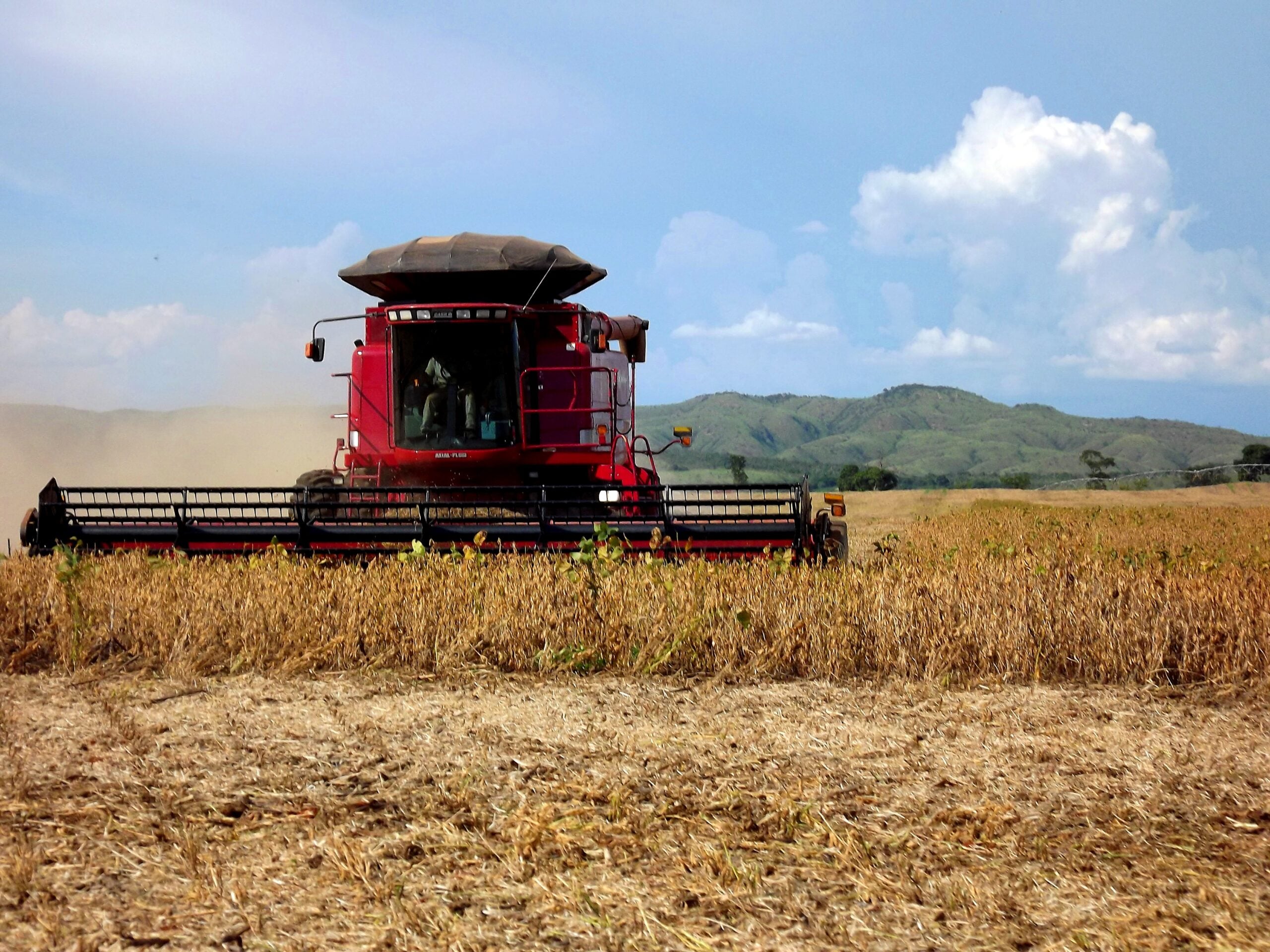
01 The session in one read
The grain tracker board painted a muted but meaningful picture on Monday, September 14, 2026. Soybeans and corn added small gains while wheat slipped, a split driven less by supply shocks than by Chinese buying patterns and Latin American exchange rates.
No single number moved the market violently; this was a day of relative adjustments. Yet beneath the calm surface, Brazilian and Argentine producers were quietly reworking their export sums.
The session confirmed that currency is now the quiet engine of South American competitiveness. With the real and the peso soft against the dollar, each dollar-denominated cargo converts into more local revenue. That nudges producers to price forward. Watch whether Brazil’s currency stabilises or extends its slide, because that will dictate the pace of farmer selling into the coming harvest.
Trade date: Monday 14 September 2026.
02 The board
The Teucrium Soybean fund settled at US$27.69, a gain of 0.69%. The Teucrium Corn fund rose 0.50% to US$20.02. The Teucrium Wheat fund closed at US$26.17, down 0.30%.
In conventional U.S. benchmark terms, November soybeans finished around US$13.04¼ per bushel, up 7¾ cents. December corn ended near US$5.33¼ per bushel, up 3 cents. Soybean oil also lent support, settling near 70.16 cents per pound, up 0.69 percent, which helps Brazil’s crush economics.
| Asset | Level | Change |
|---|---|---|
| Soybeans (SOYB) | US$27.69 | +0.69% |
| Corn (CORN) | US$20.02 | +0.50% |
| Wheat (WEAT) | US$26.17 | -0.30% |
Source: RT and exchange data, 14 September 2026. Where a commodity has no spot feed, an exchange-traded tracker or leading producer is shown as a labelled proxy.
Live Market IntelligenceThe live market board
Rio Times · Live Market Intelligence
Latin America — Cross-Market Board
| Instrument | Last | Change | YoY | Prev. | High | Low | Volume |
|---|---|---|---|---|---|---|---|
| IBOV | 185,500.88 | -0.91% | +21.85% | 187,206.89 | 168,310 | 167,142 | — |
| IPSA | 11,342.39 | +1.09% | — | 11,220.60 | 11,210 | 10,984 | 1,513,213,483 |
| IPC MEX | 63,845.28 | -0.12% | +12.17% | 63,924.77 | 66,121 | 65,405 | 108,886,187 |
| MERVAL | 3,084,547 | -0.46% | +30.51% | 3,022,485 | 3,042,365 | 2,991,150 | — |
| COLCAP | 2,588.25 | -0.06% | — | 9.04 | 9.05 | 9.02 | 4,133 |
| BVL PERÚ | 59,184.75 | -0.92% | — | — | — | — | — |
| USD/BRL | 5.16 | +0.01% | -5.13% | 5.16 | 5.18 | 5.14 | — |
| EUR/BRL | 5.95 | +1.01% | -5.83% | 5.89 | 5.98 | 5.94 | — |
| USD/MXN | 17.06 | -0.24% | -8.58% | 17.10 | 17.08 | 17.01 | — |
| USD/CLP | 913.98 | +0.04% | -5.67% | 913.65 | 915.11 | 906.68 | — |
| USD/COP | 3,140 | +0.03% | -22.04% | 3,139 | 3,141 | 3,105 | — |
| USD/PEN | 3.36 | -0.66% | -4.82% | 3.38 | 3.38 | 3.35 | — |
| USD/ARS | 1,493 | +0.10% | +12.96% | 1,491 | 1,494 | 1,480 | — |
| USD/UYU | 40.27 | +1.24% | +1.80% | 39.77 | 40.27 | 40.23 | — |
| USD/PYG | 5,939 | +1.68% | -19.54% | 5,841 | 5,939 | 5,925 | — |
| USD/BOB | 11.64 | -0.76% | +72.04% | 11.73 | 11.72 | 11.64 | — |
| USD/DOP | 58.34 | +1.25% | -3.44% | 57.62 | 58.34 | 58.04 | — |
| USD/CRC | 445.92 | +0.89% | -9.71% | 441.97 | 448.50 | 445.92 | — |
03 What moved it
Chinese importers remained in the market for forward Brazilian soybean cargoes, seeking late-2026 shipment to diversify away from U.S. origins. That demand anchor held soybeans firm even as U.S. harvest pressure started to build.
Corn drew steady interest from China’s state reserve rebuild and hog and poultry feed needs. Yet uncertainty over Beijing’s import quotas kept the advance limited.
Wheat slipped as traders weighed hopes of de-escalation in the Black Sea, which would lower some route costs. Still, Euronext December milling wheat firmed to near €244.00 (about US$282) per tonne, a sign that European supply concerns lingered despite U.S. softness.
04 The Latin American read
A weakening real during early September improved Brazilian producers’ returns on dollar-priced exports. That encouraged forward selling of the new soybean crop rather than holding unpriced inventory.
Argentina’s exporters saw a similar peso effect, making forward soybean, soymeal and corn offers more attractive to global buyers. Heavy safrinha corn shipments from Santos and Paranaguá kept Brazil competitive against U.S. Gulf and Black Sea origins.
Weather models for Brazil’s spring planting window show a neutral to slightly wetter outlook in parts of Mato Grosso and Paraná. That supports expectations for a robust 2026/27 soybean area, though analysts caution that El Niño-related volatility could still dent yields later.
05 The names to watch
In the tracker space, the three Teucrium funds remain the cleanest equity-market proxies for foreign investors: US$27.69 for soybeans, US$20.02 for corn and US$26.17 for wheat.
On the physical side, Brazil’s export ports from Santos to Paranaguá are the visible pulse of the safrinha shipping rush. Soybean oil’s firmness near 70.16 cents per pound is a meaningful signal for crushers across São Paulo and Paraná.
06 The outlook
The forward curve for U.S. soybeans is gently upward, not steeply discounted, a sign traders are not panicking about a wall of new supply. That gives South American producers breathing room to price at acceptable levels.
The key variable remains currency. If the real and peso continue to soften, Brazilian and Argentine exporters gain incremental pricing power over U.S. and Black Sea rivals. If they steady, attention will shift back to Chinese quota policy and Black Sea logistics for wheat.
07 What to watch
- Brazil’s real: A softer real widens export margins and accelerates farmer forward selling of soybeans and corn.
- China’s import quotas: Beijing’s soybean and corn quota decisions will set the pace of demand for South American cargoes.
- Black Sea freight risks: Any de-escalation trims wheat route costs; an escalation would rapidly lift Buenos Aires and Paraná wheat competitiveness.
- Brazil spring weather: Planting moisture in Mato Grosso and Paraná will shape the 2026/27 soybean area and yield expectations.
Frequently Asked Questions
Why did soybeans rise on September 14?
The Teucrium Soybean fund gained 0.69% to US$27.69 as Chinese importers actively secured forward Brazilian cargoes for late-2026 shipment.
What role did currencies play?
A weaker Brazilian real and Argentine peso improved local returns on dollar-priced grain exports, prompting producers to lock in new-crop sales.
Why did wheat underperform?
The Teucrium Wheat fund slipped 0.30% to US$26.17 as traders priced in potential Black Sea de-escalation, even though European milling wheat firmed near €244.00 (about US$282) per tonne.
How is Brazil’s crop outlook shaping up?
Weather models point to neutral-to-wetter spring conditions in Mato Grosso and Paraná, supporting a large 2026/27 soybean area, with El Niño still a wild card.
Market data: RT
This article was produced by The Rio Times’ automated newsroom system. How we use AI · Report an error
LatAm Markets: Live Signals → — real-time movers, turnover leaders and FX across Latin America.
Read More from The Rio Times