Soybean, Corn Slide as US Midwest Weather Fears Ease

Key Facts
- Soybean-tracker SOYB fell 1.94% to US$25.21, pulling back as easing US Midwest weather fears gave traders less reason to price in crop damage.
- Corn-tracker CORN dropped 1.38% to US$17.83, with the decline linked to advancing US pollination progress under cooler midweek forecasts.
- Wheat-tracker WEAT slipped a gentler 0.49% to US$24.50, outperforming corn and soybeans as Black Sea logistics uncertainty slowed selling.
- The IMF-sourced global soybean price series rose from about 383 points in January to 439 in May 2026, underscoring a higher-price backdrop earlier in the year.
- USDA data showed the average price US farmers received for soybeans at US$10.30 a bushel in January, US$10.60 in February and US$11.10 in March, confirming a steady farmgate climb heading into the second quarter.
- Brazil and Argentina remain the world’s dominant grain export engine and any currency swing in the Brazilian real or Argentine peso directly shifts the pace of farmer selling into global channels.
Today’s Focus
The soybeans and corn proxies retreated sharply on Thursday after updated US weather models pointed to less punishing heat across the Midwest crop belt in the days ahead. The soybeans-tracking fund SOYB settled at US$25.21, a decline of 1.94%, while the corn-tracking fund CORN closed at US$17.83, down 1.38%. The wheat-tracking fund WEAT eased only 0.49% to US$24.50, cushioned by persistent concerns over seaborne shipments navigating the Black Sea corridor.
The move lower in the row-crop proxies reversed part of a rally that had been supported by an IMF-tracked global soybean price climbing from about 383 points in January to 439 in May. USDA figures captured the same underlying strength, with the average price US farmers received for soybeans improving from US$10.30 a bushel in January to US$11.10 in March. The absence of fresh demand headlines from top importer China left the session without a bullish counterweight.
For Latin America, where Brazil and Argentina together constitute the world’s export engine for soybeans and corn, a late-July dip in Chicago-tracked prices squeezes the local-currency value of crops still being moved from inland silos to port. Any concurrent firming of the Brazilian real against the US dollar would amplify that compression, discouraging farmer selling and tightening near-term supply pipelines just as the Northern Hemisphere harvest approaches.
What matters today. The soybeans and corn proxies pulled back on improving US weather, with the dollar and the real’s path now the main variable for Latin American export flows.
01 The session in one read
Grain-tracker funds fell in unison on Thursday, led by a 1.94% drop in the soybeans proxy SOYB to US$25.21, a 1.38% decline in the corn proxy CORN to US$17.83 and a shallower 0.49% slip in the wheat proxy WEAT to US$24.50. The sell-off was concentrated in row crops because updated US weather runs trimmed the extreme-heat risk that had been built into prices for the past several sessions. Wheat held firmer as the market continued to assign a risk premium to Black Sea shipping flows, even with no new disruption confirmed during the day.
The concurrent slide in the soybeans and corn trackers reads more like a tactical unwinding of weather premium than the start of a sustained downturn, because the IMF global price series for soybeans had risen from about 383 points in January to 439 by May, signalling robust underlying demand. Without a fresh China booking update or a confirmed collapse in Brazilian farmer selling, this session looks like profit-taking on a well-flagged forecast change. The most immediate variable to watch is the USDA’s next crop-condition report, which will either validate the cooler forecast or reignite the supply-squeeze narrative.
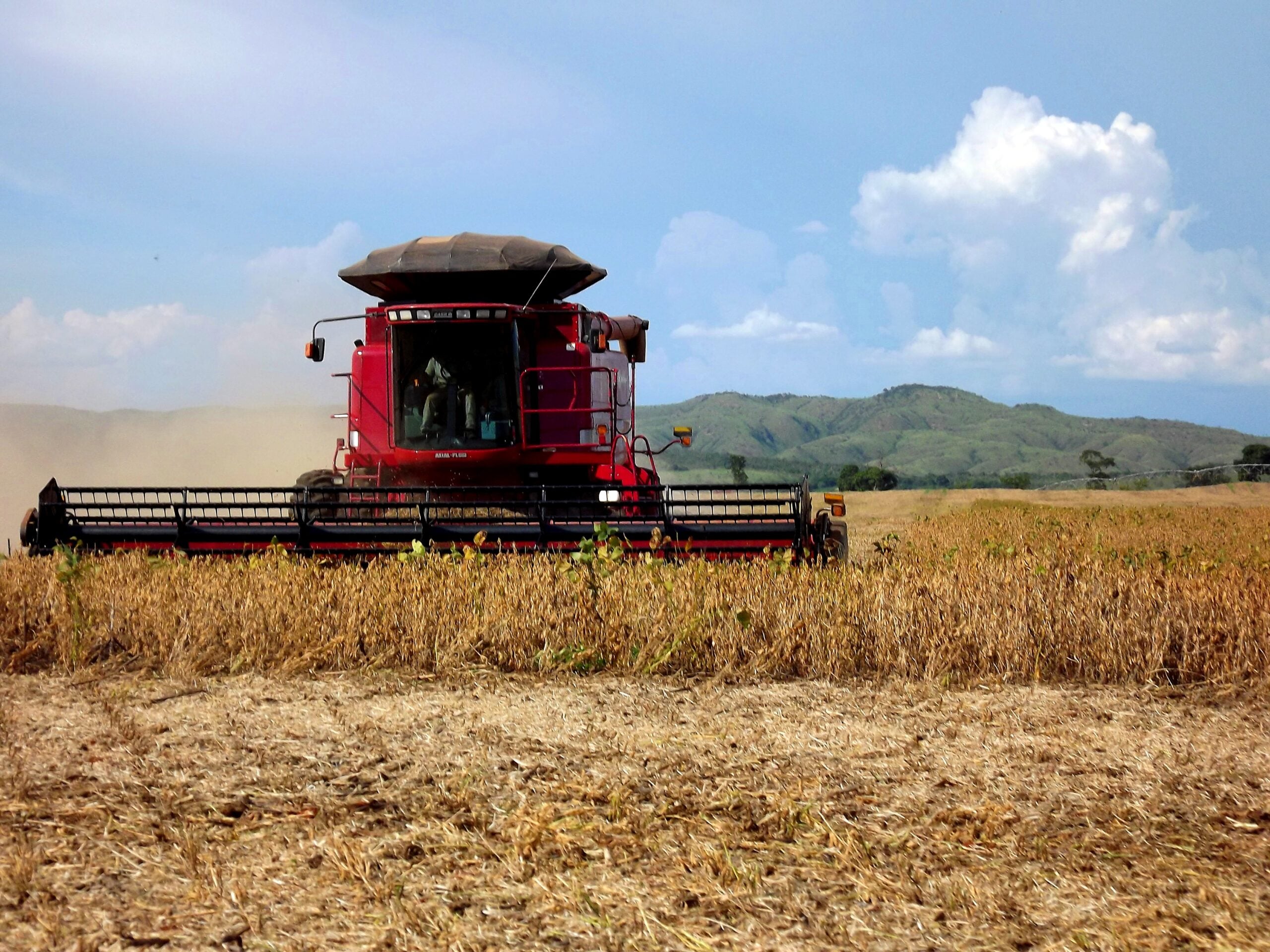
02 The board
The soybeans-tracking fund SOYB settled at US$25.21, surrendering 1.94% and underscoring how swiftly late-July weather narratives can swing the row-crop complex. The corn-tracking fund CORN closed at US$17.83, down 1.38%, extending its pullback as the crucial US pollination phase advanced under a friendlier forecast. The wheat-tracking fund WEAT ended at US$24.50, only 0.49% lower, reflecting a divergence driven by geopolitics rather than North American agronomy.
| Asset | Level | Change |
|---|---|---|
| Soybeans (SOYB) | US$25.21 | -1.94% |
| Corn (CORN) | US$17.83 | -1.38% |
| Wheat (WEAT) | US$24.50 | -0.49% |
Source: RT close, 2026-07-29. Where a commodity has no spot feed, an exchange-traded tracker or leading producer is shown as a labelled proxy.
Live Market IntelligenceThe live market board
Rio Times · Live Market Intelligence
Latin America — Cross-Market Board
| Instrument | Last | Change | YoY | Prev. | High | Low | Volume |
|---|---|---|---|---|---|---|---|
| IBOV | 204,120.12 | -1.15% | +21.85% | 206,495.23 | 168,310 | 167,142 | — |
| IPSA | 10,780.31 | -1.87% | — | 10,985.55 | 11,210 | 10,984 | 1,513,213,483 |
| IPC MEX | 70,249.54 | +1.43% | +12.17% | 69,258.58 | 66,121 | 65,405 | 108,886,187 |
| MERVAL | 3,017,221 | — | +30.51% | 3,022,485 | 3,042,365 | 2,991,150 | — |
| COLCAP | 2,529.36 | -1.21% | — | 9.04 | 9.05 | 9.02 | 4,133 |
| BVL PERÚ | 59,561.23 | -4.00% | — | — | — | — | — |
| USD/BRL | 5.16 | +0.01% | -5.13% | 5.16 | 5.18 | 5.14 | — |
| EUR/BRL | 5.95 | +1.01% | -5.83% | 5.89 | 5.98 | 5.94 | — |
| USD/MXN | 17.06 | -0.24% | -8.58% | 17.10 | 17.08 | 17.01 | — |
| USD/CLP | 913.98 | +0.04% | -5.67% | 913.65 | 915.11 | 906.68 | — |
| USD/COP | 3,140 | +0.03% | -22.04% | 3,139 | 3,141 | 3,105 | — |
| USD/PEN | 3.36 | -0.66% | -4.82% | 3.38 | 3.38 | 3.35 | — |
| USD/ARS | 1,493 | +0.10% | +12.96% | 1,491 | 1,494 | 1,480 | — |
| USD/UYU | 40.27 | +1.24% | +1.80% | 39.77 | 40.27 | 40.23 | — |
| USD/PYG | 5,939 | +1.68% | -19.54% | 5,841 | 5,939 | 5,925 | — |
| USD/BOB | 11.64 | -0.76% | +72.04% | 11.73 | 11.72 | 11.64 | — |
| USD/DOP | 58.34 | +1.25% | -3.44% | 57.62 | 58.34 | 58.04 | — |
| USD/CRC | 445.92 | +0.89% | -9.71% | 441.97 | 448.50 | 445.92 | — |
03 What moved it
The primary catalyst was an overnight update from several commercial weather models showing a high-pressure ridge over the central US Midwest breaking earlier than anticipated, reducing the threat of pollination-stunting heat for corn and pod-setting stress for soybeans. With the weather alarm dialled down, managed money trimmed length that had been added in the previous fortnight. The broader macro environment added a light headwind as the US dollar index steadied, making dollar-denominated grain trackers marginally less attractive for non-US buyers, though the move in currencies was too contained to drive the bulk of the grain selling.
04 The Latin American read
Brazil and Argentina together sit at the centre of the global grain trade, and a decline in Chicago-linked proxies directly reshapes the economics for farmers from Mato Grosso to northern Buenos Aires. When the soybeans tracker drops 1.94%, the local-currency revenue per sack for a Brazilian producer falls even before accounting for transport to port, unless the Brazilian real weakens by an offsetting margin in the same session. Argentine wheat growers, already navigating a complex export-tax and currency regime, watch a 0.49% WEAT dip through the lens of a tightly managed official peso that keeps the spread between formal and parallel exchange rates wide, distorting planting decisions for the upcoming season.
05 The names to watch
The session moves will ripple through the shares of Brazil’s leading grain exporters, where SLC Agrícola and BrasilAgro carry direct exposure to soybean and corn price swings in the Chicago market. Argentine crusher and wheat exporter Molinos Agro, part of the broader Molinos group, typically sees its trading volumes and stock react when the WEAT tracker shifts, because the company’s export margins depend on the interplay between international wheat prices and domestic Argentine grain-retention policies. On the input side, fertiliser giants such as Nutrien and Mosaic watch the corn tracker closely, as a sustained CORN decline can pressure farmer spending on crop inputs across the Southern Hemisphere’s approaching planting window.
06 The outlook
The immediate trajectory for the soybeans and corn trackers hinges on whether the incoming US crop-condition ratings validate the market’s Thursday pivot to a less anxious weather view. Any sign that the cooler break is fleeting would snap the row-crop proxies back toward their pre-session levels. For wheat, the variable is a Black Sea headline, because a single disruption to a vessel-chartering programme can erase a 0.49% decline in a matter of minutes. Meanwhile, Beijing’s absence from the soybean purchase wire this week leaves the market guessing whether China is simply digesting prior bookings or turning cautious on price, making the next USDA weekly export-sales report the must-watch event for Latin American exporters calibrating their forward sales.
07 What to watch
- US crop conditions: Weekly USDA ratings due early next week will show whether cooler weather halted or merely paused crop deterioration, dictating if SOYB and CORN can regain lost ground.
- China soybean bookings: An uptick in Chinese buying would tighten the global balance sheet and directly lift the soybeans tracker, while a continued silence would signal demand rationing at higher prices.
- Brazilian real level: If the real strengthens past 4.80 to the dollar, farmer selling in Mato Grosso is likely to slow sharply, cutting spot supply and potentially firming the soybean proxy.
- Black Sea interrupt trigger: Any escalation in Russia-Ukraine shipping tensions would spike the wheat tracker WEAT well beyond Thursday’s modest 0.49% pullback.
Frequently Asked Questions
Why did the soybeans tracker SOYB drop 1.94% to US$25.21?
Updated US weather forecasts showed less extreme heat across the Midwest, reducing the perceived risk to soybean pod development and triggering profit-taking in the fund.
What does the IMF global soybean price of 439.14965 in May signal?
It confirms soybean prices were on an upward trend earlier in 2026, which makes Thursday’s dip look more like a weather-driven correction than a fundamental collapse in demand.
Why did the wheat tracker WEAT only fall 0.49%?
Wheat held up better than corn and soybeans because the market still prices in a risk premium for potential disruptions to Black Sea shipping, even on a day without fresh conflict headlines.
How does a falling soybeans-tracker price affect Brazilian farmers?
A lower price in dollar terms shrinks the local-currency revenue per sack unless the Brazilian real weakens, reducing the incentive for farmers to sell their harvest and tying up supply.
This article was produced by The Rio Times’ automated newsroom system. How we use AI · Report an error · Editorial responsibility: Matthias Camenzind, Editor-in-Chief
LatAm Markets: Live Signals → — real-time movers, turnover leaders and FX across Latin America.