Governor Doria Says All São Paulo Residents Can Be Vaccinated for Covid-19 by February 2021
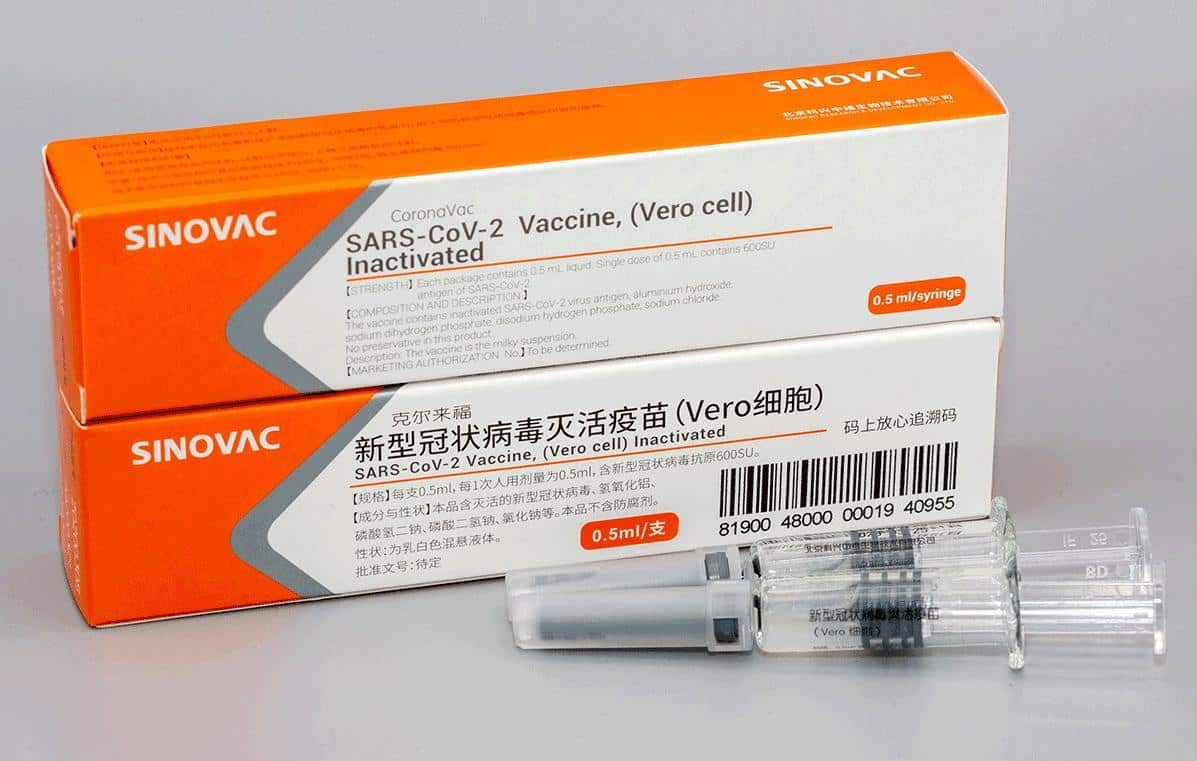
RIO DE JANEIRO, BRAZIL – São Paulo’s governor João Doria announced on Monday, September 21st, that the entire population of the state would be administered the Covid-19 vaccine developed by the Chinese Sinovac laboratory in partnership with the Butantan Institute by February 2021.
“To São Paulo Brazilians, I assure you that we will have the vaccine, the CoronaVac, to attend the whole population of São Paulo by the end of this year and during the first two months of 2021, and we will immunize you,” said Doria on Monday.
The governor did not explain how the vaccines will be distributed. Secretary of Health Jean Gorinchteyn said on September 10th that the trial schedule is being observed and the results are expected to be sent to the National Health Regulatory Agency (ANVISA) by the end of October. Thus, the vaccine will be included in the national vaccination calendar in early January, still according to him.

In July, the governor had said that the vaccine would be distributed by the Unified Health System (SUS) to millions of Brazilians, not only in São Paulo.
“In these circumstances we will be able to start producing the vaccine in December and immediately start vaccinating millions of Brazilians through the SUS, not only in São Paulo but also in other states,” declared Doria at the time.
When presenting the vaccine project to the Ministry of Health in August, Dimas Covas, the Butantan’s director, also declared that “the vaccine is for all Brazilians, not only for São Paulo citizens.”
“Butantan supplies the Ministry of Health with vaccines, all the vaccines it produces, the National Immunization Program, and this is the project. We will supply this vaccine, these 45 million doses to the Ministry of Health,” said Dimas Covas on August 25th.
The agreement with the Chinese laboratory provides the sending of ready doses of the CoronaVac, manufactured in China, as well as the transfer of technology for the Butantan to manufacture them on national territory in the future.
Until last Monday, the state government said it would be 45 million doses still this year. On Sunday, Doria said on social media that overall doses will be 46 million in 2020 alone.
The state of São Paulo has approximately 44 million inhabitants, according to IBGE (Brazilian Institute of Geography and Statistics). However, the CoronaVac trials on volunteers are performed with two doses of the vaccine per person.
Alternative plan
Asked about how immunization would be accomplished in São Paulo, Doria said on Monday that the state government now has an alternative plan for vaccination, in case distribution is not conducted by the SUS.
“Yes, we have an alternative plan, but we prefer to believe in a national plan, a plan that involves the Ministry of Health. This is what we have been working on with Minister Eduardo Pazuello. It makes no sense to believe that the Ministry of Health will not give equal treatment to all Brazilians,” said Doria.
“What I can guarantee is that the Brazilians who live in São Paulo will not be deprived of the vaccine,” he added.
Doria also stated that there will be no priority for some Brazilians over others in the vaccine distribution.
“I understand that the immunization of all Brazilians is critical. In my opinion, there are no first-class Brazilians, who get the vaccine before second-class Brazilians, who get the vaccine later. And it is my opinion that the vaccine should also be mandatory,” said the governor.
Vaccine still in trials
Every vaccine needs to undergo critical trial steps before large-scale distribution is authorized. Trials are necessary to determine the safety and efficacy of a vaccine.
CoronaVac is in its third trial phase. This stage serves to assess if it can be mass distributed. These trials with volunteers began in Brazil on July 21st, at the Clínicas Hospital of the University of São Paulo School of Medicine (FMUSP).
According to Clinical Trials, which compiles data on clinical vaccine studies, the Butantan Institute reported that the last CoronaVac volunteer will be examined in October 2021. However, the government plans to offer the vaccine in January 2021.
In August, Dimas Covas, director of the Butantan Institute, stated that he would seek approval for the Chinese CoronaVac vaccine even before the end of clinical trials with the 9,000 Brazilian volunteers.
The CoronaVac is in its third phase of trials. Half of the volunteers are administered a placebo and the other half the vaccine. This type of trial is called a double blind, because neither researchers nor subjects know who received vaccine or placebo. Fourteen days after the first dose, volunteers are given another one.
On July 3rd, ANVISA cleared the new phase of the project. Days later, Governor João Doria announced that the National Research Ethics Committee (CONEP) had also approved the trials.
In addition to the Clínicas Hospital, the vaccine will be administered in twelve research centers selected in the country and coordinated by the Butantan Institute.
Only healthcare professionals working directly in the fight against Covid-19 will be able to take part in the third phase of trials of the vaccine. Other pre-requisites are that the volunteers have not been infected by the disease in the past, that women are not pregnant or plan to become pregnant within the next three months, and that the volunteers live near one of the 12 research centers that will conduct the project.
In all, 9,000 healthcare professionals are expected to be involved in the trials in the states of São Paulo, Rio Grande do Sul, Paraná, Rio de Janeiro, Minas Gerais, and Brasília, during the third phase of trials of the Chinese vaccine.
Five million doses
On Sunday, September 20th, Doria announced that the state will receive five million doses of the vaccine against Covid-19 developed by the Chinese Sinovac laboratory in partnership with the Butantan Institute as early as October.
“The trials will continue with volunteer doctors and nurses in six states and soon, if all goes as planned, we will be able to immunize millions of Brazilians. Vaccination symbolizes hope, the certainty that all this will pass. Have a great Sunday,” said Doria in a post on social media.
The details of the state government’s agreement with Sinovac, the Chinese laboratory that is developing the vaccine in partnership with the Butantan, are confidential. Should the vaccine pass the phase 3 clinical trials, which are currently underway, its national production will be conducted in a plant that the state government intends to adjust.
Number of doses
The total number of doses that the government claims will be received through the agreement with Sinovac does not figure in any official document. The amount disclosed by the governor and his spokespersons has already varied a number of times.
When the government of São Paulo announced the investment of R$96 million (US$19 million) in donations for works in the plant, on July 29th, Doria said that if the state reached the goal of R$130 million, it would be possible to double the planned production of 60 million doses to 120 million.
However, in a press release sent the same day, the state management said that 120 million doses of the vaccine had already been planned and that the investment would enable doubling this number, reaching 240 million doses.
Days before, in an online presentation, Dimas Covas announced another projection. According to him, 120 million doses of the vaccine were expected to be received ready and half-ready and the Institute’s plant could produce a further 100 million doses.
Subsequently, the amounts disclosed changed once again. Currently, the agreement with the Chinese laboratory provides for the shipment of 15 million ready and 30 million half-ready doses this year, according to the government. Another 16 million half-ready doses are expected to be delivered by March 2021.
The government of São Paulo is also negotiating with the Ministry of Health an investment of around R$1,9 billion that would enable the offer of 100 million doses of the vaccine by May 2021.
Expansion of the Butantan plant
On Monday, September 14th, Doria announced the conclusion of a new stage of fundraising for the Butantan Institute’s plant that will produce the vaccine against Covid-19 developed by the Chinese Sinovac laboratory in partnership with the Institute.
According to Doria, donations from private sector companies amount to R$97 million. On July 29th, the government had already announced that it had raised R$96 million in donations for the project.
At the time, the government estimated that R$130 million would be required for the project – so R$34 million in donations were lacking. However, this second time, the government announced a new estimated value for the work: R$160 million.
Given this new estimate, the amount that still needs to be raised rose to R$63 million. The total amount will not necessarily come from donations. The state government is still seeking the federal government’s contribution.
The government of São Paulo is negotiating an investment of around R$1.9 billion with the Ministry of Health, of which:
- R$85 million would be used for the clinical trial;
- R$60 million for plant reform;
- the remainder would enable vaccine supply to reach 100 million doses by May 2021.
Source: G1
More: Brazil news in English, every day from The Rio Times.
This article was produced by The Rio Times’ automated newsroom system. How we use AI · Report an error · Editorial responsibility: Matthias Camenzind, Editor-in-Chief
Living in or visiting São Paulo? See this month's events and our São Paulo city guide with rents, safety and upcoming concerts.