Falklands Oil Firm Rockhopper Keeps Its 2028 Start Date Despite Argentina’s Sanctions
ENERGY · ARGENTINA
Key Facts
- —The country Argentina claims the British-run Falkland Islands, which it calls the Malvinas, and is trying to stop oil production in their waters.
- —What happened On 30 September 2026 British firm Rockhopper Exploration said first oil from the Sea Lion field is still targeted for the first quarter of 2028.
- —Who is involved Rockhopper holds 35% of Sea Lion; Israel’s Navitas Petroleum holds 65% and operates it. Rockhopper announced a US$200 million share sale in August, its results show.
- —What it means for you Nothing changes for travel or trade today. Firms tied to island oil face Argentine sanctions and possible exclusion from Argentine energy projects.
- —Still open Whether Britain answers Argentina’s two-week deadline, set on 28 September, and whether a UN sea tribunal is asked to act.
The Falklands oil project Argentina wants stopped is keeping its timetable. British partner Rockhopper Exploration said on Wednesday that first oil from Sea Lion is still targeted for early 2028.
The statement came in its half-year results, published in London on 30 September. It follows Argentina’s two-week ultimatum to Britain, covered in Falklands Oil: Argentina Gives the UK Two Weeks, Then Plans a Law of the Sea Case.

What Rockhopper Said
Chief executive Samuel Moody said first oil from the first phase “remains targeted for Q1 2028.” He cited a recent capital raise and “the continued strong support of the UK and Falkland Islands Governments.”
The report says Argentine threats against firms and people in the islands’ oil sector brought “heightened media and political attention.” It notes that London and the islands’ government called the measures “illegitimate and without legal justification.”
Argentine outlets, including Crónica and Clarín, reported the statement within hours. Rockhopper also repeated that Navitas, the operator, expects no material effect on the project’s timetable.
The Numbers Behind the Confidence
The first phase comprises 11 wells, with drilling due to start early in 2027. Output will run through the Aoka Mizu, a floating production vessel able to handle about 55,000 barrels a day.
Navitas has bought a second vessel, the OSX-1, for a larger area further south. Together the two could lift output to about 180,000 barrels a day, with first oil there possible in 2030.
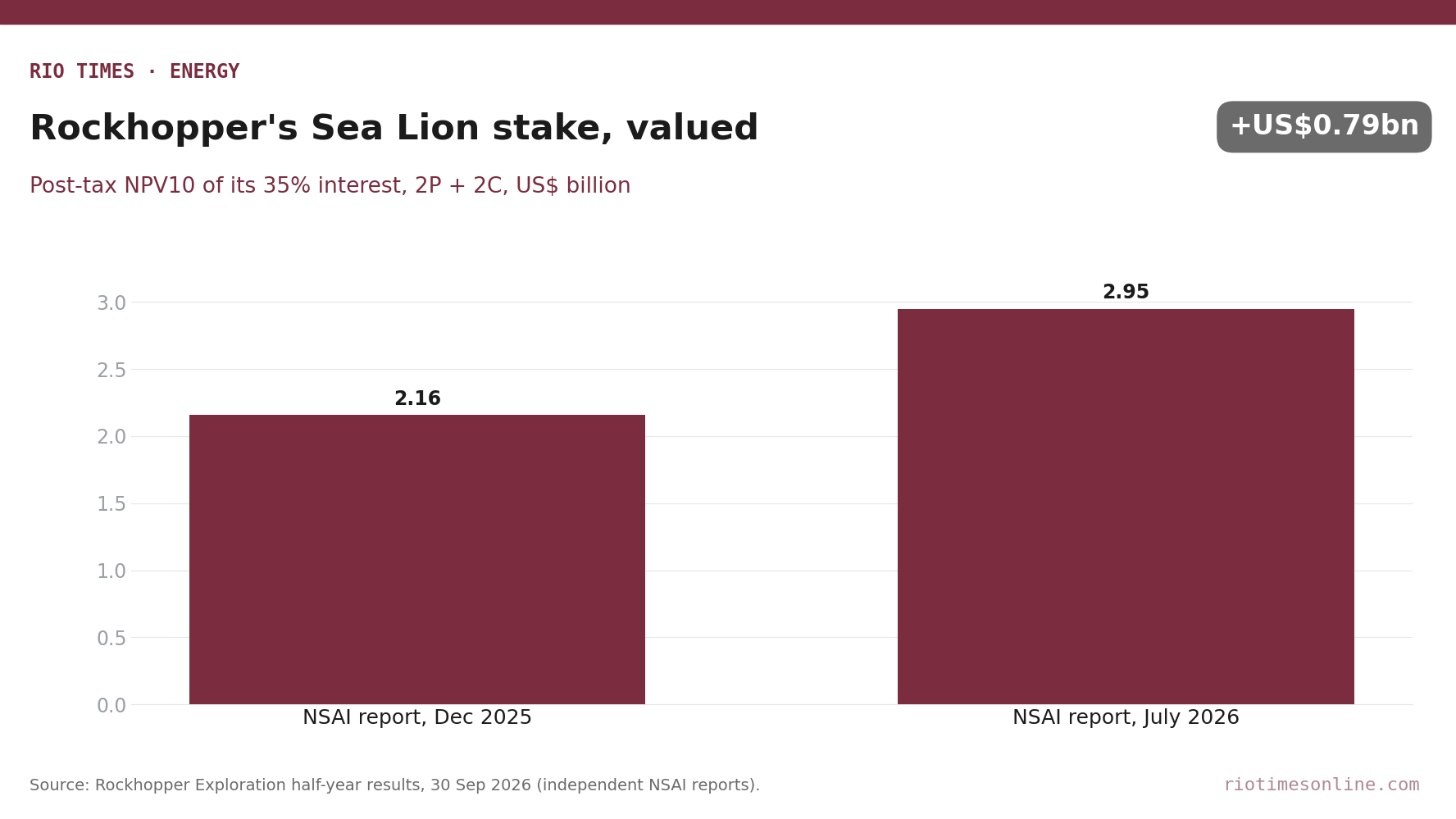
A new report by US consultants Netherland, Sewell & Associates puts Rockhopper’s share at 110 million barrels of proven and probable reserves. It values that stake, including contingent resources, at US$2.95 billion, up from US$2.16 billion.
That valuation assumes Brent crude at US$75.95 a barrel. Rockhopper’s first-half pre-tax loss narrowed to US$3.0 million from US$51.4 million, Alliance News and Infobae reported.
What Argentina Has Done So Far
President Javier Milei’s government announced sanctions on firms and people in island oil work in early September. In mid-September a federal judge in Río Grande ordered both companies to halt the project, Clarín reported.
That order has no force in the islands, as explained in Why an Argentine Court Order Against Falklands Oil Drilling May Not Bite. On 28 September Buenos Aires gave Britain two weeks before seeking emergency measures at the UN sea tribunal in Hamburg.
The islands’ government, meanwhile, is extending all offshore production licences by five years, with two more optional. That step was reported in Falklands Offshore Licences Extended Five Years Amid Argentine Pressure.
Confidence and Its Limits
The company’s case rests on licences from the islands’ government and on British backing. Money is less of a worry after the August raise, which Rockhopper says funds it to mid-2028.
The risks are legal and commercial rather than physical. Argentina can pressure contractors, lenders and suppliers that also work on the mainland, and it has threatened to bar them from its own projects.
Other explorers are watching. Ámbito reported that Borders & Southern Petroleum is seeking a partner for Darwin, a gas and condensate find south of the islands.
What Is Not Yet Known
Britain had not publicly answered the Argentine deadline, which runs to about 12 October. It is unclear whether any tribunal would treat the case as urgent.
Rockhopper and Navitas are still negotiating how Rockhopper funds its 35% of the second vessel. The company expects binding documents “in the coming weeks.”
More: Argentina news in English, every day from The Rio Times.
Frequently Asked Questions
What is the Sea Lion field?
An offshore oilfield north of the Falkland Islands, discovered by Rockhopper in 2010. Navitas Petroleum operates it with 65%; Rockhopper holds 35%.
When is Falklands oil production due to start?
The operator targets first oil in the first quarter of 2028, with development drilling due to begin early in 2027, according to Rockhopper’s results of 30 September 2026.
Can Argentina stop the project?
Not directly, because the licences come from the islands’ government with British support. Argentina is using sanctions, domestic courts and a planned UN sea-law case to raise the cost.
Sources: Rockhopper Exploration, half-year results, 30 September 2026; Crónica; Clarín; Infobae; Ámbito; Alliance News via London South East, all 30 September 2026.
Read More from The Rio Times