Europe Intelligence Brief — Saturday, October 3, 2026
Executive Summary
Europe Intelligence Brief for October 3: G7 releases 100 million barrels after a US diesel threat, Spain's housing march, and euro-area inflation at 3.8%.
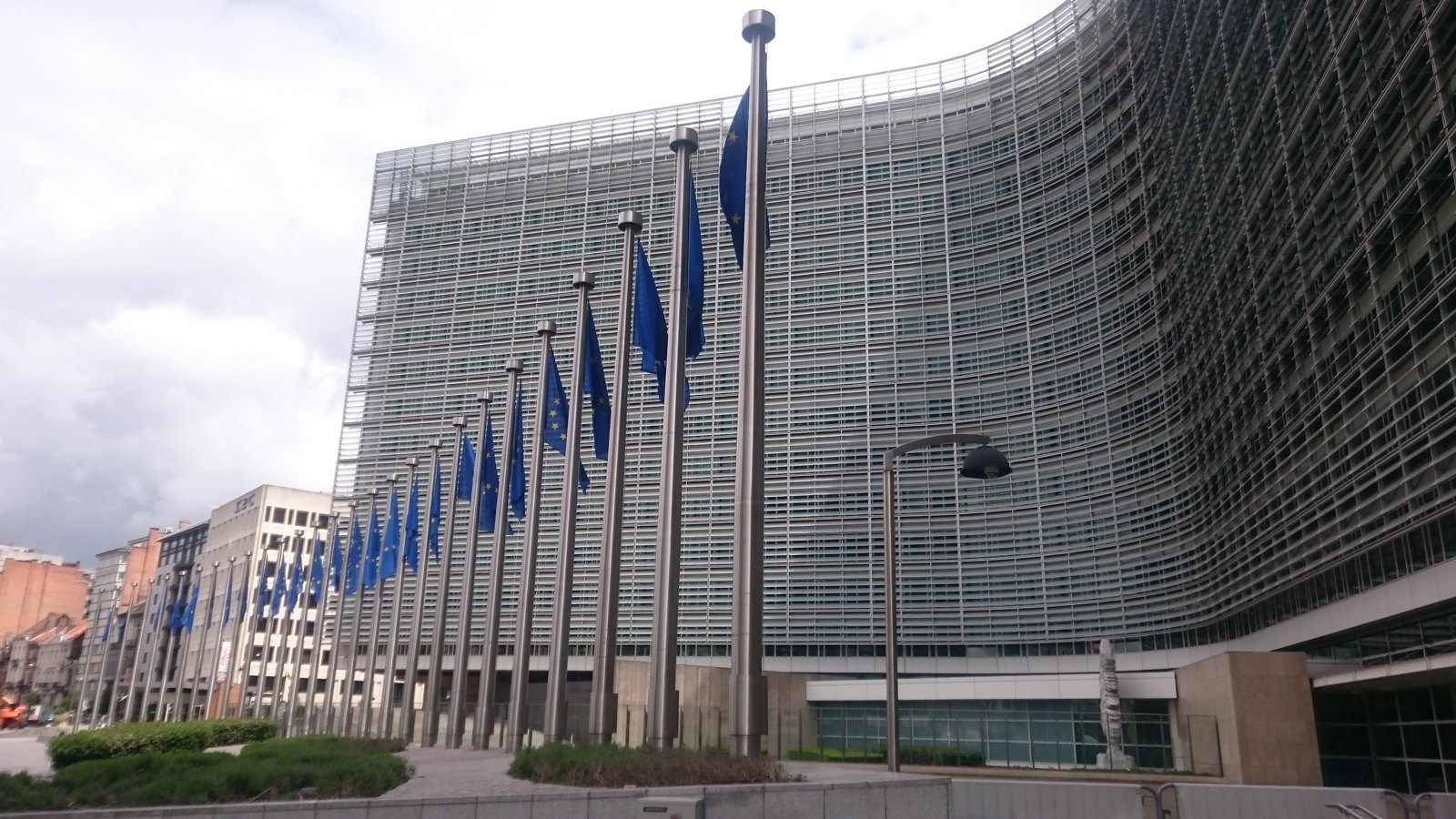
Europe’s temper this Saturday is the bill arriving everywhere at once. The G7 agreed on Friday to release 100 million barrels of diesel and crude, ending a week in which Washington threatened a fuel-export ban. Spaniards then marched on rents, Russia struck a second Kyiv bridge, and Eurostat said inflation had hit 3.8 per cent.
The register is relief mixed with fatigue. The fuel fight ended in a compromise, but the causes did not move. Housing, energy and war each produced a political price tag within the same 24 hours.
What steadies the continent is scheduling. Hungary and Ukraine have fixed dates for a swap of votes. The European Central Bank has a meeting on 29 October. Spain’s prime minister has a decision to make by Tuesday if he wants a late-November election.
The through-line is a continent whose household bills have become its foreign and domestic policy. Fuel, rent and bread are now the files that ministers and marchers argue over, and the argument is moving faster than the fixes.
Key Facts
—The deal. G7 leaders agreed on 2 October to release 100 million barrels of diesel and crude over four months through the International Energy Agency, with a substantial diesel release in the first 20 days, France 24 reported.
—The threat. President Trump had demanded 120 million barrels from France and Germany, about 40 per cent of their reserves, or a US diesel-export ban, RTE reported on 2 October; he later said the ban was never really on the table.
—The ledger. The IEA said on 3 October that members had released 325 million of the 400 million barrels pledged in March; the G7 did not say whether the new 100 million includes the remaining 75 million, Euronews reported.
—Madrid’s defeat. Spain’s Congress rejected two housing decrees on 2 October, by 172 to 178 and 166 to 184, after the Catalan party Junts voted with the PP, Vox and UPN, Infobae reported.
—Madrid’s street. The government delegation counted 70,000 marchers on 3 October; the Tenants’ Union claimed 500,000. Protests were called in about 50 Spanish towns and cities, Infobae reported.
—Kyiv’s bridges. A Russian strike hit the Northern Bridge on 3 October after repeated strikes on the Southern Bridge since Thursday; Russia’s Foreign Ministry urged diplomats to leave Kyiv, RTE reported.
—The price. Euro-area inflation was 3.8 per cent in September against 3.2 per cent in August, with energy up 18.8 per cent a year and core at 2.5 per cent, Eurostat said on 2 October.
—The calendar. Ukraine’s parliament meets in extraordinary session on 12 October, and an EU conference on 13 October is meant to open two accession clusters, European Pravda reported on 1 October.
Brussels Takes The Deal, Not The Threat
The diesel standoff ended on Friday in a form that neither side first described. G7 leaders agreed to release 100 million barrels of diesel and crude over four months, France 24 reported on 2 October. A substantial part of the diesel is to come within the first 20 days.
That differs from the demand reported a day earlier. Washington had asked for 120 million barrels from France and Germany alone, RTE reported, with a US diesel-export ban as the alternative. The deal spreads the load across the G7 and includes crude. The leaders also agreed to refrain from export restrictions on energy.
Brussels was blunt before it was relieved. Commission spokeswoman Anna-Kaisa Itkonen said the EU “fully” rejected any diesel ban, because it would undermine trust in the United States as a reliable partner, France 24 reported. Ursula von der Leyen later welcomed the G7 decision not to impose export bans on allies.
The register in Brussels is relief with a receipt. Europe avoided a ban without conceding the principle, yet it is still releasing stocks while the Strait of Hormuz remains restricted. The IEA said on 3 October that 325 million of the 400 million barrels pledged in March had been released, so the arithmetic is not finished.
Madrid Marches Toward A Strike
On Friday, Spain’s Congress rejected both of the government’s housing decrees. The first failed by 172 votes to 178 and the second by 166 to 184, Infobae reported. Junts, the Catalan party the government had hoped to win over, voted with the PP, Vox and UPN.
On Saturday, four columns marched through Madrid under the slogan “towards a general strike” and met at Cibeles around 14:00. The government delegation counted 70,000 people, while the Tenants’ Union claimed 500,000, Infobae reported. Madrid’s march passed without incident; the agency reported incidents in Valencia.
Union spokeswoman Valeria Racu said the housing legislature now truly begins and that a general strike should come soon. Pedro Sánchez was reported to be using the weekend to gauge the anger before deciding on an early election. A vote on Sunday 29 November would need the dissolution decree in the official gazette on Tuesday 6 October, Spanish press reports said.
The register in Madrid is a street that has found its leverage. Parliament refused a rent policy, and the answer came within 24 hours, in the streets of about 50 towns and cities. Whatever Sánchez decides, housing is now the issue that sets Spain’s calendar.
Kyiv’s Bridges Become The Front Line
A Russian strike hit Kyiv’s Northern Bridge on Saturday morning. Mayor Vitali Klitschko said the road surface and the trolleybus overhead wires were damaged, and the Kyiv Independent reported two people injured. The Southern Bridge has been shut since a series of strikes began on Thursday.
Moscow framed it as policy. Russia’s Foreign Ministry said its forces would keep delivering “massive retaliatory strikes” and urged diplomats and foreign nationals to leave Kyiv, RTE reported on 3 October. President Zelensky accused Vladimir Putin of breaking the rules of war through attacks on civilian areas.
Analysts quoted by the Kyiv Independent doubted the bridges can be destroyed outright. Aviation expert Kostiantyn Kryvolap called such strikes “mosquito bites” against a structure that size. Their value, he suggested, lies in disrupting traffic and logistics and in psychological pressure on a city of about three million people.
The register in Kyiv is a capital being cut in two by inconvenience. Three other bridges were switched to one-way traffic, the Kyiv City Military Administration said, and Klitschko said the capital should operate on a war footing. The danger is less a collapse than a winter of daily friction.
The Euro Area Reads A 3.8 Per Cent Warning
Eurostat’s flash estimate put euro-area inflation at 3.8 per cent in September, up from 3.2 per cent in August, on 2 October. Economists had expected 3.6 per cent, Euronews reported. Energy rose 18.8 per cent a year, against 14.3 per cent in August. Core inflation, which strips out energy and food, was 2.5 per cent.
The big economies are close together but not equal. Germany stood at 3.3 per cent, France at 3.4, Italy at 4.1 and Spain at 5.0, Eurostat said. The euro area has had 21 members since Bulgaria joined on 1 January.
Stock markets paid for it. Over the week to 2 October, France’s CAC 40 fell 2.2 per cent to 7,897, Spain’s IBEX 35 fell 3.1 per cent to 19,085 and Germany’s DAX fell 0.7 per cent to 25,231, according to EODHD closing data. The euro ended the week at US$1.1258.
The register in the euro zone is a central bank cornered by fuel. The ECB meets on 28 and 29 October, with the decision on the second day. A fuel-led price shock is hard to fight with interest rates, yet a three-year high leaves little room to ignore it.
Budapest And Kyiv Write A Calendar
Ukraine and Hungary have turned a June promise into dated steps. Ukraine registered a bill on 1 October that gives minority-language schools a special status, with a threshold of 50 per cent plus one student, European Pravda reported. Hungarian Prime Minister Péter Magyar welcomed the submission, Ukrainska Pravda reported on 2 October.
The sequence runs in parallel, because trust is thin. On Tuesday 6 October Hungary is to let the Council presidency send Kyiv a request for negotiating positions. On Monday 12 October Ukraine’s parliament meets in extraordinary session, and on Tuesday 13 October a conference in Luxembourg is due to open Clusters 2 and 3 of the accession talks.
The register on the Dnipro is homework done in wartime. A country under nightly strikes is writing school law on a Brussels timetable, and each side can stop the process if the other breaks its word.
What This Means From Latin America
The diesel deal matters first to importers. Mexico is the largest single buyer of US diesel exports, so the end of the export-ban threat removes a risk that would have hit it before it hit Europe. The extra barrels may also soften a fuel premium that Latin American governments are already passing to motorists.
Spain’s housing fight has a Latin American audience. Spanish politics shapes visas, remittances and investment flows for the region, and a campaign from late November would crowd out other files in Madrid. The debate over rents also echoes in Latin American cities facing the same affordability squeeze.
Ukraine’s ports are the link for farmers and traders. An attack on a cargo ship in Odesa, reported by RTE on 3 October, is a reminder that grain shipping risk can change the competitive position of Brazilian and Argentine exporters. The euro at US$1.1258 and a possible ECB move on 29 October also affect the cost of European financing for the region.
The comparison is set out at greater length elsewhere. The dossier carries the leader, the country health check and the outcome table with its Latin America column — open the Europe Intelligence Dossier.
What We Are Watching
- Sunday and Monday: Madrid’s decision — Whether Sánchez announces a 29 November election, which would need a decree published on Tuesday 6 October.
- Monday 5 October: Europe’s PMIs and Turkey’s inflation — Spain’s services PMI is forecast at 57.5 against 57.8 before, and Turkey’s annual inflation at 30.3 per cent against 31.51 per cent in August, according to the EODHD calendar.
- Tuesday 6 October: Hungary’s first step — Budapest is due to let the Council presidency send Kyiv the request that starts Clusters 2 and 3.
- Wednesday 7 October: Poland’s rate decision — The Monetary Policy Council meets on 6 and 7 October with the reference rate at 3.75 per cent; Polish inflation reached 4.0 per cent in September, Bankier reported.
- 12 and 13 October: Kyiv’s two dates — Parliament’s extraordinary session on Monday, then the conference on Tuesday that would open the clusters.
- 25 October: Serbia votes — Parliamentary elections on Sunday, after Aleksandar Vučić resigned as president on 27 September to run for prime minister, Euronews reported.
Background: G7 Frees 100 Million Barrels as Mexico Needs US Diesel.
Background: Hungary After Orbán: Europe’s Most Successful Populist Falls.
Frequently Asked Questions
What did the G7 agree on diesel?
G7 leaders agreed on 2 October to release 100 million barrels of diesel and crude over four months through the International Energy Agency, with a substantial diesel release in the first 20 days, France 24 reported. The leaders also agreed to refrain from energy export restrictions, and Trump said the US would not impose a diesel-export ban.
Is Spain heading for a snap election?
Possibly on 29 November. Congress rejected two housing decrees on 2 October, and Spanish press reports said Sánchez would decide after weighing the weekend’s protests. A vote on that date would need a dissolution decree published on 6 October.
What is the next step in Ukraine’s EU accession?
Ukraine’s parliament is due to hold an extraordinary session on 12 October on a minority-schooling bill. A conference on 13 October is meant to open two negotiating clusters if Hungary lifts its veto, European Pravda reported.
How high is inflation in the euro area?
Eurostat’s flash estimate put euro-area inflation at 3.8 per cent in September, up from 3.2 per cent in August, with energy prices up 18.8 per cent a year. Core inflation was 2.5 per cent, and the ECB’s next decision is on 29 October.
This article was produced by The Rio Times’ automated newsroom system. How we use AI · Report an error · Editorial responsibility: Matthias Camenzind, Editor-in-Chief
LatAm Markets: Live Signals → — real-time movers, turnover leaders and FX across Latin America.