Hungary After Orbán: Europe’s Most Successful Populist Falls
Key Facts
— — Viktor Orbán, Europe’s longest-serving and most electorally successful nationalist populist leader, lost power after 16 years as Péter Magyar’s Tisza party won 138 of 199 parliamentary seats on record 78% turnout.
— — Orbán’s record is contested but substantial: he shielded Hungary from the migration crisis that destabilized Western Europe, maintained energy security through pragmatic Russian gas deals, won four consecutive elections, and built a sovereignty-first governance model that inspired nationalist leaders from Buenos Aires to San Salvador.
— — The result reshapes European politics: it removes the veto blocking €90 billion in EU aid to Ukraine, deprives Moscow of its most effective EU-level partner, and hands the Trump-aligned global right its most high-profile electoral setback—though its causes are debated.
The man who proved that nationalist populism could win elections, govern for a generation, and reshape a country on its own terms was defeated on Sunday—not by Brussels or by liberals, but by 78% of his own voters choosing a former ally who promised to keep the nationalism and ditch the corruption.
Péter Magyar’s Tisza party won a two-thirds supermajority in Hungary’s parliament on Sunday, taking 138 of 199 seats with 53.6% of the vote against Fidesz’s 37.8%, according to the National Election Office, CNN, and Al Jazeera. Turnout reached 78%—the highest in the country’s post-communist history. Viktor Orbán conceded within hours, telling supporters the result was “painful” but clear, and pledging to “serve the Hungarian nation from the opposition.” It was the end of 16 unbroken years in power for the leader who, more than any other European politician of his generation, demonstrated that nationalist populism could function as a governing philosophy rather than merely a protest vote.
What Orbán Built
Orbán’s defenders—and they number in the millions, both inside Hungary and across the global right—point to a record that his critics rarely engage with honestly. He closed Hungary’s borders during the 2015 migration crisis while Germany, France, and Sweden opened theirs, sparing Hungary the parallel society problems, integration failures, and violent crime spikes that now dominate domestic politics across Western Europe. He maintained energy security by preserving gas supply relationships with Russia when the EU’s own sanctions strategy left much of the continent scrambling for alternatives at catastrophic cost. He won four consecutive parliamentary elections with increasing margins, something no other EU leader achieved during the same period. He reduced Hungary’s corporate tax rate to 9%—the lowest in the EU—attracting investment from BMW, Samsung, and Chinese battery manufacturers. And he articulated a coherent ideological alternative to the Brussels consensus: national sovereignty over supranational governance, traditional social values over progressive cultural projects, and pragmatic realism over moralistic foreign policy.
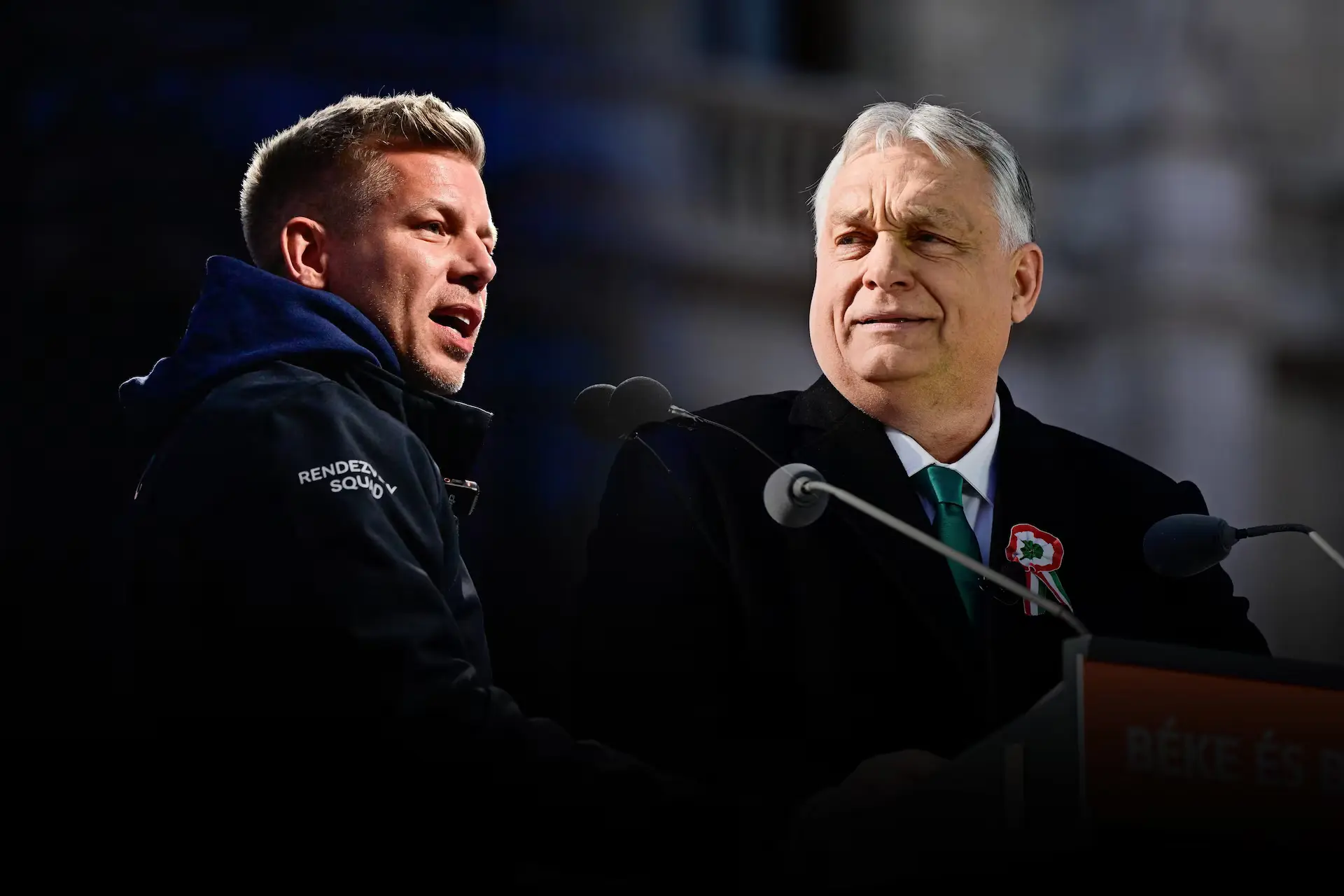
This is why leaders from Argentina’s Javier Milei to El Salvador’s Nayib Bukele to Chile’s José Antonio Kast studied and borrowed from the Orbán playbook. It was not a blueprint for failure. It was, for 16 years, a blueprint for winning—and for governing in a way that delivered tangible outcomes (low migration, low unemployment, energy stability) that many Western European governments could not match.
Why He Lost
The explanations split along predictable lines. Orbán’s critics say Hungarians rejected authoritarianism, corruption, and Russian alignment. His supporters say three years of economic stagnation—driven in large part by the EU’s own sanctions regime, the Iran war’s energy shock, and Brussels’ punitive freezing of €17–20 billion in Hungarian funds—eroded the economic foundation that kept voters loyal. Matt Schlapp, chairman of the American Conservative Union which hosted CPAC conferences in Budapest, framed it bluntly: “The people of Hungary were saying, ‘We’re having a difficult time with inflation, the economy, and the war. Let’s try the new guy.’”
The truth likely includes elements of both narratives. Corruption allegations around Orbán’s inner circle had accumulated for years. The cost-of-living crisis hit Hungarian households hard, with the forint losing 20% against the euro during Orbán’s tenure. And the Iran war’s energy fallout—which drove European energy prices to crisis levels—made American association politically toxic at exactly the moment Vice President JD Vance arrived in Budapest to campaign for Orbán. Romanian far-right MEP Diana Sosoaca called the Vance visit “the biggest mistake he could have made before the elections.” The factor that may matter most, however, is that Magyar is not a leftist or a liberal. He is a former Fidesz insider who broke with the party in 2024 and sits within the European People’s Party, the EU’s mainstream center-right. He ran on anti-corruption and healthcare reform, not on reversing Orbán’s migration policy. Hungarian voters did not reject nationalism. They rejected what they perceived as a government that had become more interested in enriching its circle than serving its people.
What Changes—and What Doesn’t
The geopolitical consequences are immediate. Magyar has pledged to lift Hungary’s veto on the €90 billion ($105 billion) EU loan to Ukraine—the single largest aid package that any member state had blocked. He announced his first trips as prime minister would be to Warsaw, Vienna, and Brussels, explicitly reorienting Hungary toward the EU mainstream. The €17–20 billion in frozen EU funds, withheld over rule-of-law disputes, will likely be released as Magyar implements judicial and institutional reforms. The forint surged 2.5% overnight to its strongest level since February 2022, and Morgan Stanley had estimated a potential 10% rally in a Tisza supermajority scenario. Magyar has pledged a path to euro adoption by 2030.
For Russia, the loss is strategic. Orbán was Moscow’s most effective voice inside the EU, consistently blocking or delaying sanctions escalation, preserving energy trade, and—according to recent reporting—allowing a senior government official to share the contents of EU discussions with the Kremlin. Poland’s Prime Minister Donald Tusk posted “Russians, go home!” in Hungarian on X within minutes of the result. For Trump and the MAGA movement, which held Orbán up as the model of conservative governance in practice, the defeat is a high-profile setback—though Schlapp and other American conservatives have framed it as an economic vote rather than an ideological rejection.
The Lesson for Latin America
The Atlantic Council warns that Brussels should not release frozen funds without demanding real reforms, cautioning that “too swift and lenient a release could fuel a conservative backlash across the bloc.” That warning contains the deeper lesson: Orbán lost not because his ideas were unpopular but because his government stopped delivering on them. The migration policy remains popular. The sovereignty-first stance resonates. The low-tax model attracted investment. What failed was the perception of corruption, economic stagnation, and a ruling circle that appeared to serve itself. For Latin American leaders who have drawn from Orbán’s model—Milei on deregulation, Bukele on security, Kast on border control—the message is not that populism fails. It is that populism without performance has a shelf life, and 16 years is apparently it. The model that made Orbán the most successful nationalist leader in modern European history is not discredited. It was just operated, in the end, by a government that forgot why it was elected.
This article was produced by The Rio Times’ automated newsroom system. How we use AI · Report an error · Editorial responsibility: Matthias Camenzind, Editor-in-Chief
LatAm Markets: Live Signals → — real-time movers, turnover leaders and FX across Latin America.