Escobar Cocaine Hippos – Billionaire Offers to Save Them From Cull
COLOMBIA · SOCIETY
Key Facts
—The legacy. Colombia’s cocaine hippos descend from four animals drug lord Pablo Escobar imported in the 1980s for his private zoo.
—Runaway numbers. The herd has grown to around 160 animals and could reach 500 by 2030, officials warn.
—The plan. Colombia approved a plan to cull roughly 80 of the animals, alongside sterilisation and some transfers abroad.
—The rescue offer. Indian billionaire heir Anant Ambani has offered to relocate 80 hippos to his Vantara sanctuary in Gujarat.
—Why it is hard. The animals are an invasive species with no natural predator, and sterilisation alone has failed to slow them.
—The cost. A previous overseas-transfer plan was estimated at about $3.5m, underlining how expensive relocation is.
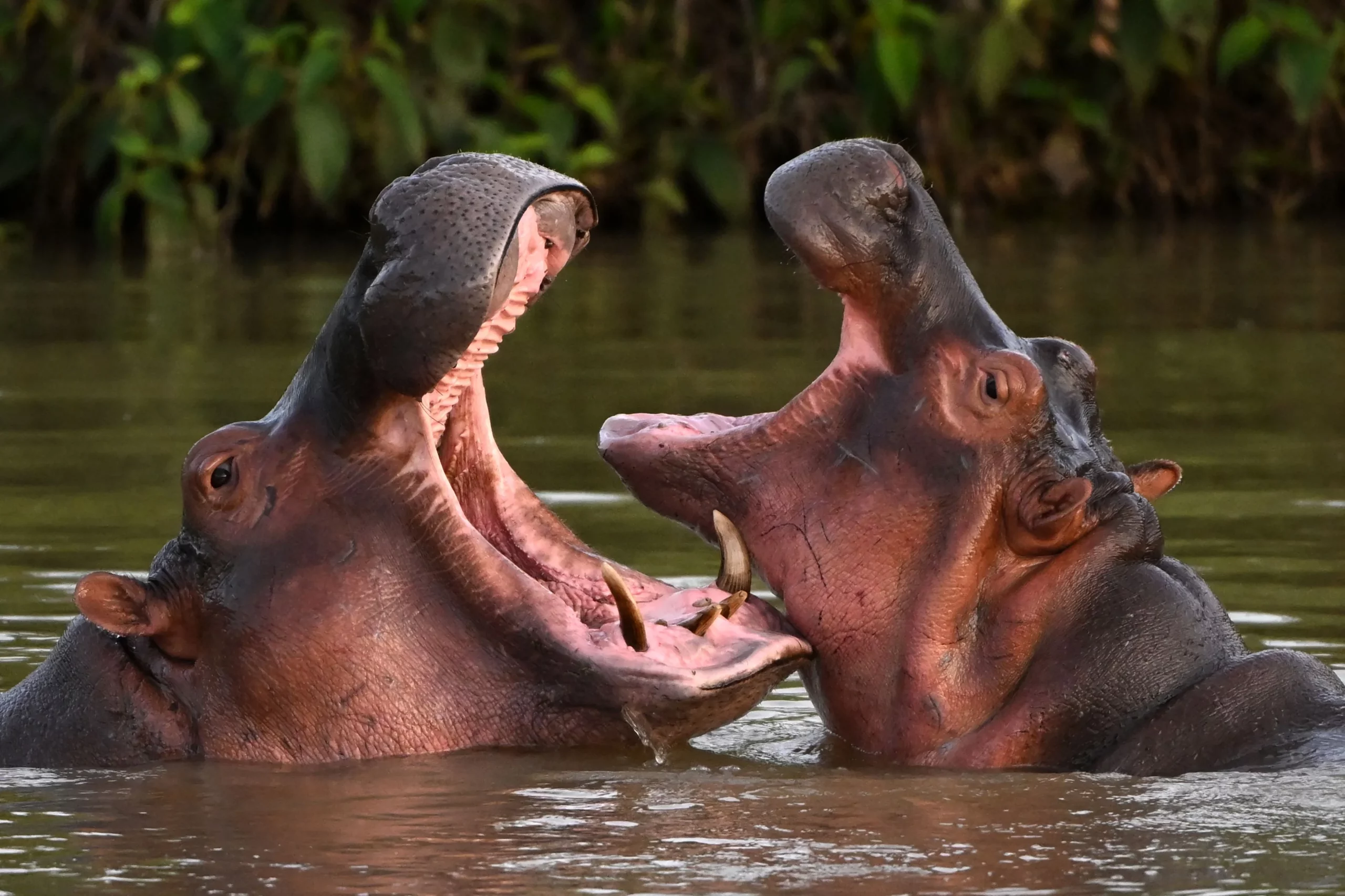
Colombia’s cocaine hippos, the descendants of animals Pablo Escobar brought to his private zoo, have multiplied to around 160 and now face a government cull, prompting an Indian billionaire to offer to fly 80 of them to a sanctuary rather than see them killed.
How the cocaine hippos got there
In the 1980s, at the height of his power, Escobar built a sprawling estate called Hacienda Napoles and stocked it with exotic animals. Among them were four hippos, native only to Africa.
After he was killed in 1993, most of his menagerie was dispersed, but the hippos were left behind. They found the warm, water-rich country around the Magdalena River well suited to breeding.
Four decades on, that handful has become a herd of roughly 160. Officials warn the population could swell to 500 by 2030 if nothing changes.
Hacienda Napoles itself survives as a theme park and tourist draw, and the hippos have become an unlikely local attraction. That dual status, as both nuisance and curiosity, has complicated every attempt to deal with them.
Why Colombia wants to act
Colombia has declared the hippos an invasive species. With no natural predator, they roam freely, disturb local waterways and have come into conflict with people living along the rivers.
Scientists say their waste alters the chemistry of the water, threatening native species such as manatees. The animals are also dangerous, with reports of charges at fishermen and at least one killed on a road.
Years of sterilisation have not slowed the herd. Catching and castrating a multi-tonne wild hippo is slow, costly and risky, and the births have outpaced the procedures.
Against that backdrop, Colombia approved a plan that pairs sterilisation and some overseas transfers with the culling of about 80 animals. The decision drew immediate criticism from animal-welfare campaigners.
Supporters of the plan say it is the only realistic way to stop the herd doubling again within a few years. Opponents counter that killing the animals is both cruel and a public-relations disaster for a country still shaking off its narco past.
The billionaire’s rescue offer
In late April, Anant Ambani, son of Indian tycoon Mukesh Ambani, offered a different path. He proposed relocating 80 of the hippos to Vantara, his wildlife centre in Jamnagar, in the Indian state of Gujarat.
In a letter to Colombia’s environment minister, Vantara’s leadership appealed to the government to reconsider the cull. They said the centre would provide lifelong care in an enriched habitat designed to mirror the animals’ current surroundings.
These animals did not choose where they were born, Ambani said, framing them as sentient beings worth saving through a humane solution. Vantara bills itself as one of the world’s largest wildlife rescue and conservation centres.
The facility says it already houses tens of thousands of animals across many species, from elephants and big cats to crocodiles. It has also drawn scrutiny over the scale and sourcing of its collection.
A debate with no easy answer
Relocation is far from simple. Moving giant animals across the world is enormously expensive, with a previous overseas-transfer plan estimated at around $3m to $4m, and only a fraction of the herd could realistically be moved.
A single hippo can weigh well over a tonne and does not travel easily. Each animal must be sedated, crated and flown thousands of miles, then settled into an unfamiliar climate and diet.
There is also the question of who pays and who takes responsibility for the animals once they arrive. A private rescue offer, however generous, raises long-term welfare and oversight issues of its own.
An earlier transfer sent ten hippos to Mexico, but it barely dented the total. Even a successful move of 80 would leave most of the population in place and still growing.
Conservationists are themselves divided. Some argue that humane relocation is a moral duty; others say the priority must be protecting Colombia’s native ecosystems, even if that means culling.
The episode has become a parable about unintended consequences, where one man’s vanity zoo became a national ecological headache decades later. For now, Colombia’s government has not publicly accepted the offer, and the future of the hippos remains unresolved.
A court case in recent years even saw the hippos granted limited legal recognition abroad, a measure of how far the saga has travelled. Whatever Colombia decides, the story has long since outgrown the estate where it began.
More: Colombia news in English, every day from The Rio Times.
Frequently Asked Questions
What are Colombia’s cocaine hippos?
They are hippos descended from four animals Pablo Escobar imported in the 1980s for his private zoo. After his death they bred in the wild and now number around 160.
Why does Colombia want to cull them?
They are an invasive species with no natural predator, damaging waterways and endangering people and native wildlife. Sterilisation alone has failed to control their numbers.
Who offered to save them?
Indian billionaire heir Anant Ambani offered in late April to relocate 80 hippos to his Vantara sanctuary in Gujarat. He asked Colombia to reconsider the cull.
Can relocation solve the problem?
Only partly. Moving the animals is costly and slow, and even relocating 80 would leave most of the growing herd in Colombia.
Connected Coverage
For more on the long saga, see our earlier feature on Colombia’s race to tackle Escobar’s wildest legacy, the criminal afterlife in the return of an Escobar-era supplier, and the wider drug economy in how cocaine links Colombia, Ecuador and Mexico.
This article was produced by The Rio Times’ automated newsroom system. How we use AI · Report an error · Editorial responsibility: Matthias Camenzind, Editor-in-Chief