Why Markets Are Pricing a “Godzilla” Weather Risk in Brazil
Markets
Key Facts
The El Niño Brazil markets story is no longer just a weather forecast: banks are now turning the next growing season into a trade, mapping which stocks, the currency and inflation stand to move.
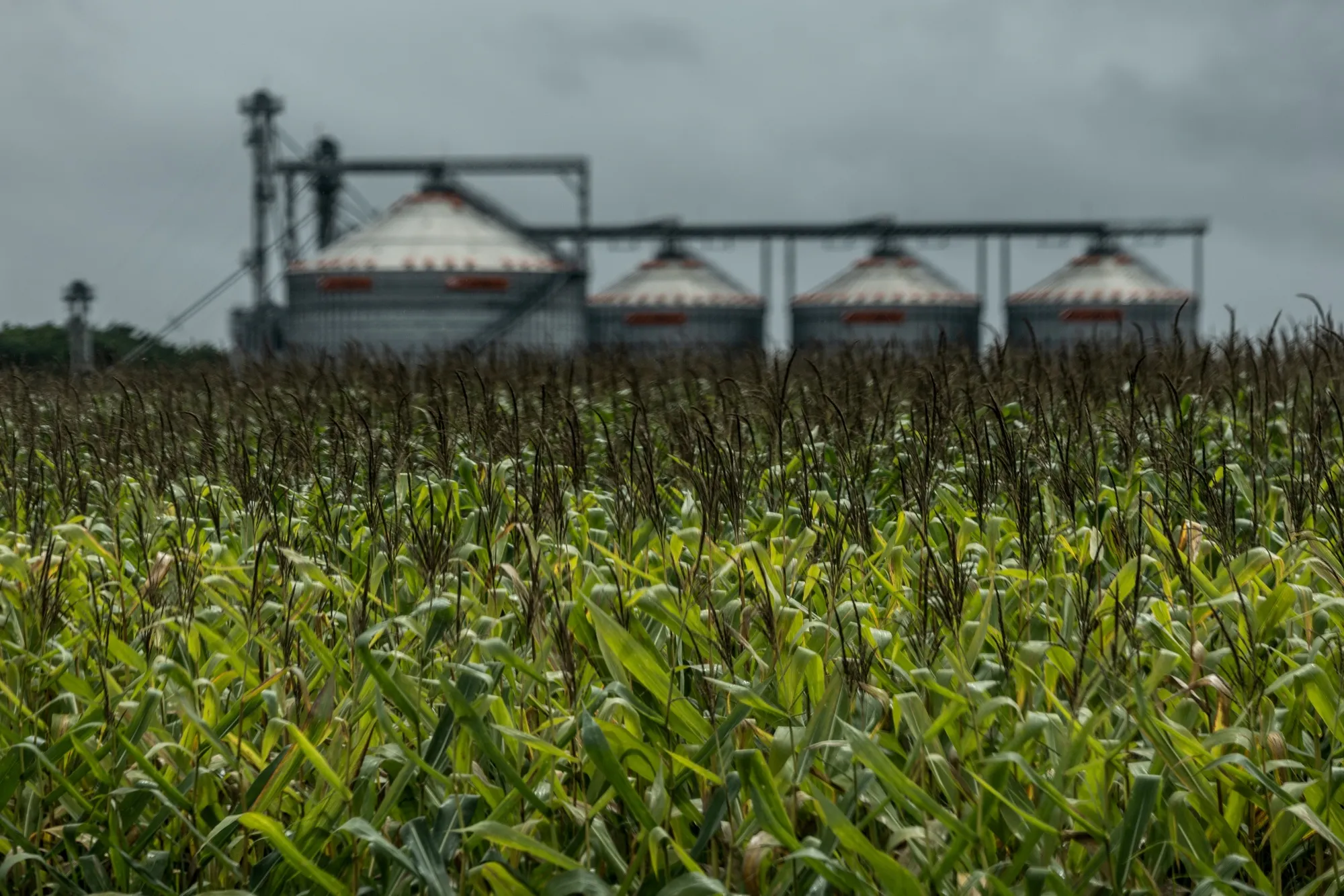
A weather pattern nicknamed the “El Niño Godzilla” for its expected strength has moved from the farm pages to the trading desk. The phenomenon warms the Pacific and reshapes rainfall across the world, and Brazil sits squarely in its path.
US forecasters put the chance of a very strong event at sixty-three percent, with ocean temperatures running two degrees or more above normal late this year. For a country where farming drives a large slice of the economy, that is a market event, not just a meteorological one.
How El Niño Brazil markets turn weather into a trade
Analysts at the bank Itaú BBA have named Brazil a key market to watch, treating climate readings as an early warning for the currency and for central-bank decisions. Their logic is that weather feeds straight into the supply of commodities, which then moves food prices, the exchange rate and company profits.
The striking part is how little has to go wrong to matter. The bank’s base case is still a record soybean crop of around a hundred and eighty-two million tonnes in the coming season.
But a shortfall of just six percent would wipe out roughly eleven million tonnes of supply. That alone would drag the global stocks-to-use ratio, a key gauge of how tight the market is, from twenty-eight percent down to twenty-five.
A drop like that would push prices up on the Chicago exchange, feed into Brazil’s food inflation, strain the real and weigh on farm-sector growth. A small crop miss, in other words, ripples far beyond the field.
Which companies the El Niño Brazil markets call favors
The weather splits the country in two, and the stock map follows. Heavy rain should protect soy and corn in the South, while the Centre-West and the northern farm belt known as MATOPIBA face sudden dry spells and delayed planting of the second crop.
Large, diversified growers such as SLC Agrícola and BrasilAgro can spread that risk across regions and lean on irrigation. The meatpacker Minerva is flagged as the most sensitive to the event, given its reliance on South American beef, while higher grain costs would squeeze the chicken-and-pork giants.
Beyond the farm, the barge operator Hidrovias do Brasil is named the most vulnerable, as low river levels could choke shipping. The insurer BB Seguridade looks shielded, since its crop book leans on the South, where the El Niño actually lowers drought risk.
Live Market IntelligenceBrazil — Live Market Board
Rio Times · Live Market Intelligence
Brazil — Live Market Board
+0.46%
183,827.59
+0.46%
65,071.30
+0.20%
11,055.91
-0.73%
2,782,561
-0.59%
2,558.92
-0.79%
60,220.45
+0.32%
| Instrument | Last | Change | YoY | Prev. | High | Low | Volume |
|---|---|---|---|---|---|---|---|
| IBOV | 183,827.59 | +0.46% | +21.85% | 182,991.13 | 168,310 | 167,142 | — |
| USD/BRL | 5.16 | +0.01% | -5.13% | 5.16 | 5.18 | 5.14 | — |
| SELIC | 14.00% | — | — | — | — | — | |
| PETR4 | 41.64 | -0.05% | +35.19% | 41.66 | 41.97 | 41.15 | 41,499,400 |
| VALE3 | 72.97 | +0.83% | +30.75% | 72.37 | 73.54 | 72.66 | 17,658,000 |
| ITUB4 | 38.60 | -1.03% | +4.57% | 39.00 | 39.34 | 38.39 | 29,487,800 |
| BBDC4 | 16.85 | +0.36% | +3.50% | 16.79 | 16.90 | 16.67 | 19,416,900 |
| BBAS3 | 19.37 | +0.47% | +0.73% | 19.28 | 19.44 | 19.16 | 11,069,200 |
| B3SA3 | 14.26 | -0.21% | +12.73% | 14.29 | 14.47 | 14.11 | 33,037,800 |
| ABEV3 | 14.89 | -0.80% | +21.91% | 15.01 | 15.07 | 14.81 | 16,453,100 |
| WEGE3 | 47.59 | +0.49% | +29.99% | 47.36 | 48.08 | 47.36 | 3,364,600 |
| PRIO3 | 59.14 | -0.19% | +50.67% | 59.25 | 59.81 | 58.74 | 3,325,600 |
| SUZB3 | 41.33 | +2.35% | -23.55% | 40.38 | 41.48 | 40.35 | 3,914,900 |
| RENT3 | 34.68 | -0.09% | +0.84% | 34.71 | 34.96 | 34.35 | 7,979,100 |
| AZZA3 | 15.89 | -2.63% | -53.76% | 16.32 | 16.42 | 15.82 | 1,330,300 |
| CSNA3 | 4.30 | +0.47% | -42.65% | 4.28 | 4.41 | 4.26 | 10,076,100 |
| GGBR4 | 24.69 | +2.19% | +51.38% | 24.16 | 24.85 | 24.18 | 7,047,600 |
| ENEV3 | 24.21 | -1.38% | +70.49% | 24.55 | 24.64 | 23.99 | 9,297,000 |
Why a foreign reader should care
For an investor abroad, this is a reminder that Brazilian assets carry a weather premium that has little to do with company management. Latin America’s growing weight in the world grain trade means a dry spell in Mato Grosso can move prices and portfolios far away.
It also feeds the bigger macro picture. Food is a heavy component of Brazilian inflation, so a bad crop could keep the central bank from cutting interest rates as fast as hoped, with knock-on effects for bonds and the currency.
The honest caveat is that this is a risk map, not a forecast of disaster. The base case remains a bumper harvest, and forecasters caution that the event’s true strength will only become clear closer to the planting window late in the year.
Background: Brazil Overhauls Tax System: A New Era for Business and Economy.
Frequently Asked Questions
What is the “El Niño Godzilla”?
It is an informal nickname for an unusually strong El Niño, the climate pattern caused by warming in the Pacific Ocean. Forecasters see a high chance of a very strong event late in 2026, with sea temperatures well above normal, though scientists caution the label is media shorthand rather than a formal category.
Why do El Niño Brazil markets matter to investors?
Brazil is one of the world’s largest grain suppliers, so its weather moves global prices for soy, corn and sugar. Those swings feed into food inflation, the exchange rate and the profits of farm, food, energy and shipping companies, which is why banks now track the forecast as a market signal.
Will the harvest actually fail?
Probably not, on current expectations. The base case from analysts is still a record soybean crop of around a hundred and eighty-two million tonnes, with the El Niño seen as a risk to that outlook rather than a likely cause of outright failure.
Connected Coverage
› Super El Niño Forming in 2026 Threatens Brazil Food Inflation
› Brazil’s Soybean Boom Slows to Its Weakest Pace in 20 Years
This article was drafted with automated assistance and reviewed before publication. How we use AI · Report an error
Read More from The Rio Times