Ecobank Guinea Bailiffs Case Explained as Strike Hits Courts

GUINEA · ANALYSIS
Key Facts
- —The country Guinea is a West African state led by Mamadi Doumbouya, home to vast bauxite reserves and the Simandou iron ore project.
- —What happened On Monday, 12 October, Guinea’s economic crimes court kept two bailiffs in detention and adjourned their trial to 19 October.
- —The charges Fraud to obtain a judgment, forgery of public documents, use of forgeries, impersonating an office and complicity, on a complaint by Ecobank Guinea.
- —The money A regional business court ordered Ecobank Guinea to pay US$2 million; a payment demand served in May 2026 seeks over US$4.6 million.
- —The fallout Guinea’s bailiffs have stopped all work since midnight on 8 October, stalling summonses and the enforcement of court rulings.
- —Still open Whether the court convicts or frees the two men, and whether the bank must still pay the regional award.
The Ecobank Guinea bailiffs case took a new turn on Monday, 12 October, when Guinea’s economic crimes court kept two court officers in jail. The judges adjourned the trial to Monday, 19 October, for the prosecution’s closing demands and the lawyers’ pleadings.
For foreign firms, the case tests how court rulings are enforced in Guinea, where bailiffs have stopped work in protest. Ecobank Guinea, the local arm of a pan-African banking group, accuses the two of forging the paperwork behind a multimillion-dollar judgment.
Who the Two Detained Bailiffs Are
In Guinea, a bailiff, or huissier de justice, is a sworn officer who serves court papers and enforces judgments. “Il ne peut pas y avoir d’exécution d’une décision de justice sans l’intervention d’un huissier”, lawyer Mohamed N’Daye Kaba told Guineematin.
In English: “There can be no enforcement of a court decision without the intervention of a bailiff.”
Sory Daouda Camara is honorary president of the National Chamber of Bailiffs of Guinea, the profession’s official body, Guinéenews reported. Mandjou Sangaré was a trainee in his office in 2018 and has since become a bailiff, the court’s special prosecutor says.
Both men have been held in the civil prison of Coyah, near Conakry, since 29 September. Guineematin and Mosaïque Guinée report that Camara rejected the charges on 7 October: “Je ne me reproche rien” (“I have nothing to reproach myself for”).
How the Ecobank Guinea Bailiffs Case Began
The case goes back to April 2018, when Sangaré brought a garnishment notice to the offices of Ecobank Guinea. The notice, bearing Camara’s seal, targeted money linked to a debtor company called Africof.
Ecobank’s deputy legal director, Alexandre Koulémou, told the court the bank asked for proof that the seizure order had first been served on Africof. The bank thought the trainee had gone to fetch it.
Instead, Ecobank Guinea was accused of refusing the notice and was sued to pay the debt itself, Guinéenews and Mosaïque Guinée reported. Koulémou said the bank later found the notice had been served by an unsworn clerk.
A court in Kaloum, Conakry’s business district, annulled the notice on 29 November 2018, according to the special prosecutor’s 5 October statement. The creditor took the dispute to Conakry’s Court of Appeal and then to a regional court.
That court is the Common Court of Justice and Arbitration (CCJA) in Abidjan. It is the top court of OHADA, a business-law system Guinea shares with other African states.
In a ruling of 2 October 2025, the CCJA ordered Ecobank Guinea to pay a sum Koulémou put at US$2 million. Three seizures of the bank’s funds and vehicles followed, he said.
On 12 May 2026, the creditor served a demand for US$4,602,988 plus 3.1 billion Guinean francs (about US$352,000), the prosecutor says. Conversions here use about 8,800 francs to the US dollar, the rate on 12 October 2026.
Ecobank lawyer Pépé Antoine Lama said interest explains the jump from US$2 million to over US$4.6 million. Koulémou added that Africof’s accounts had been closed four years before 2018.
What the Defence and the Bank Argue
Prosecutors charge the two men with fraud to obtain a judgment, forgery of public and authentic documents, use of forgeries, impersonating an office and complicity. Both are presumed innocent.
Defence lawyer Kouyaté told Guineematin that the Court of Appeal and the CCJA had both found the notice valid. He asked why the bank waited eight years to complain, arguing that the limitation period is three years.
“Ce n’est qu’une diversion” (“It is only a diversion”), Kouyaté said, arguing the case aims to stop the creditor from collecting. After bail was refused again, he added: “La liberté est le principe et la détention, l’exception” (“Liberty is the rule, detention the exception”).
Lama said he filed a 2001 ruling that, in his reading, shows the creditor owed Africof money, not the reverse. “On ne doit pas escroquer pour obtenir des décisions de justice” (“One must not commit fraud to obtain court decisions”), he said.
He stressed that Ecobank Guinea is not asking the court to overturn the CCJA ruling. Its aim is to prove that the ruling rested on false documents.
The creditor, lawyer Halimé Saad Chalhoub, is also prosecuted on Ecobank’s complaint, the special prosecutor says. The prosecutor says she left Guinea after the preliminary inquiry; Lama told Guineematin she is summoned for 19 October.
What the CRIEF Is and Its Record
The Court for the Repression of Economic and Financial Offences, or CRIEF, was created by decree of Mamadi Doumbouya in December 2021, after his coup. Doumbouya is now Guinea’s president.
It hears economic crimes worth at least one billion Guinean francs (about US$114,000), which is why a private bank’s fraud complaint landed there.
The court was set up to pursue embezzlement and corruption, and its best-known defendants are former officials. Former prime minister Ibrahima Kassory Fofana and former parliament speaker Amadou Damaro Camara were convicted there.
Both were allowed abroad for medical care in September 2026. Doumbouya said it was “ni une amnistie, ni une grâce” (“neither an amnesty nor a pardon”), Guinéenews reported.
The US State Department’s 2025 Investment Climate Statement says the CRIEF has had “limited success in closing corruption cases involving public officials”. It adds that the court has been described as understaffed and underfunded.
In a statement published by Mosaïque Guinée on 5 October, the CRIEF’s special prosecutor said it acts within the law. It added that it will yield to no outside pressure.
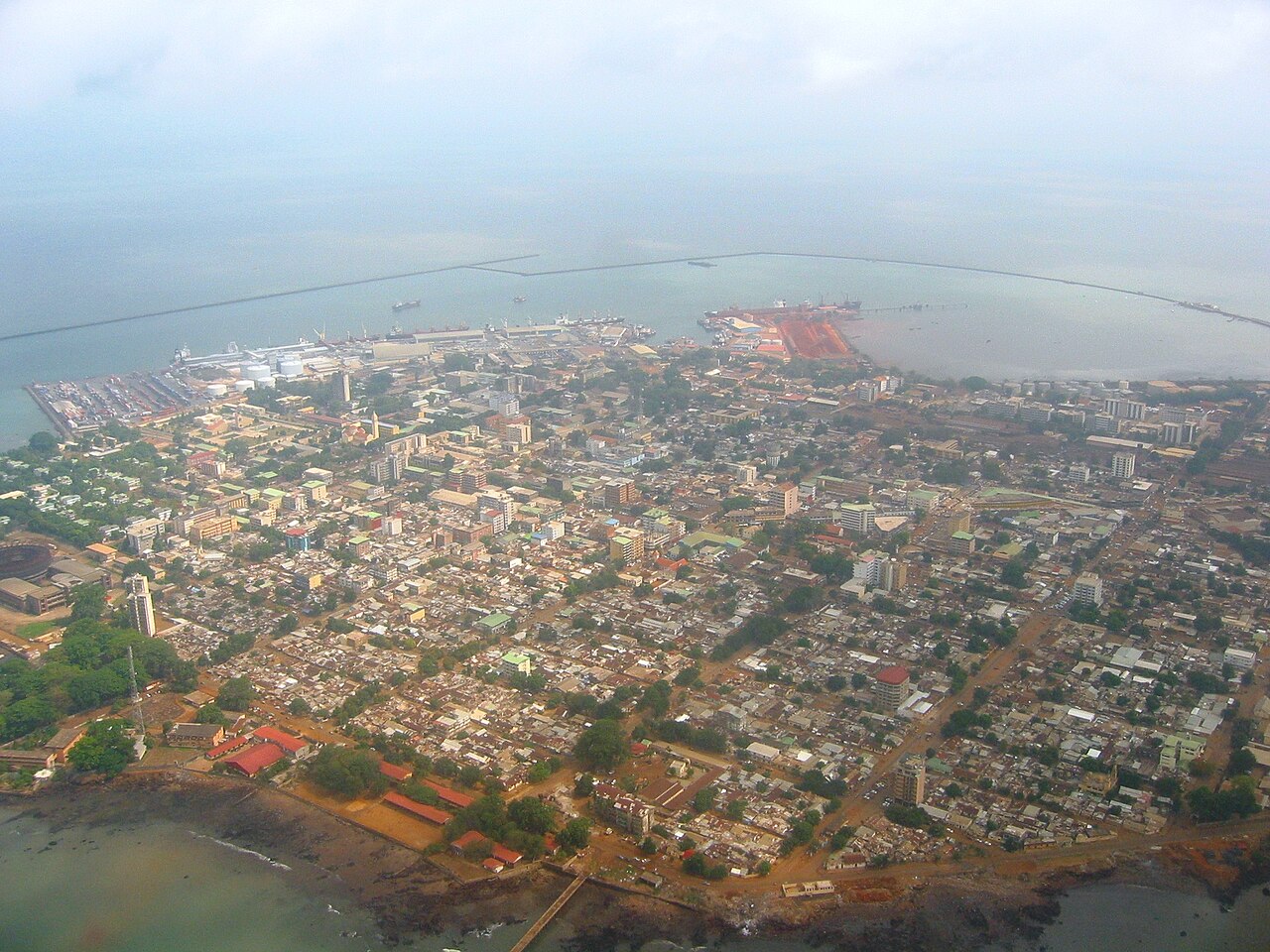
Why the Bailiffs’ Strike Matters
The National Chamber of Bailiffs halted all bailiff work nationwide from midnight on Thursday, 8 October. The move followed the court’s refusal of bail on Wednesday, 7 October.
On 12 October, the chamber’s secretary general, Jean-Pierre Pépé Béavogui, said the stoppage stands “jusqu’à nouvel ordre” (“until further notice”). He told Guineematin and Mosaïque Guinée that bailiffs do not feel safe at work.
Kaba, the lawyer, said he cannot file an urgent case over a container held at Conakry’s port, because no bailiff will serve the papers. People who have won judgments cannot have them enforced, he added.
What It Means for US Readers
Ecobank Transnational, the Lomé-based parent group, has a presence in 35 sub-Saharan African countries, according to its own history. Its shares trade in Abidjan, Accra and Lagos.
The State Department says Guinea’s judiciary “lacks independence” and that “most legal cases take years and significant legal fees to resolve”. It advises investors to put international arbitration clauses in major contracts.
It also notes that investors can appeal commercial rulings to a regional body in Abidjan. Ecobank Guinea lost at that level, and now pursues the bailiffs in a national criminal court.
US companies active in Guinea, such as rail firm Wabtec with its US$700 million-plus maintenance deal, rely on the same courts. While the strike lasts, firms with unpaid bills cannot have papers served or rulings enforced.
For background on the country, see the Rio Times Guinea explainer on bauxite, Simandou and Doumbouya’s rule.
What Is Not Known
The court has not said when it will rule after the 19 October pleadings. The prosecution’s sentencing demands are also still to come.
It is unclear how a conviction would affect the CCJA award, since Ecobank Guinea says it is not seeking to overturn it. Whether Chalhoub will appear is also unclear.
The strike has no end date; the chamber says it will last until its members receive guarantees that they can work safely.
More: Africa news in English, every day from The Rio Times.
Frequently Asked Questions
What is the Ecobank Guinea bailiffs case?
It is a criminal trial in which Ecobank Guinea accuses two bailiffs of fraud and forgery over a 2018 garnishment notice. That notice led a regional court to order the bank to pay US$2 million.
Who are the two bailiffs?
Sory Daouda Camara is honorary president of Guinea’s National Chamber of Bailiffs. Mandjou Sangaré was a trainee in his office in 2018; both are held in Coyah prison.
What is the CRIEF?
It is Guinea’s special court for economic and financial offences, set up by Mamadi Doumbouya in December 2021. It has convicted former officials, including a former prime minister.
When is the next hearing?
The court adjourned the case to Monday, 19 October 2026, for the prosecution’s closing demands and the lawyers’ pleadings. No verdict date has been set.
Why are Guinea’s bailiffs on strike?
Their national chamber halted all work from midnight on 8 October over the detention of the two men. It says the strike lasts until bailiffs get guarantees to work safely.
Sources: Guinéenews (12 Oct hearing), 12 October 2026; Guineematin (12 Oct hearing), 12 October 2026; Mosaïque Guinée (Ecobank testimony), 12 October 2026; Mosaïque Guinée (bailiffs’ strike), 12 October 2026; Guineematin (lawyer Kaba on the strike), 12 October 2026; Guinéenews (strike declared), 8 October 2026; CRIEF special prosecutor, communiqué No. 592/CRIEF/PPS/2026, 5 October 2026; Guineematin (7 Oct hearing), 7 October 2026; Guineematin (strike maintained), 12 October 2026; Guinee360 (12 Oct hearing), 12 October 2026; Vision Guinée (prosecutor statement), 5 October 2026; Mosaïque Guinée (trial opens), 7 October 2026; Mosaïque Guinée (CRIEF prosecutor statement), 5 October 2026; Guinéenews (Kassory and Damaro), 19 September 2026; US State Department, 2025 Investment Climate Statement: Guinea, 2025; Ecobank group history, accessed 13 October 2026.
Editorial responsibility: Matthias Camenzind, Editor-in-Chief · Editorial standards · Report an error