Seeking Distance From Bolsonaro, Two Former Allies Target General Elections in 2022
RIO DE JANEIRO, BRAZIL – Potential opponents of President Jair Bolsonaro in 2022, the governors of São Paulo, João Doria of the Social Democracy Party (PSDB), and Rio de Janeiro, Wilson Witzel, of the Social Christian Party (PSC), ended 2019 distanced from Bolsonaro, who led them to victory in the election, as they pursue strategies that make them competitive nationally.
But both of them are bruised in the very area that brings them closer to the president: public safety. Witzel, a former judge, saw his government break the record for police killings and Doria closed the year forced to dismiss police officers after recording nine deaths at a funk dance.

Anchored in the conservative wave that marked the 2018 race, both campaigned harder against crime, but this year, despite reaffirming their policies in the area, they tried to moderate their positions in an attempt to counter the federal government.
If they have strategies in common, the commanders of the main state governments differ in their management priorities and the positions they hold within their parties. In his second executive position, Doria, who was mayor of São Paulo, governs with more financial slack and, therefore, can project large works and actions.
In addition, he exerts influence within PSDB, a party that has greater history and nationwide reach when compared to PSC. In this context, the situation would improve for Witzel if the project that he has been taking on, the fusion between PSL and PSC, came off of paper into reality, since PSL, Bolsonaro’s former party, enjoys the largest share of the government political party fund and TV time.
“Doria has not only São Paulo, but bases in other states. He’s ahead in this fight,” says political scientist Paulo Baía of the Federal University of Rio de Janeiro (UFRJ). Another factor favors Doria, according to analyst Rodrigo Prando, of Mackenzie. “He has set up a ministerial secretariat.”
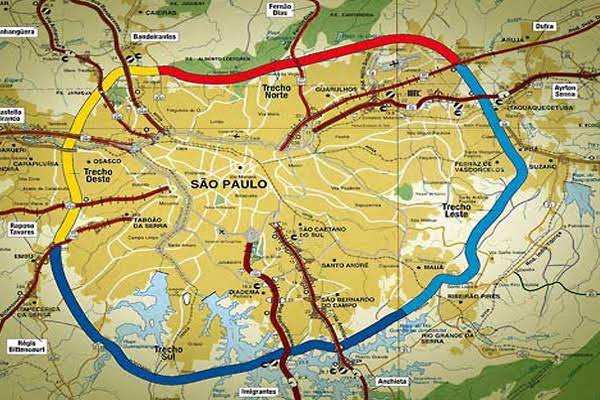
Among the projects he plans to develop this year are works pledged by his party for years, such as Line 6-Orange Metro and the northern stretch of the Rodoanel ringroad. Both are paralyzed. Doria should also start a process of privatization of SABESP, the state-owned water and sanitation company, and a revision of state highway concession contracts, which should yield billions extra to the government.
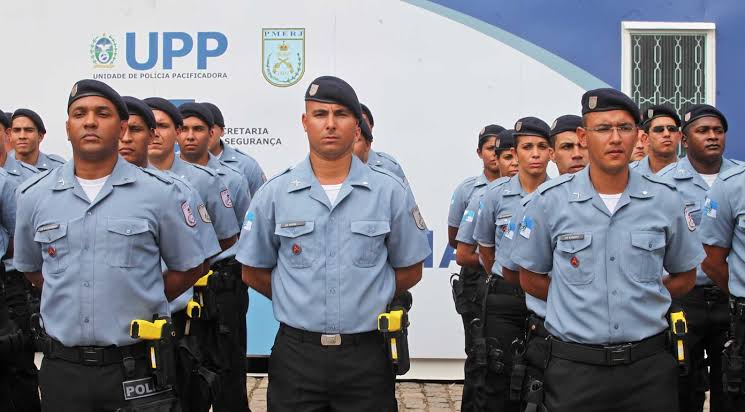
Rio is in a different situation, trying to get out of a serious fiscal crisis. In 2020, with a budget deficit of R$10.7 (US$2.67) billion, Witzel will seek an extension of the Fiscal Recovery Regime (RRF), which ends in September. The plan is to extend repayment obligations for another three years. In the safety area, the goal is to invest in social actions in the favelas, with the resurrection of the Police Pacification Units (UPPs), without abandoning the policy of confrontation.
Antagonism
In political discourse, besides trying to counteract the ideals that rule Bolsonaro’s government, Witzel bases his antagonism on the governing method. He called the president “unprepared” and has declared that the Planalto does not know how to dialogue with governors. “His agenda is much more ideological than specific,” he said over coffee with the press.
“Witzel has a double strategy. He retains the speech that gave him the victory for certain groups, a base that elected him and that he disputes with Bolsonaro: that of safety,” Baía says.
While Bolsonaro does not have a defined model of articulation with Congress, both the governor of the state of Rio de Janeiro and São Paulo have been able to play with traditional politics in their respective state assemblies, and have achieved a majority of supporters.
However, the balance of the year leaves Witzel with an undignifying mark even for those who said, in the campaign, that the police had to “aim at the head”: in his administration, the deaths from police intervention broke records in the state.
They were 1,686 by November 30th, the last number available at the Public Safety Institute (ISP). By that time, the number had already been the highest since 1998, the beginning of the historical series.
Doria, who celebrates a drop in homicide rates in 2019, had to deal with a crisis in the last month of the year that had national coverage, although negative.
During police action in Paraisópolis, the capital’s second-largest favela, nine youths attending a funk dance died asphyxiated in alleys fleeing from the police. The release of images depicting violence from agents further complicated Doria’s position, who was forced to retreat from an initial stance of approval of police conduct by ordering the dismissal of 38 State Police officers.
But overall, according to Prando, Doria had more positive than negative points. Among them, the analyst highlights movement in the field of economics and international relations. “It’s one more message he sends to Bolsonaro and the federal government.”
More: Brazil news in English, every day from The Rio Times.
This article was produced by The Rio Times’ automated newsroom system. How we use AI · Report an error
Read More from The Rio Times