Dfcu Half-Year Loss: Crane Bank Case in London Wipes Out the Profit
Uganda · FINANCE
Key Facts
—Half-year loss: dfcu Limited posted a net loss of Shs15.8 billion (about US$4.3 million) for the six months to 30 June 2026, against a Shs34.5 billion (about US$9.3 million) profit a year earlier.
—Legal cost driver: The loss was driven by a one-off legal cost provision connected to the Crane Bank litigation in the English High Court.
—Claim size: The claimants, led by Dr Sudhir Ruparelia, have quantified their claims at over £170 million in the London proceedings.
—Prior profitability: dfcu reported Shs74.9 billion (about US$20.2 million) profit after tax at group level in 2025, up from Shs72.1 billion (about US$19.5 million) in 2024, showing the loss is an exceptional item.
—Case timeline: The English court claim was filed in December 2020, and a UK Court of Appeal ruling in July 2023 allowed the dispute to proceed to trial.
—Origins: The Bank of Uganda intervened in Crane Bank in 2016 and transferred selected assets and liabilities to dfcu Bank in January 2017.
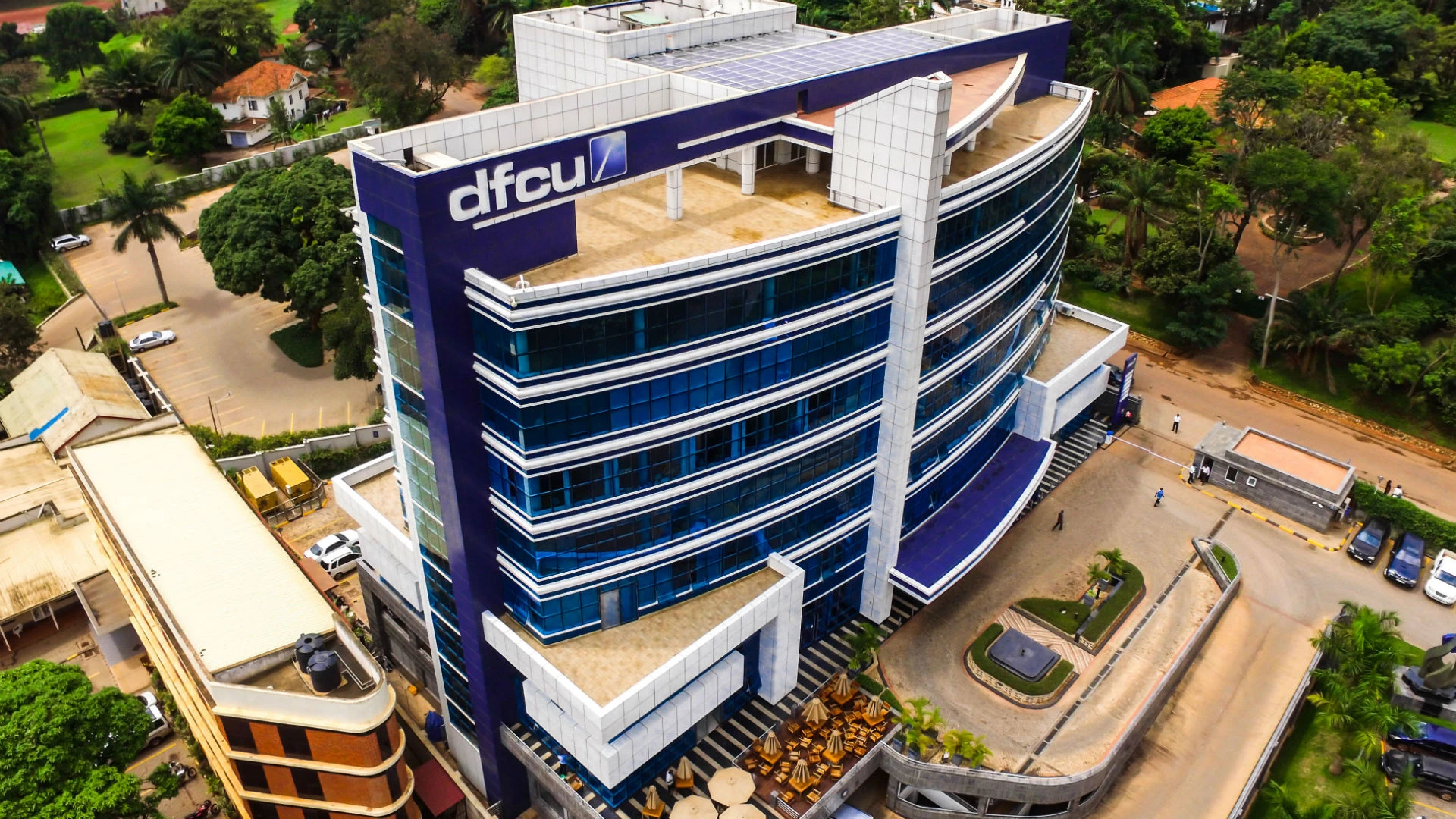
dfcu Limited has slipped to a half-year loss of Shs15.8 billion for the six months to June 2026, as legal costs from the long-running Crane Bank case in London’s English High Court weighed heavily on the Ugandan lender’s earnings.
The dfcu half-year loss in numbers
dfcu Limited warned investors that its unaudited results for the six months ended 30 June 2026 would show a loss, turning round a Shs34.5 billion profit a year earlier. The bank attributed the reversal to substantial legal expenses from the Crane Bank case in the English High Court.
Local reporting confirmed the net loss at Shs15.8 billion for the period, explicitly linking it to a one-off legal cost provision connected to the Crane Bank matter. dfcu has not disputed the existence of the litigation burden and says the loss reflects exceptional historical legal costs.
The bank stressed that the loss does not change the underlying health of the business. The message to shareholders is that this is a legal-cost shock, not an operating collapse.
How the Crane Bank case reached London
The dispute traces back to 2016, when the Bank of Uganda intervened in Crane Bank amid financial instability and mismanagement concerns. In January 2017, the central bank transferred selected assets and liabilities of Crane Bank to dfcu Bank.
The claimants, led by Dr Sudhir Ruparelia, filed an action in the English courts in December 2020. They have quantified their claims at over £170 million, according to UK court materials.
A UK Court of Appeal ruling in July 2023 allowed the case to proceed to trial rather than being struck out on jurisdiction grounds. That decision kept the London litigation active and opened the door to mounting legal costs on both sides.
A strong bank hit by an exceptional charge
dfcu had just come off a strong run of annual results. The bank reported Shs72.1 billion (about US$19.5 million) profit after tax in 2024, up 151 percent from Shs28.7 billion (about US$7.8 million) in 2023.
For 2025, dfcu reported Shs74.9 billion (about US$20.2 million) profit after tax at group level and Shs81.5 billion (about US$22.0 million) at bank level. Total income rose 16 percent to Shs526 billion (about US$142 million), while non-funded income climbed 20 percent to Shs108 billion (about US$29.2 million).
The 2026 half-year loss is therefore best framed as an exceptional legal overhang on an otherwise improved banking franchise. dfcu disclosed that Crane Bank litigation cost it Shs76.6 billion (about US$20.7 million) in 2025, up from Shs42.3 billion (about US$11.4 million) in 2024 — 23 percent of group operating costs. One caveat: the interim filing does not break out legal costs as a line item, so the attribution rests on what management has said rather than on the accounts.
Money, power and the fight over jurisdiction
The dispute sits at the intersection of Ugandan banking power, elite business rivalry, and the legacy of the 2016 Crane Bank collapse. The case remains politically sensitive because it involved the central bank’s intervention and the disposal of a major local lender.
dfcu says the transaction involved selected assets and liabilities of Crane Bank, and that the English High Court previously dismissed the claims for lack of jurisdiction. The bank argued that the Bank of Uganda had been acting in a regulatory capacity under Ugandan law.
On 30 October 2024 Judge Stephen Hofmeyr KC dismissed a dfcu application for security for costs, finding that the claimants had shown they could pay any costs awarded against them. dfcu separately obtained a personal undertaking from Sudhir Ruparelia. An earlier High Court ruling in October 2022 had found England had no jurisdiction; the Court of Appeal reversed that in July 2023, and the UK Supreme Court declined to hear the point in 2024, sending the case to trial.
The international dimension of an African banking dispute
The case matters because it has migrated to the English High Court, giving a domestic Ugandan banking dispute an international forum. It raises questions about where commercial disputes involving African banks, regulators and shareholders can be judged.
The case is being fought in London rather than Kampala, which is how a good many African commercial disputes over state action and banking assets end up being resolved, a theme explored in Africa: The New Scramble.
The underlying bank is not the problem. Deposits grew 17 percent to Shs2.87 trillion, loans 20 percent to Shs1.44 trillion and total assets reached Shs3.94 trillion. Tier 1 capital stands at Shs570.6 billion, a 30.0 percent ratio against a Bank of Uganda minimum of 10 percent, with total capital adequacy at 30.7 percent against a 12 percent floor. Chief executive Charles Mudiwa said the underlying operating profit reflects “a leaner, faster, and more agile bank.”
What to watch next
The substantive trial is scheduled to begin in London in October 2026 and is expected to run about 12 weeks, with the claims quantified at over £170 million (about US$229 million). Any judgment or settlement will have direct consequences for dfcu’s balance sheet and for the precedent it sets in cross-border African banking disputes.
Investors will watch whether dfcu can absorb further legal costs without impairing its capital position. The bank’s 2025 full-year strength provides a buffer, but the half-year loss shows how quickly litigation can redraw the earnings picture.
For Uganda’s banking sector, the case is a reminder that historical interventions can carry long financial tails. The outcome will shape how regulators, shareholders and litigants calculate risk in future bank restructurings across the region.
Why this matters beyond Uganda
The shape of this case is one Latin American investors will recognise: a bank fails, the central bank steps in, the assets move to a rival, and years later the former owners sue — not at home, but in a foreign court where a judgment is easier to enforce. Argentina, Ecuador and Venezuela have all produced versions of it.
The lesson for anyone holding frontier-market bank equity is that a resolution is rarely final when it happens. dfcu has been profitable throughout, and a nine-year-old transfer of assets is still capable of wiping out half a year’s earnings.
Frequently Asked Questions
Why did dfcu Bank report a half-year loss in 2026?
dfcu posted a Shs15.8 billion net loss for the six months to June 2026 because of a one-off legal cost provision tied to the Crane Bank litigation in the English High Court.
What is the Crane Bank case about?
The case concerns the 2017 transfer of Crane Bank assets and liabilities to dfcu after the Bank of Uganda intervened in 2016, with claimants led by Dr Sudhir Ruparelia seeking over £170 million in London.
Is dfcu Bank’s core business in trouble?
No, dfcu reported Shs74.9 billion (about US$20.2 million) profit after tax in 2025 and says the half-year loss reflects exceptional legal costs rather than a weakening of its underlying banking operations.
Connected Coverage
For more on how African commercial disputes are increasingly fought in international courts and the power dynamics behind them, read Africa: The New Scramble.
Sources
This article was produced by The Rio Times’ automated newsroom system. How we use AI · Report an error
LatAm Markets: Live Signals → — real-time movers, turnover leaders and FX across Latin America.
Read More from The Rio Times