Costa Rica’s Congress Upholds President Chaves’s Immunity Amid Corruption Claims
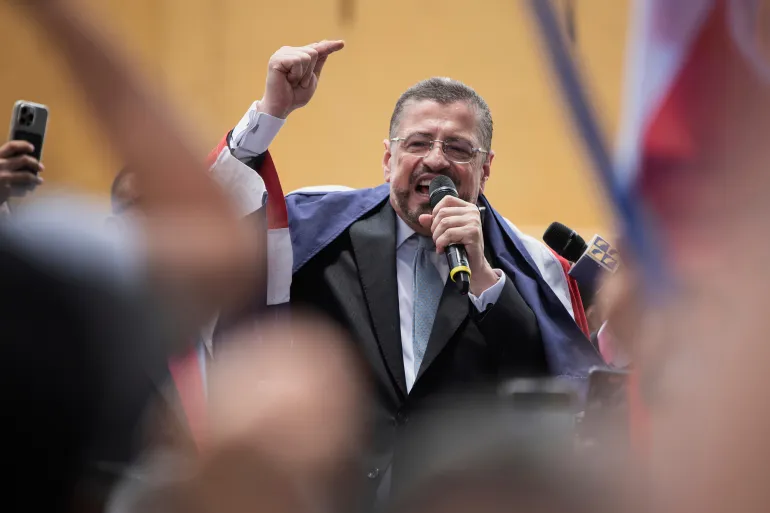
Costa Rica’s lawmakers voted 34–21 on September 22 and kept President Rodrigo Chaves’s legal protection intact.
Judges had found enough evidence in July that Chaves steered$405,000 in a public relations contract through the Central American Bank for Economic Integration so that $32,000 reached a political ally for a home down-payment. Chaves denies the allegations.
The near five-hour closed-door session marked the first time Costa Rica’s modern democracy debated lifting a president’s immunity.
Thirty-four deputies backed removing the shield, but the motion fell four votes short of the two-thirds majority required. Two deputies missed the vote.
Another inquiry claims Chaves used private trust funds and his personal accounts to finance his 2022 campaign outside electoral rules. The judiciary still must ask Congress for permission before prosecuting.
Under Chaves, Costa Rica finished a $1.2 billion IMF program, cut the fiscal deficit in half, and drove unemployment to a 15-year low. However, violent crime has risen sharply as drug gangs vie for control, making security voters’ top concern ahead of the February 2026 election.
Chaves cannot seek immediate re-election, but his party plans to stay in power. If no candidate wins 40 percent of votes, the election will go to an April runoff.
The episode tested Costa Rica’s checks and balances as legislators weighed economic progress against the principle of accountability.
More: Latin America news in English, every day from The Rio Times.
This article was produced by The Rio Times’ automated newsroom system. How we use AI · Report an error · Editorial responsibility: Matthias Camenzind, Editor-in-Chief