Costa Rica Faces Historic Reckoning as President Confronts Immunity Loss
Costa Rica, often considered Central America’s most stable democracy, now faces a crucial test that could reshape its reputation at home and abroad.
For the first time since its 1949 constitution, the country’s Supreme Court has asked Congress to lift the sitting president’s immunity. President Rodrigo Chaves could then be prosecuted for allegedly misusing public money.
The controversy centers on a $405,000 communications contract, funded by the regional CABEI development bank. Prosecutors allege the Chaves government steered this contract to a politically connected media firm, RMC La Productora, owned by Christian Bulgarelli.
According to official investigative documents, meetings between Bulgarelli and officials in the presidential offices led to the company drafting its own favorable terms.
Investigators say $32,000 ultimately ended up with Chaves’s campaign adviser, Federico Cruz. President Chaves rejects all accusations and says his opponents want to undermine his reforms.
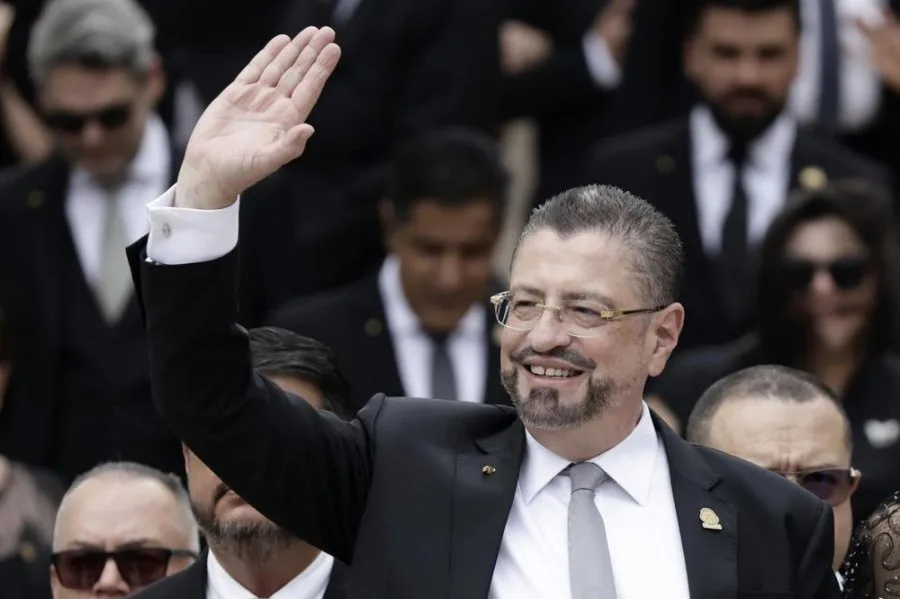
Chaves’s party alone cannot block Congress from removing his immunity: out of 57 seats, his Social Democratic Progress Party holds ten, while opposition parties together have enough numbers to act if they agree.
Presidential Investigation Tests Democratic Stability
If just 38 lawmakers vote to proceed, prosecutors could summon Chaves for questioning within weeks and possibly file charges soon after. This has never happened before in Costa Rica, a country that abolished its army 75 years ago precisely to keep politics and law separate from violence and instability.
Why does this matter beyond Costa Rica? The country’s reputation has long attracted foreign investors and businesses looking for a predictable, law-based environment.
Costa Rica depends on trust in its public contracts and institutions—especially from partners like the multilateral CABEI bank, a key source of development funding and jobs.
If investors sense growing corruption or political chaos, Costa Rica risks losing one of its main economic advantages. For Costa Ricans, this is not just a political scandal but a test of national values and trust in democratic checks and balances.
The outcome will show whether institutions can hold a sitting president accountable without undermining stability or economic confidence. For the region and the world, Costa Rica’s response could offer proof that no leader stands above the law—even in the Americas’ steadiest democracy—or reveal the risks when traditional protections break down.
At stake is not just a president’s future, but the continued confidence of citizens and investors alike in the system that has protected Costa Rica’s peace and prosperity for generations.
More: Latin America news in English, every day from The Rio Times.
This article was produced by The Rio Times’ automated newsroom system. How we use AI · Report an error
Read More from The Rio Times