Coronavirus in Latin America – Updated Overview for End-March 2020
RIO DE JANEIRO, BRAZIL – The number of confirmed coronavirus infection cases in Latin America keeps increasing, although still less than in European countries or the USA.
Fewer tests, more remote locations, less well-equipped health care systems, a particular form of “message control” or simply fewer infections – the reasons are likely to be many and varied.

By far the most affected countries to date, according to Saturday evening figures from Johns Hopkins University, are Brazil (4,256 positive tests/136 deaths), Chile (1,909/6) and Ecuador (1,823/48). Below is an overview of some of the developments in a number of selected countries over the past few days:
Mexico reacted this week with even more restraint and tightening of measures. Only as of Thursday, public events that are not absolutely necessary were canceled.
Yesterday, President Andres Manuel López Obrador instructed the population to remain at home if possible. During the week, the government suspended the option of requesting asylum.
Cuba offered Argentina to send doctors to assist with the care there. In addition, a plane was dispatched from Havana on Thursday to bring infected people to Cuba if the health system there collapsed or to help those who live in very remote areas.
A second plane was expected yesterday, Sunday. In early April, 500 Cuban doctors are expected to arrive at the request of the province of Buenos Aires to provide local help. The last scheduled flight with Argentineans who have been abroad was expected to land in Buenos Aires on Friday evening. Since then, the estimated 10,000 people who stayed abroad must remain there “until further notice”.
Ecuador has already been granted a loan of US$500 million (R$2.5 billion) by the International Monetary Fund (IMF) as a result of the coronavirus. President Lenín Moreno is concurrently paying off private creditors but is telling the population that without new loans for the state, individual citizens will soon be unable to afford medicines in drugstores.
Meanwhile, in the worst-affected region of the country, Guayas, corpses of coronavirus victims have to wait a long time on the open road to be picked up, according to the newspaper La Hora. Doctors describe the situation in the country’s largest hospital in Guayaquil as “totally out of control”.
De facto president Jeanine Áñez has declared a “sanitary emergency” in Bolivia. This also includes more powers for the military. The interim government has also ordered a 14-day quarantine. The presidential and parliamentary elections, originally planned for May 3rd and adjourned due to the spread of the coronavirus, are now to be held between June 7th and September 6th, the Supreme Electoral Court announced on Thursday.
This week in Brazil, President Jair Bolsonaro faced growing opposition. The governors of 26 of the 27 states opposed his (non-existent) measures and met without him to discuss further action.
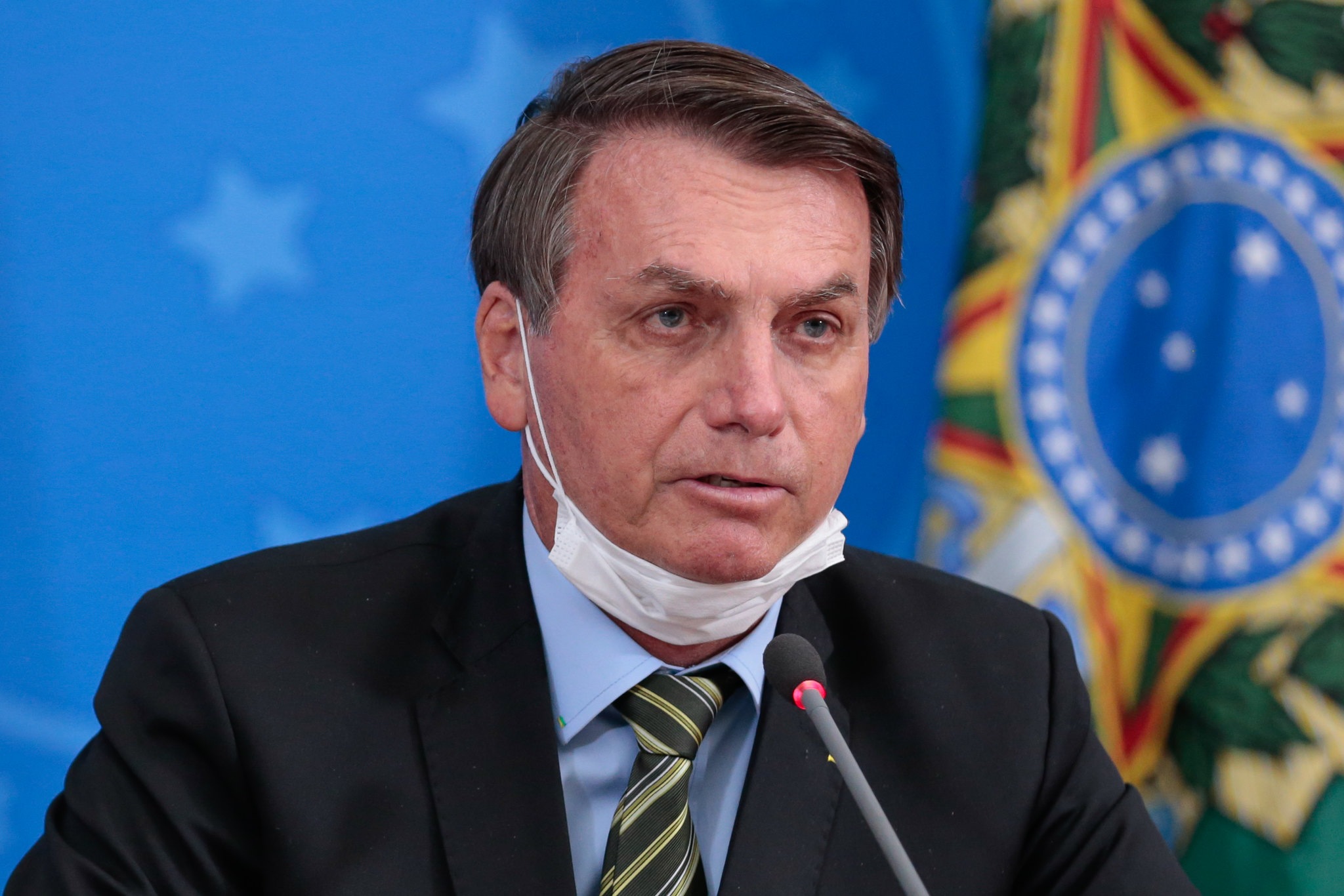
The President still refuses to disclose the result of his last test for the coronavirus. By Thursday, 25 people from his immediate circle had already tested positive. In some favelas, people are already starting to organize themselves.
Even after months of protests, the government in Chile is pursuing its path of neo-liberalism: workers who cannot work due to the restrictions of the Coronavirus pandemic will not be paid by their employers for four months.
Bolsonaro in Brazil had aimed for the same by decree but then backed down due to intense public pressure.
The government in Uruguay has also announced that it will cut pensions and salaries of public service employees, although only between five and 20 percent.
According to the government, there are currently 113 confirmed infections and two deaths in Venezuela. President Nicolás Maduro declared a coronavirus emergency on March 12th and ordered a nationwide curfew on March 17th, which restricts freedom of movement and paralyzes all retail trade except grocery stores, drugstores, and pharmacies.
A number of economic measures (including the suspension of rent and loan interest payments, the state taking over the wages of small and medium-sized enterprises, protection against dismissal) are intended to protect the population from the economic consequences of the coronavirus crisis. To contain the virus, Venezuela is being provided with extensive aid from China, Cuba, and Russia.
The list of Latin American countries asking for or agreeing to help from China to fight the pandemic is growing. Reuters news agency lists the following countries: Argentina, Brazil, Chile, Peru, Mexico, Ecuador, and Venezuela.
While the US continues to drive a wedge in the Latin American region, as demonstrated just this week by the charges against the Venezuelan government, China is improving relations.
A “positive” approach to the pandemic and its as yet unforeseeable consequences is demonstrated by Morgan Stanley: the US investment bank is advising investors to invest in Latin America, particularly in Brazil, Peru, and Mexico, as soon as the situation begins to stabilize.
More: Brazil news in English, every day from The Rio Times.
This article was produced by The Rio Times’ automated newsroom system. How we use AI · Report an error · Editorial responsibility: Matthias Camenzind, Editor-in-Chief