Guatemala’s First Public-Private Highway Reaches a Milestone
Trade
Key Facts
—The milestone. Guatemala’s first infrastructure public-private partnership reaches its first handover this month.
—The road. It upgrades 41 kilometres of highway linking Escuintla to the Pacific port of Quetzal.
—The cost. The project is valued at about 154 million dollars, funded entirely from foreign resources.
—The builder. A consortium of one Guatemalan and one international firm holds the contract.
—The jobs. Backers project up to 20,000 direct and indirect jobs over the 25-year contract.
Guatemala is about to prove a point about how it builds roads. Its first infrastructure public-private partnership, a highway to its main Pacific port, is reaching a long-awaited milestone this month.
A public-private partnership is an arrangement in which a government contracts with private companies to finance, build, and sometimes operate infrastructure that would traditionally be funded by taxpayers. The private partner typically takes on much of the financial risk in exchange for the right to collect revenue, often through tolls or availability payments, over a long contract period.
The project upgrades the road between the city of Escuintla and Puerto Quetzal. The private operator has flagged a first handover in mid-July, with the contracted construction phase due to close by month’s end.
For a foreign reader, the significance is the model, not just the road. This is Guatemala’s test case for financing infrastructure with private money instead of stretched public budgets.
Why this public-private partnership matters
Guatemala has long underinvested in infrastructure. Its slow roads are a drag on trade, with industry leaders complaining that goods crawl across the country at some of the lowest average speeds in the region.
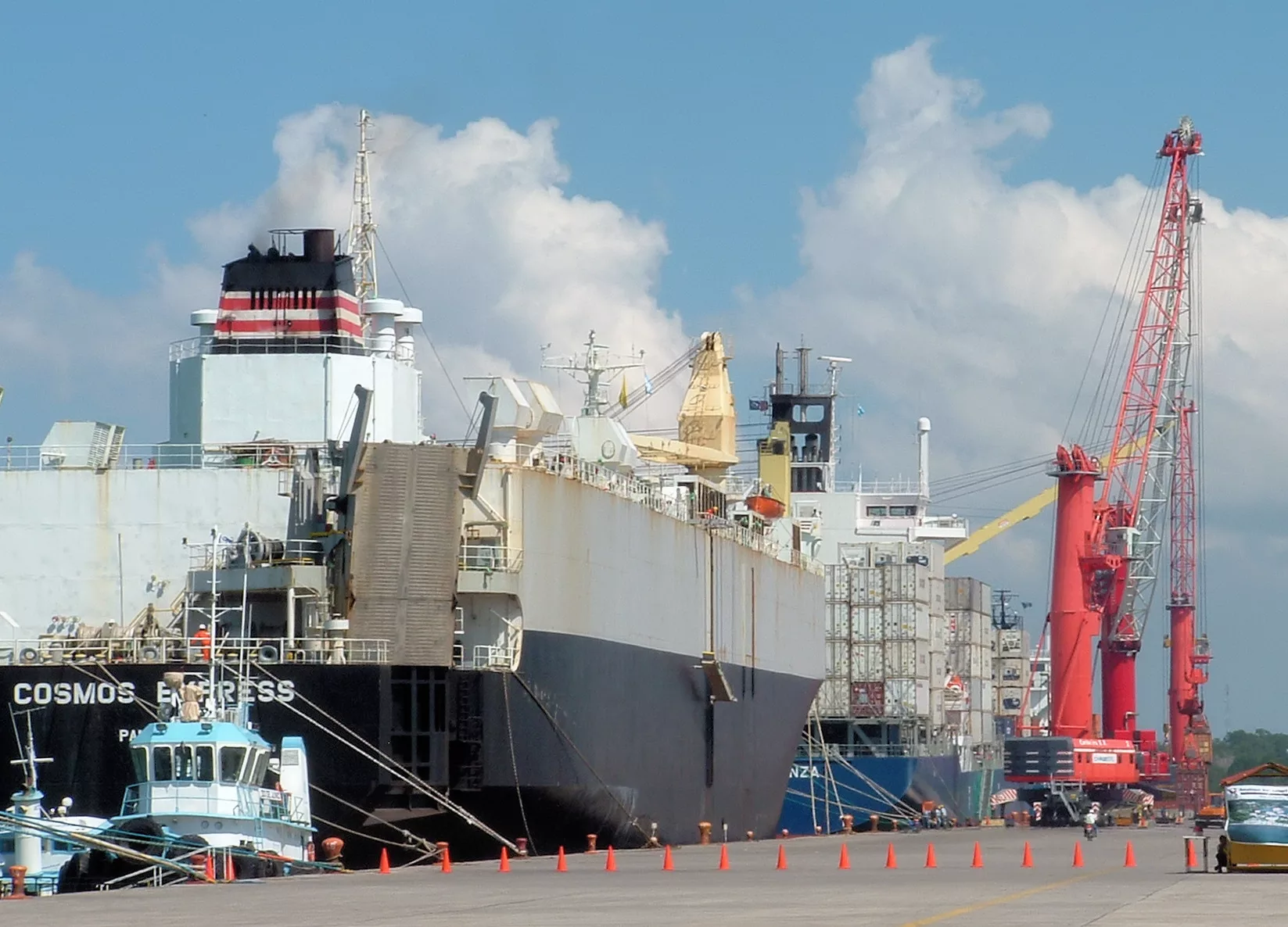
This corridor is a prime example of the stakes. The highway carries a large share of the traffic on a key route linking the capital region to the Pacific coast, the artery for much of the country’s imports and exports.
The partnership model shifts the risk. Under the arrangement, the private consortium finances and builds the road and carries the risk, while the state supervises and receives the finished asset.
That structure is new for Guatemala. The country ranks low in the region for such deals, and officials hope a successful first project will attract more foreign investors to future ones.
The broader context is that many Central American nations struggle to fund infrastructure from tax revenue alone, making private capital an increasingly attractive option. Our reporting has shown that similar public-private models elsewhere in Latin America have faced renegotiation pressures when toll revenues fell short of projections, a risk that Guatemala’s first test case must now navigate.
The government has leaned on outside expertise. Guatemala’s infrastructure agency has joined a regional network on public-private deals run by a major development bank, aiming to import best practice as it builds a pipeline.
The project also carries political weight. Officials say the administration of President Bernardo Arévalo fast-tracked the works early in its term, framing them as proof that a nimbler investment model can work.
What the project delivers
The upgrade is substantial. It rebuilds 41 kilometres of highway, raising a busy four-lane road to full motorway standard with an added third lane in stretches.
Full motorway standard typically means controlled access with no at-grade intersections, higher design speeds, and better safety features than ordinary highways. For a trade corridor, that translates into fewer bottlenecks and more predictable transit times for freight.
The works go well beyond fresh asphalt. Plans include several grade-separated interchanges, pedestrian bridges, weigh stations, toll plazas and even a market for the fruit vendors at the road’s entrance.
The headline benefit is speed. Backers say the revamped road is designed to cut journey times sharply, easing the flow of cargo to and from a port that handles much of the nation’s trade.
The money and the jobs
The financing is entirely foreign. The project carries a price tag of about 154 million dollars, funded fully from external resources rather than the national budget.
The employment case is central to the pitch. Hundreds already work the site, most from the local area, and the consortium projects up to 20,000 direct and indirect jobs over the life of the contract.
Delivery has not been friction-free. Construction began in 2024 after years of delay, and officials acknowledge challenges over land rights and bridge works along the route.
The handover now opens a new phase. Supervisors will check the work against the contract, and because it is a partnership, any dispute goes to arbitration rather than the courts.
The open question is whether the model will prove durable. Will toll revenue cover the consortium’s costs and return, or will the state face pressure to renegotiate terms down the line?
And can Guatemala build enough of a track record to persuade other private investors that the country is a reliable partner for long-term infrastructure bets?
More: Latin America news in English, every day from The Rio Times.
Frequently Asked Questions
What is the Escuintla-Puerto Quetzal highway?
It is a 41-kilometre stretch of highway linking the city of Escuintla to Puerto Quetzal, Guatemala’s main Pacific port. The project upgrades it to full motorway standard and is the country’s first infrastructure public-private partnership, valued at about 154 million dollars.
Why is this public-private partnership important?
It is Guatemala’s first infrastructure project under a public-private partnership model, financed by private and foreign money rather than the state budget. Officials see it as a test case that could unlock further investment in a country that has long underinvested in roads and ports.
How many jobs will it create?
Hundreds of workers, most from the local Escuintla area, are already employed on the construction. Over the 25-year contract, the consortium projects the road could generate up to 20,000 direct and indirect jobs, including related services such as hotels, restaurants and logistics.
Connected Coverage
Guatemala Ports Law Stalls as Quetzal Congestion Bites
Canada IDB Guarantee: $200m to Mobilise $1bn for Latin America
This article was produced by The Rio Times’ automated newsroom system. How we use AI · Report an error · Editorial responsibility: Matthias Camenzind, Editor-in-Chief
LatAm Markets: Live Signals → — real-time movers, turnover leaders and FX across Latin America.