Governments’ Fragility Hinders Fight Against Coronavirus in Latin America
RIO DE JANEIRO, BRAZIL – The advent of the coronavirus pandemic is forcing Latin America to face its worst ghosts. The impact is still low compared to Europe and Asia, but the sequence is similar and the announcement of the coming asteroid is so resounding that virtually all governments are already preparing for the worst.
Even the most skeptical, prudent or wary leaders, whether out of conviction or out of necessity, are giving in. Led by Brazil, the coronavirus is starting to settle in a region with many shortcomings. Moreover, it will be in places where, unlike in the rest of the world, the State is virtually non-existent, which makes the fight against contagion even more difficult.
Latin America, a subcontinent with 600 million inhabitants, is confined. It is virtually impossible to travel between countries after all the major powers, with the exception of Mexico, have closed their borders, including the Colombian air borders.

And for almost everyone now, because for years these steps have been limited, if not banned, to millions of migrants fleeing poverty and violence, whether in Venezuela or Central America on their way to the United States.
However, these measures may not have a real impact in curbing the contagion, as South Korea, the example the whole world is looking at, has not closed its borders.
The case of Latin America, notes Oliver Stuenkel, professor of international relations at the Getulio Vargas Foundation, could be a “symbolic effect, to lend the sense that governments are doing something”.
“There is no doubt that closing borders will have negative and unpredictable consequences over time. Many countries are connected, like Mexico and the United States, or Argentina and Brazil. These links are being pushed aside and I’m not sure they will be restored,” adds Brian Winter, vice president of the Americas Society and Council of the Americas.
The halt to the flow of people -except for local citizens or residents to enter and leave- was followed by more drastic, unprecedented decisions, such as the mandatory quarantine declared in Argentina, which Colombia also enforced as of Tuesday, after the simulation anticipated by Bogotá and which showed a global trend, worsened in the region: polarization and internal tensions, to the extent that the mayor of the capital, Claudia López, has a positive evaluation of up to 70 percent in some surveys, almost three times that of the president, Iván Duque.
The perceived lack of solid leadership is compounded by the failure to implement joint measures, no matter how hard some countries in South America tried last week. This is not, however, a peculiarity of Latin America, as the European Union, with five decades of history, is unable to adopt measures that satisfy all its member countries.
“There are firm leaders, such as Argentina, Peru, Colombia and Ecuador, and on the other hand, Brazil and Mexico. But there is still time for governments to change the way they act,” Winter says. “This crisis is not like any we have experienced before. It’s just the beginning, what is popular today may not be tomorrow”, adds the analyst.
However, if there is one feature that is not found in other regions of the world and which is present in most of Latin America, particularly in its powers, it is the absence of the State.
Many countries have followed China’s example by adopting measures to prevent the spread of the virus, but in the case of the Asian country, the state has shown a power that, except in countries where authoritarianism prevails, such as Venezuela, it is difficult to glimpse in the region.
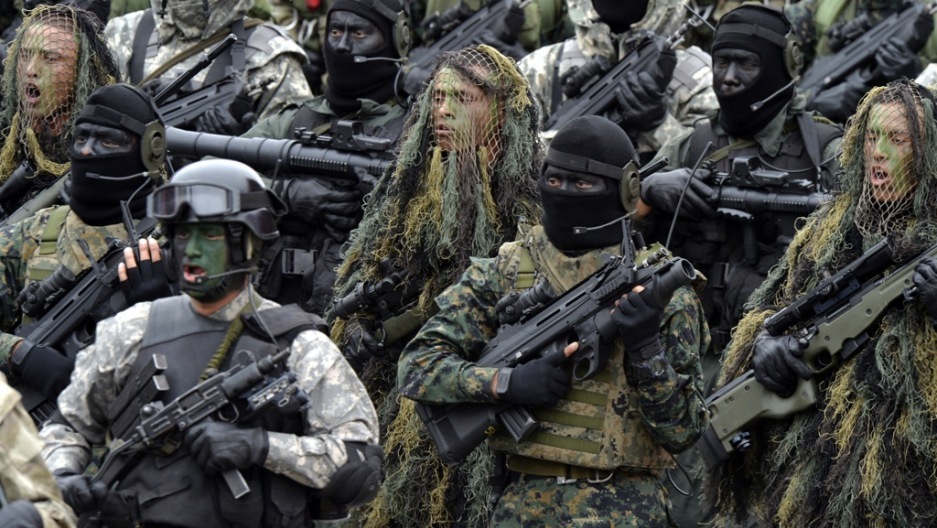
It is no longer a matter of people ignoring the rules imposed by authorities, as we can see all over the world, but rather that there are places in Latin America where the State -its rulers, the Army etc.- is an illusion. In other words, millions of people are governed, or rather controlled, by organized crime, where violence is the answer.
This weekend in Colombia, in prison riots, more people have died so far than by the coronavirus: at least 23. “These are areas where there are groups that challenge state control, like the favelas in Brazil,” notes Stuenkel. “This hinders or reduces the state’s ability to impose measures, such as social distancing. But it doesn’t just happen in those places; also in remote populations, like the Amazon, the work of containing the coronavirus will be very difficult,” adds the political scientist.
“The crisis will hasten some movements hitherto unnoticed, such as the more active role of the military recalled since the 1980s. On the other hand, we see how the popularity of democratic presidents who reacted firmly, like Martín Vizcarra in Peru, has improved.
Perhaps, if the leaders act correctly, the inclination that Latin Americans have lost faith in their leaders and in democracy in general can be reversed,” Winter adds.
Moving on, the measures to try to contain the spread of the virus – and the brake on the curve that is causing world chaos – will not happen, by action or omission, absent the shock that this will cause in the economies of the countries.
If Latin America emerged virtually unscathed from the 2008 crisis, this time it seems to be the region that could suffer the greatest blow. The mere fact that anxiety has already spread, without the countries having even come close to the number of deaths plaguing Europe, provides a good indication of the governments’ fears.
In this respect, the most obvious example is Mexico, where millions of people live on limited money and any isolation would sentence them even further to poverty, which, in the words of some government officials, kills more than the virus.
Why has the government not adopted more drastic measures? This is the question that emerges in any conversation about the pandemic inside and outside Mexico. The answer, at first, was perceptible, but the president himself, Andrés Manuel López Obrador, verbalized it openly. The president, who one week ago was basking in crowds, ignoring the health recommendations and was even optimistic about the potential damage to the economy.
“I would like this not to have an effect, they will call me irresponsible,” he said, but he had to take his speech to reality. If on Friday he asked the population not to “overreact” to the damage of the coronavirus, because it could hurt the economy, on Sunday he was crystal clear: “We must see how we are progressing to face the economic crisis that is ahead”.
Likewise, in Brazil, Jair Bolsonaro is investing in a few appearances in his role as a leader, even going so far as to refute world health guidelines, by opposing the ban on church services, a focus for the crowding of people and a fertile ground for the spread of the virus.
Two weeks ago, he called the Covid-19 “the flu”, the concern with the epidemic “hysteria”, and said that the goal of those alarming the population is to cripple the economy in order to bring his government down. “If the economy sinks, Brazil will sink. What’s the point? If it sinks, my government ends. It’s a power struggle,” he said in an interview on March 16th.
Source: El Pais
More: Brazil news in English, every day from The Rio Times.
This article was produced by The Rio Times’ automated newsroom system. How we use AI · Report an error · Editorial responsibility: Matthias Camenzind, Editor-in-Chief