Coronavirus in Argentina: Critical Situation in Buenos Aires Slums
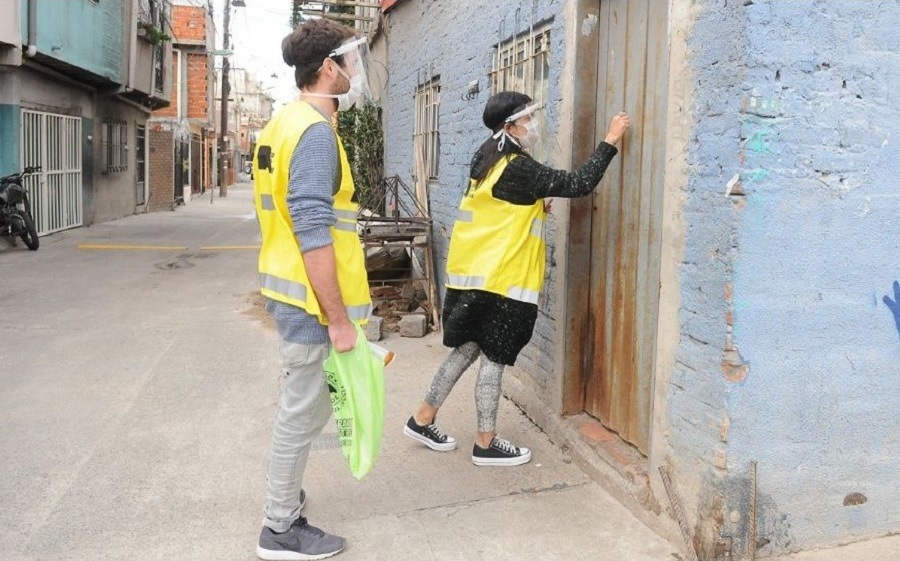
RIO DE JANEIRO, BRAZIL – Despite continued strict quarantine measures throughout the country, coronavirus infections are on the rise in the poor districts, known as “villas”, of the Argentinean capital Buenos Aires and its conurbations.
Villa 31, a slum located close to the city center, is currently the main focus of attention. Last week, Villa Azul, located south of the capital, was locked down due to high infection rates. By mid-week, approximately half of the 300 Covid-19 tests performed there are said to have been positive.

The lockdown of Villa Azul led to criticism from within the government of President Alberto Fernández as well as from social organizations. Daniel Menéndez, a consultant for the nationally active social organization “Barrios de Pie”, cautioned against establishing “closed-off areas for the poor” who “will die there”.
Activists working in the slums are also affected by the disease. Some have already died, like Agustín Navarro, who worked in Villa 31. He was the coordinator of a soup kitchen and one of the leaders of “Barrios de Pie”.
Shortly before that, Ramona Medina and Victor Giracoy, two other well-known grassroots activists in the slums, had also died as a result of Covid-19. There had been no water there for weeks.
Over 2,500 infections and 22 deaths were recorded in Villa 31 by mid-week. Representatives of the neighborhood organizations recently met with the Mayor of Buenos Aires, Horacio Larreta, and with President Alberto Fernández to discuss urgent measures to prevent the virus from spreading further and to provide the population with food and water.
Villa 31 – also known as “Padre Mugica”, named after the founder of the Movement of Pastors of the Slums, who was murdered by the paramilitary organization Triple-A in the 1970s – is located in the Retiro district, very close to the wealthier neighborhoods of Barrio Norte and Nuñez.
It is one of the oldest informal communities in the country and has existed since the early 1930s, wedged between the port and the railway area. At that time Polish and Italian immigrants, unemployed due to the Great Depression, settled there.
The quarter grew and changed over the years in line with economic fluctuations. In times of agricultural mechanization, landless workers came from the interior, in times of economic upturn, immigrants from neighboring countries, and in times of crisis, it took in those who fell through the social and family networks.
Residents were repeatedly relocated, at times more or less voluntarily into social housing projects like Catalinas Sur, at other times forced out into the province. The main attempt to dismantle the villa occurred during the military dictatorship (1976-1983), which resettled 97 percent of its residents by 1980, leaving only a core of 754 people. However, shortly thereafter new settlers moved into the vacated wasteland.
Since the return of democracy, there has been discussion about consolidating the settlement through infrastructure measures and building replacements – or relocating it entirely and dismantling it.
In 2010, an urban development plan was drafted. Mayor Larreta announced the development of infrastructures in 2017, for which a loan of US$100 million was raised. Critics accuse him of having spent a considerable amount of money on expert opinions rather than on specific measures.
The erection of a nearby public building actually lowered the water pressure in the quarter to such an extent that the residents had no running water for weeks. The links between the consulting firm commissioned and the conservative-liberal PRO party in power in Buenos Aires have already led to accusations of nepotism.
Its central location arouses speculative desires. Despite the urbanization plan, an elaborate parallel real estate project has been in place for some time. In June 2019, the city council approved the privatization of the former railroad and port sites on which the district is located. The estimated value, should the villa be removed, is very high due to its proximity to the center.
The PRO party, which ruled in the country until December with Mauricio Macri, and still represents the government in the independent capital, has long been accused of encouraging speculation in state-owned properties. As a result, the Argentinean government recently reversed a number of transfers of state-owned properties to the city, which Macri had disposed of shortly before his departure.
The population of Villa 31 is now estimated at around 70,000. Many of them work in the building and service sectors of the rich city center, particularly in the casual sector, which is why the lockdown has affected them particularly hard.
The first imported Covid-19 cases occurred in the nearby wealthier neighborhoods, and from there were carried to the slums, whose inhabitants certainly do not belong to the part of the population who spend their holidays abroad, but often work in the homes of those who do.
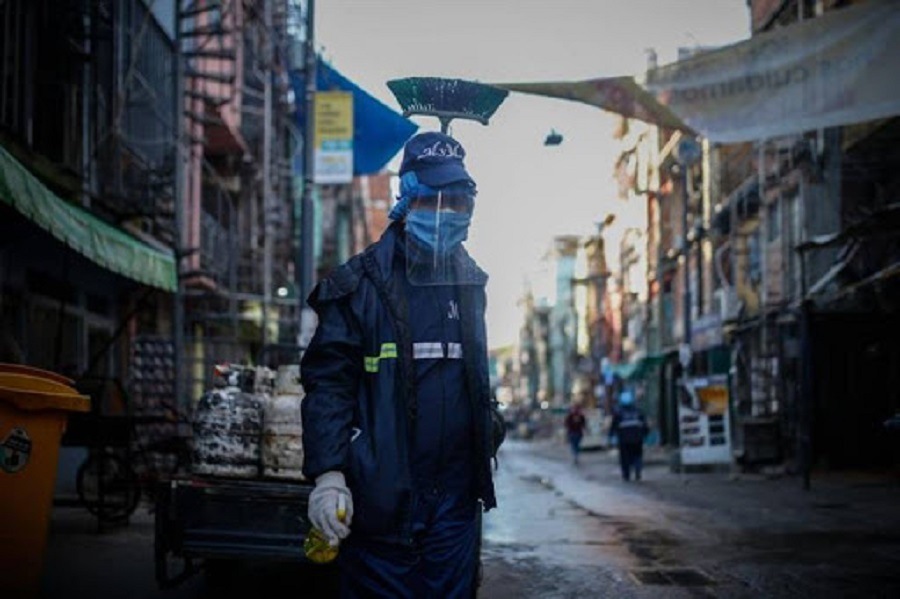
And while among the remainder of the population, the number of cases has been declining and deaths have been very low, the disease is now spreading rapidly in this and other impoverished districts.
More: Brazil news in English, every day from The Rio Times.
This article was produced by The Rio Times’ automated newsroom system. How we use AI · Report an error
Read More from The Rio Times