Copper Falls in Base-Metals Selloff; Chile Risks Linger
Key Facts
- Copper futures tracker fell The CPER fund, which tracks copper futures rather than spot metal, settled at US$39.51, a decline of 0.68% for the Thursday, October 1 session.
- London benchmark dipped Copper on the London Metal Exchange settled at US$14,253.50 per tonne, down 1.1% to a two-week low.
- Broad metals sell-off Copper fell with other base metals while China’s holiday thinned trading, and the move outweighed fresh supply concerns in Chile.
- Big miners followed lower Southern Copper’s New York shares dropped 1.69% to US$199.22, while Freeport-McMoRan fell 1.03% to US$69.28.
- Chile labour risk escalates Supervisors at BHP’s Escondida voted to authorise strike action, and workers at Antofagasta’s Centinela rejected a final offer.
- China off the board Chinese markets including the Shanghai Futures Exchange were closed for Golden Week from October 1 through October 7, leaving London to set prices in thinner trading.
Today’s Focus
Copper drifted lower on Thursday, October 1, in a broad base-metals sell-off. The CPER copper-futures tracker settled at US$39.51, down 0.68%, while the London Metal Exchange benchmark closed at US$14,253.50 per tonne, down 1.1% to a two-week low.
The slide came despite fresh labour trouble in Chile, the world’s largest copper producer. Supervisors at BHP’s Escondida mine voted to authorise strike action, and workers at Antofagasta’s Centinela rejected a final contract offer.
Chinese markets were closed for Golden Week, removing the main source of physical buying and leaving London to set prices in thin holiday trade. That amplified the broad risk-off move across base metals.
Southern Copper dropped 1.69% to US$199.22 and Freeport-McMoRan fell 1.03% to US$69.28, underperforming the metal itself as investors weighed mine-level risk in Peru and Mexico against the longer-term demand case from electric vehicles and grid investment.
What matters today. A broad base-metals sell-off in thin holiday trade is doing more to set copper’s price than the threat of strikes at Chile’s biggest mines.
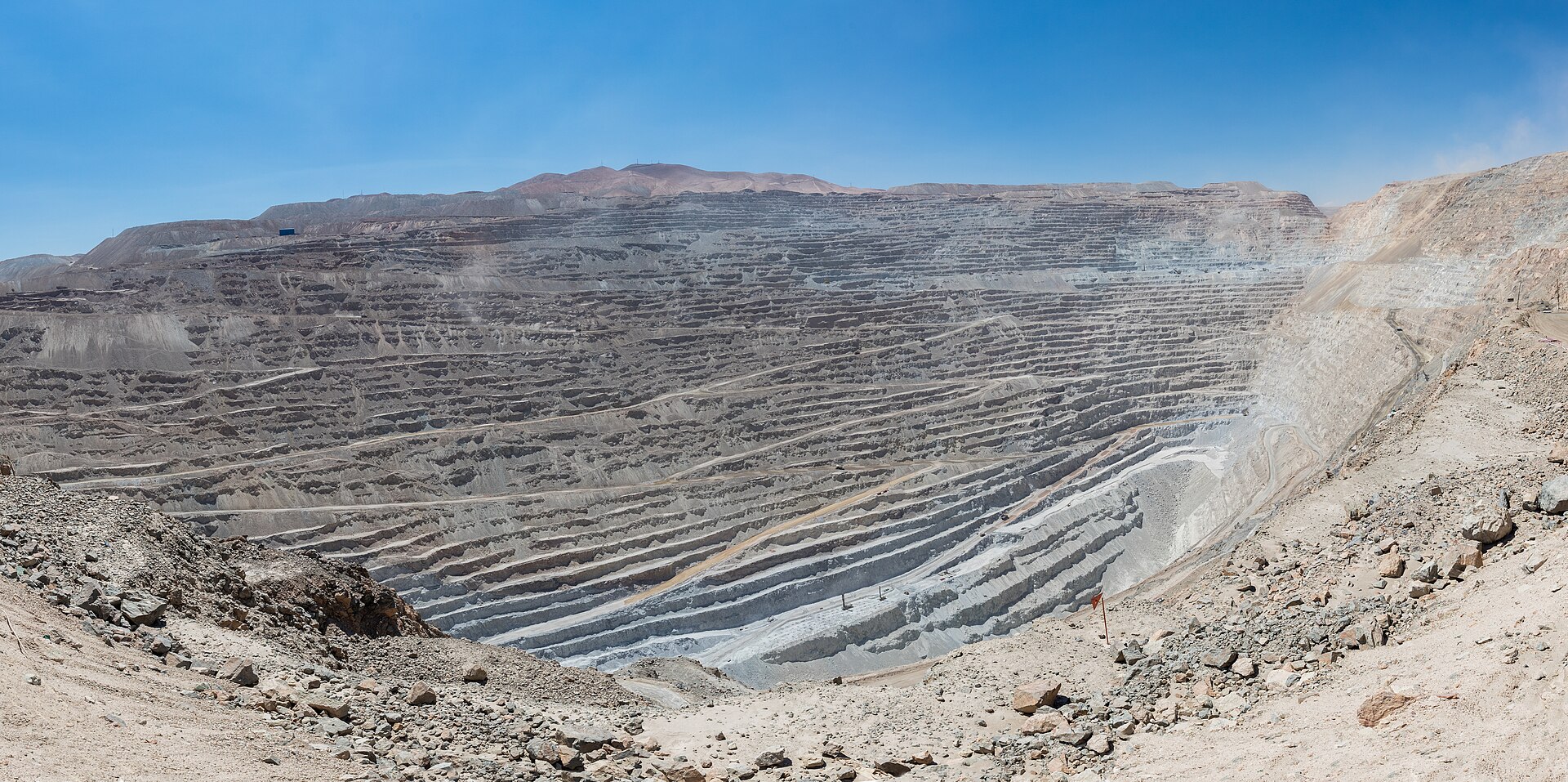
01 The session in one read
Copper eased on Thursday, October 1, as traders looked past labour unrest at the world’s largest mine and followed a wider fall in base metals. The CPER fund, a New York-listed instrument that tracks copper futures contracts rather than physical spot metal, settled at US$39.51, down 0.68%.
The direction matched the London Metal Exchange benchmark, which closed at US$14,253.50 per tonne. Softer prices came despite a vote by supervisors at BHP’s Escondida mine in Chile to authorise strike action.
China, the world’s dominant copper buyer, was closed for the first day of Golden Week, a national holiday that runs from October 1 through October 7. That removed the Shanghai Futures Exchange from price discovery and left London to set the tone in thin, holiday-thinned trade.
Copper’s Thursday decline shows the market trading with the wider base-metals complex rather than on copper-specific news, even as physical supply risks build in Chile. With China absent for Golden Week and trading thin, the path of least resistance was lower despite Escondida’s strike vote. The variable to watch is whether supervisors at Escondida actually walk out after the legal mediation period, which could flip the narrative from risk-off to supply shock.
02 The board
The CPER copper-futures tracker fell 0.68% to US$39.51, the clearest proxy for how futures traders marked Thursday’s session. Southern Copper, which mines in Peru and Mexico, did worse: its New York shares slid 1.69% to US$199.22.
Freeport-McMoRan, operator of Peru’s Cerro Verde mine, dropped 1.03% to US$69.28. Both miners underperformed the CPER tracker, a sign that investors were pricing in company-specific risk alongside the broader move in the metal.
Because CPER tracks futures contracts and their rolling settlements, its daily move reflects the futures curve rather than the physical spot price in a warehouse. That makes it a useful signal of what financial traders expect, not just what smelters are paying today.
| Asset | Level | Change |
|---|---|---|
| Copper (CPER tracker) | US$39.51 | -0.68% |
| Southern Copper | US$199.22 | -1.69% |
| Freeport-McMoRan | US$69.28 | -1.03% |
Source: RT close, 2026-10-01. Where a commodity has no spot feed, an exchange-traded tracker or leading producer is shown as a labelled proxy.
Live Market IntelligenceThe live market board
Rio Times · Live Market Intelligence
Latin America — Cross-Market Board
| Instrument | Last | Change | YoY | Prev. | High | Low | Volume |
|---|---|---|---|---|---|---|---|
| IBOV | 187,197.46 | +0.46% | +21.85% | 186,340.46 | 168,310 | 167,142 | — |
| IPSA | 10,908.18 | -0.56% | — | 10,969.49 | 11,210 | 10,984 | 1,513,213,483 |
| IPC MEX | 63,828.60 | -0.60% | +12.17% | 64,214.36 | 66,121 | 65,405 | 108,886,187 |
| MERVAL | 2,758,840 | -2.15% | +30.51% | 3,022,485 | 3,042,365 | 2,991,150 | — |
| COLCAP | 2,530.05 | -0.75% | — | 9.04 | 9.05 | 9.02 | 4,133 |
| BVL PERÚ | 59,831.84 | -0.13% | — | — | — | — | — |
| USD/BRL | 5.16 | +0.01% | -5.13% | 5.16 | 5.18 | 5.14 | — |
| EUR/BRL | 5.95 | +1.01% | -5.83% | 5.89 | 5.98 | 5.94 | — |
| USD/MXN | 17.06 | -0.24% | -8.58% | 17.10 | 17.08 | 17.01 | — |
| USD/CLP | 913.98 | +0.04% | -5.67% | 913.65 | 915.11 | 906.68 | — |
| USD/COP | 3,140 | +0.03% | -22.04% | 3,139 | 3,141 | 3,105 | — |
| USD/PEN | 3.36 | -0.66% | -4.82% | 3.38 | 3.38 | 3.35 | — |
| USD/ARS | 1,493 | +0.10% | +12.96% | 1,491 | 1,494 | 1,480 | — |
| USD/UYU | 40.27 | +1.24% | +1.80% | 39.77 | 40.27 | 40.23 | — |
| USD/PYG | 5,939 | +1.68% | -19.54% | 5,841 | 5,939 | 5,925 | — |
| USD/BOB | 11.64 | -0.76% | +72.04% | 11.73 | 11.72 | 11.64 | — |
| USD/DOP | 58.34 | +1.25% | -3.44% | 57.62 | 58.34 | 58.04 | — |
| USD/CRC | 445.92 | +0.89% | -9.71% | 441.97 | 448.50 | 445.92 | — |
03 What moved it
The dominant headwind was a market-wide risk-off session. Zinc fell 2.7% and nickel hit a ten-month low, so copper moved with the whole complex. The market also partly unwound the risk premium it had built into prices ahead of the strike votes.
Thin holiday trading made the move easier. With the Shanghai Futures Exchange closed for China’s National Day holiday, arbitrage flows between venues were removed and London carried the price discovery.
Those market pressures outweighed genuine physical supply threats in Chile. Escondida halted operations after a fatal accident in late September and began a gradual restart, but supervisors have since voted to authorise a strike.
Workers at Antofagasta’s Centinela mine also rejected a final contract offer. With China’s markets shut for Golden Week, there was no immediate round of bargain-hunting from Shanghai to cushion the slide.
04 The Latin American read
Chile supplied 5.3 million metric tons of copper in 2025, almost a quarter of global mine output, making its labour disputes a structural risk to world supply. Peru is also among the world’s largest producers.
The strike votes at Escondida and Centinela are not yet walkouts, but they raise the cost of production at a time when Chinese smelters are already drawing on refined cathode imports. Codelco, Chile’s state-owned producer, is not directly involved in either dispute, but any shutdown at Escondida tightens the same global pool of metal.
For investors in Southern Copper and Freeport-McMoRan, the Thursday share declines reflect a calculable risk: these companies operate in Peru at a moment when labour tension in neighbouring Chile is reminding the market that mine supply is never guaranteed.
05 The names to watch
BHP is at the centre of the supply story because Escondida is the world’s largest copper mine. A supervisors’ strike would pause a meaningful slice of global output, even after September’s fatal accident forced a temporary halt.
Southern Copper, the US-listed miner with pits in Peru and Mexico, fell more than the metal, a sign that equity investors are applying a risk discount to producers with labour and permitting exposure. Freeport-McMoRan’s Cerro Verde operation in Peru faces the same regional backdrop, though its vote-sensitive projects are in different jurisdictions.
Codelco, Chile’s state-owned giant, is not directly implicated in the current disputes, but it sets the tone for how Chile navigates mining labour relations. Chinese smelters, idle this week for Golden Week, will be the first buyers to react when Shanghai reopens on October 8.
06 The outlook
The short-term direction depends on whether the broad sell-off in base metals continues once China returns. Under Chilean law a five-day government mediation must come before any walkout at Escondida or Centinela, so a stoppage is not imminent.
The longer-term demand case remains intact: Chinese electricity-grid investment, electric-vehicle manufacturing and renewable-energy equipment all require substantial copper wiring. The question is whether supply disruptions in Chile will be severe enough to offset the financial drag of tighter US policy.
07 What to watch
- Escondida strike vote: Whether supervisors at BHP’s Escondida actually walk out, and how quickly BHP can negotiate, will set the supply narrative for the next two weeks.
- China’s Golden Week return: Shanghai reopens on October 8; the first trading day will reveal whether Chinese buyers step in at current prices or wait for a deeper pullback.
- Mediation period: Chilean law requires five days of government-led mediation, extendable by five more, before a stoppage at Escondida or Centinela can begin.
- US jobs report: Friday’s payrolls data will move the dollar and yields, which feed into dollar-priced metals such as copper.
Frequently Asked Questions
Why did copper fall if mines in Chile face strikes?
A broad base-metals sell-off and thin holiday trading outweighed supply concerns, pushing the London benchmark down 1.1% to a two-week low, even as Escondida supervisors voted to authorise a strike.
What does CPER actually track?
CPER tracks copper futures contracts rather than physical spot copper. Its daily move reflects the futures curve and contract settlements, not a warehouse price.
Why does China’s Golden Week matter for copper?
Chinese markets close from October 1 through October 7 for Golden Week, removing the Shanghai Futures Exchange and most physical buyers from price discovery. London sets prices in thinner, holiday trade.
Which Latin American mines are under pressure?
BHP’s Escondida in Chile is the world’s largest copper mine and has authorised strike action by supervisors. Workers at Antofagasta’s Centinela also rejected a final offer.
Market data: RT
This article was produced by The Rio Times’ automated newsroom system. How we use AI · Report an error
In depth
LatAm Markets: Live Signals → — real-time movers, turnover leaders and FX across Latin America.
Read More from The Rio Times