Most of the World’s Ylang-Ylang Comes From Three Small Islands
COMOROS · SOCIETY
Key Facts
- —The share The Comoros produces 50 to 70 percent of the world’s ylang-ylang.
- —The crop base Ylang-ylang, cloves and vanilla are the main exports, together earning most of the country’s export revenue.
- —The economy GDP was about US$1.6 billion in 2025, with growth of about 4.1% projected for 2026.
- —The debt position Public debt was about 33% of GDP in 2025, but risk of debt distress is still rated high.
- —The catch Low debt still means high risk because exports are narrow and remittances matter.
- —The politics President Azali Assoumani won a fourth term in January 2024; separatist tension persists.
Comoros ylang-ylang makes up 50 to 70 percent of world supply. So most perfume starts on three small islands in the Mozambique Channel.
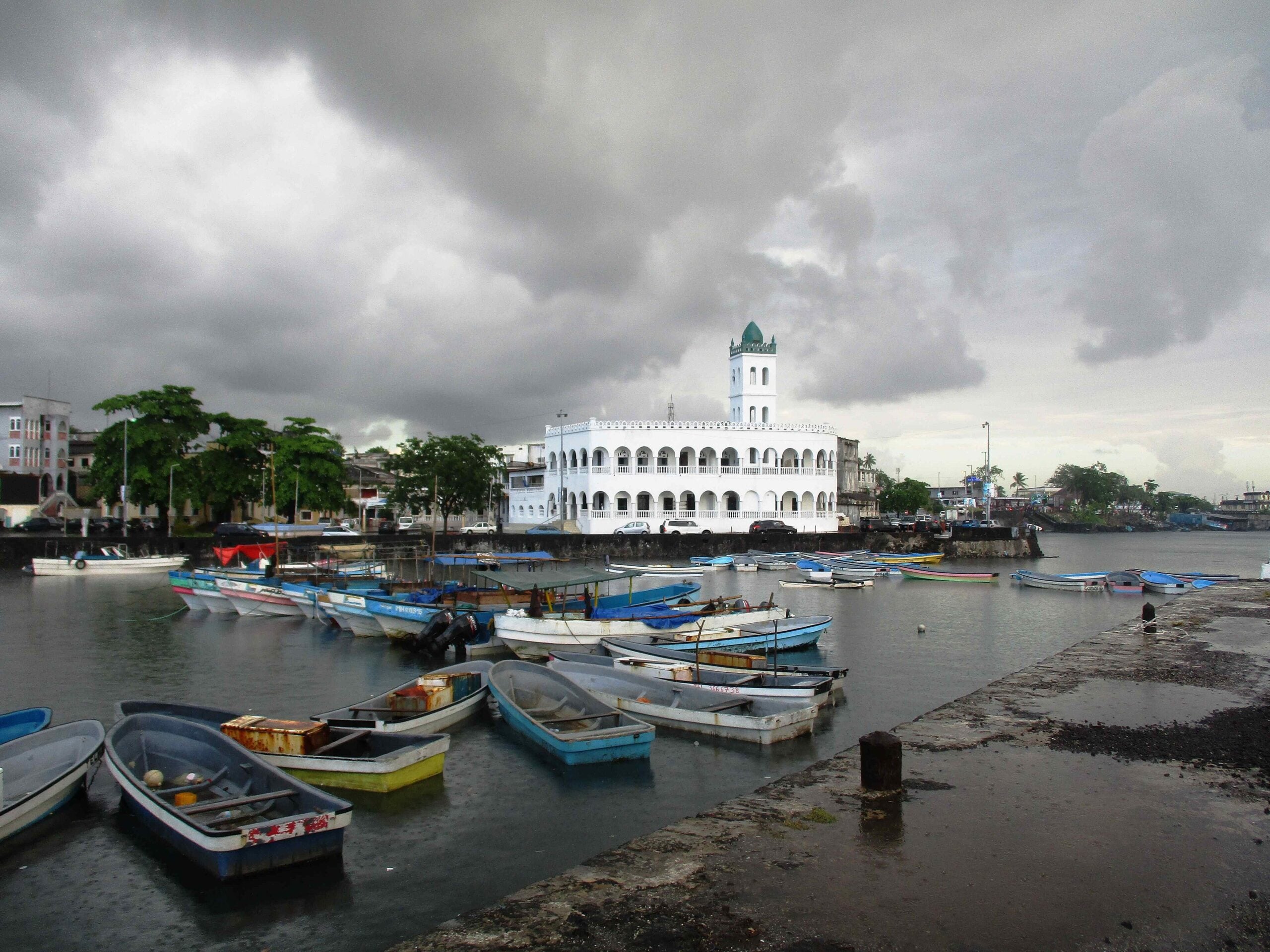
Almost none of the money returns to Comoros. The country still faces high risk of debt trouble, even with debt at only about a third of GDP.
Why Comoros ylang-ylang matters far beyond the Comoros
Ylang-ylang is the flower of Cananga odorata. It is distilled into an essential oil.
That oil has been a base note in fine fragrance for over a century.
It is an input almost nobody can name. Almost everybody wears it.
The Comoros supplies 50 to 70 percent of world production. That is a supply concentration like cobalt in the Democratic Republic of the Congo.
But this crop is not seen as strategic by anyone.
Production is mostly by small farmers. Flowers are picked before dawn, when oil content is highest.
They are distilled in copper pots. Their design has changed little for decades.
The output then leaves as raw or lightly processed oil. The blending, branding and retail margin happen in Grasse, Paris and New York.
The value that never comes home
A kilogram of ylang-ylang oil sells for a fraction of what the fragrances built on it command. The islands sell an ingredient and buy back the finished product at many times the price.
This is the classic commodity trap, and it is the same argument Ivorian cocoa farmers and Ghanaian cashew processors make. The difference is scale: Comoros is too small to bargain.
Agriculture makes up roughly a third of the economy, and ylang-ylang, vanilla and cloves together earn most of the country’s export revenue. That shows how heavily the economy depends on three crops.
A bad flowering season can hurt the whole economy.
Cloves and vanilla complete the export basket. All three are volatile, weather-exposed and priced elsewhere.
There is also a quiet competitive threat. Synthetic substitutes for natural ylang-ylang exist, and every price spike gives perfumers a reason to reformulate.
Low debt, high risk
Public debt reached about 33 percent of GDP in 2025, down from 35 percent the year before. By international comparison that is modest, well under a third of what Cabo Verde carries.
Yet the IMF’s February 2026 review keeps the Comoros at high risk of debt distress. The reason is capacity to pay rather than quantity owed.
Export earnings are narrow, seasonal and concentrated in three crops. Remittances from the large Comorian diaspora in France do much of the work that exports do elsewhere.
That combination means a small shock produces a large financing gap. Debt ratios flatter countries whose income is unreliable.
Three islands and a fragile union
The Union of the Comoros brings together Grande Comore, Anjouan and Mohéli, with Mayotte remaining under French administration. The arrangement has survived repeated separatist crises.
President Azali Assoumani was re-elected in January 2024 for a fourth term. Political continuity has brought a measure of stability and has not resolved the islands’ underlying rivalry over resources and posts.
Institutional capacity is thin, and the IMF office in Moroni has spent much of 2026 running technical workshops on revenue forecasting. That is the level at which state-building is happening.
The islands have also begun to trade on heritage. Comoros won its first UNESCO listing in July for six historic medinas, which is a tourism asset the country has barely developed.
What would actually change the economics
Moving one step down the chain would do more than any aid programme. Producing standardised, certified, traceable oil rather than variable raw output raises the price a buyer will pay.
Certification is the practical lever. Organic and fair-trade labelling has lifted returns for vanilla growers in Madagascar and could do the same here.
The obstacle is finance rather than knowledge. Distillation upgrades, quality laboratories and cold chain need capital that a country at high risk of debt distress struggles to borrow.
This is where blended and concessional finance is supposed to work. Small, specific, revenue-generating projects are exactly what the instruments were designed for.
What to watch next
The first thing is the ylang-ylang harvest and prices, which set the trade balance more than any policy decision.
The second is whether the UNESCO listing translates into visitor numbers, because tourism is the only obvious second engine.
The third is the next debt sustainability assessment, and whether the risk rating moves as revenue administration improves.
Latest developments
- France to Send Troops to Guard the Saudi Oil Port That Bypasses Hormuz — 25 September 2026
- Kenya’s Port Authority Says It Paid US$1.5m for Machines It Never Received — 25 September 2026
- São Paulo Daily Brief — Friday, September 25, 2026 — 25 September 2026
- Rio de Janeiro Daily Brief — Friday, September 25, 2026 — 25 September 2026
Frequently Asked Questions
How much of the world’s ylang-ylang comes from the Comoros?
Between 50 and 70 percent of global production comes from the islands. The oil is a base ingredient across the fragrance industry.
What are the main Comorian exports?
Ylang-ylang, cloves and vanilla are the primary agricultural exports. Together they earn most of Comoros’s export revenue, with cloves the single biggest earner.
How large is the Comorian economy?
Nominal GDP was around US$1.6 billion in 2025, with growth of about 4.1 percent projected for 2026.
Why is Comoros at high risk of debt distress with low debt?
Public debt was about 33 percent of GDP in 2025, but the risk assessment reflects capacity to service obligations. A narrow, volatile export base and heavy remittance dependence are the vulnerability.
Who governs the Comoros?
President Azali Assoumani won a fourth term in January 2024. He leads a union of three islands with a history of separatist tension.
Connected Coverage
- The Comoros got its first UNESCO listing for its heritage side.
- Ghana also struggles to process its own cashews, and a farmgate price cut hurts growers.
This article was produced by The Rio Times’ automated newsroom system. How we use AI · Report an error · Editorial responsibility: Matthias Camenzind, Editor-in-Chief