Colombia’s Peso Slides Past 3,100 per Dollar: What It Means for Expats
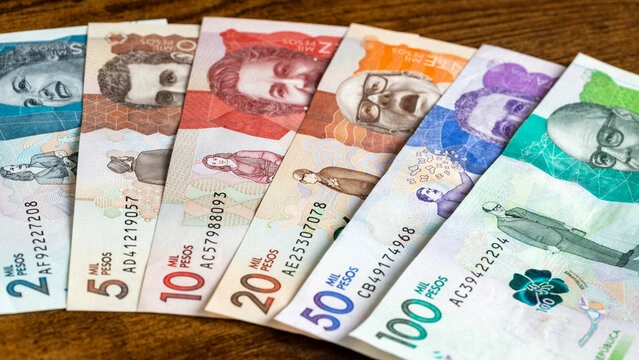
Money: Colombia
Updated 12 times · Latest: 23 September 2026
Key Facts
- —The TRM fixing in force on Thursday 27 August is 3,118.24 pesos per dollar, up 1.19 percent from Wednesday’s 3,081.67.
- —Wednesday’s spot session closed at 3,128.50, a 1.24 percent daily weakening of the peso and the dollar’s first finish above 3,100 since August 18.
- —Context: even after the bounce, the dollar fell about 18.5 percent against the peso this year through last week, its weakest run since 2018.
- —Drivers: cheaper oil, a firmer US dollar after a hot inflation reading, and caution ahead of Colombia’s September tax debate.
- —For you: US$1,000 converts to COP 3,118,240 at today’s TRM, about COP 61,730 more than a week ago.
The Colombian peso, the region’s star currency of 2026, has given back ground this week. If you earn in dollars, your money suddenly goes further; if you earn in pesos, imported prices just crept up.
What actually happened this week
Colombia’s official exchange rate, the TRM, is computed each day from the previous session’s trading and published by the financial superintendency. The fixing valid for Thursday 27 August is 3,118.24 pesos per dollar, up from 3,081.67 on Wednesday and 3,056.51 on Tuesday. In two days, the peso has weakened about 2 percent against the dollar.
The spot market tells the same story in real time. Wednesday’s session closed at 3,128.50 pesos per dollar, up 1.24 percent on the day. That is the first time the dollar has finished above 3,100 since August 18, ending a run in which the peso seemed untouchable.
None of this erases the bigger picture. Through last week, the dollar had fallen about 18.5 percent against the peso in 2026, at one point touching its weakest level since 2018. This week’s move is a correction within a strong-peso year, not a reversal of it.
Why the peso is sliding
Three forces are working together. First, oil. Colombia earns a large share of its export income from crude, and oil prices fell this week, which mechanically softens demand for pesos. State-controlled Ecopetrol carries enough weight in the local stock index that cheaper crude drags the whole market.
Second, the US dollar. July’s US PCE inflation reading, the Federal Reserve’s preferred gauge, came in at 3.7 percent year on year on Wednesday, above forecasts. That revived talk that the Fed’s next move could be a rate rise rather than a cut, firming the dollar against most emerging-market currencies at once.
Third, local caution. Colombia’s new government has confirmed it will file a structural tax reform in September, targeting exemptions that grew from about COP 68 trillion in 2019 to more than COP 136 trillion in 2023, roughly US$22 billion to US$45 billion at this week’s rates. Markets tend to go quiet and defensive before fiscal fights.
What it means for your money
If you are paid in dollars or hold dollar savings, the move works for you. A US$1,000 transfer converts to COP 3,118,240 at today’s TRM, against COP 3,056,510 at last Tuesday’s fixing. That is roughly COP 61,730 more per thousand dollars, close to US$20 in a week.
Rent arithmetic shows the same effect. A COP 3,000,000 monthly rent cost about US$981 at last week’s rate and about US$962 today. Landlords who index to the dollar will notice the shift within weeks; peso-denominated leases do not move.
If you are paid in pesos and spend in dollars, everything runs the other way. US subscriptions, imported electronics and dollar-priced travel all cost slightly more this week. The peso’s twelve-month picture, though, remains far stronger than in any recent year.
One practical note on the TRM itself: it is a fixing set in advance. The rate in force today was computed from Wednesday’s trading, so today’s spot moves will only appear in the fixing published for Friday. If the dollar keeps climbing in Thursday’s session, the official rate follows tomorrow.
What to watch next
The immediate variable is Friday’s Jackson Hole keynote by Fed chair Kevin Warsh at 10 a.m. New York time, his first in the job. A hawkish tone would extend the dollar’s bounce; a calm one would likely let the peso settle back below 3,100.
After that, watch oil and the September tax bill. A further slide in crude keeps pressure on the peso, while the shape of the tax reform will set the fiscal narrative into year-end. Colombia’s business confidence reading, due today, gives a first hint of how the private sector is digesting the new government’s first month.
What is Colombia’s official exchange rate today?
The TRM in force on Thursday 27 August is 3,118.24 pesos per dollar, up 1.19 percent from Wednesday’s fixing of 3,081.67. Wednesday’s spot session closed at 3,128.50, the dollar’s first finish above 3,100 since August 18.
Is the peso’s long rally over?
Not on this evidence. The dollar fell about 18.5 percent against the peso this year through last week and hit its weakest level since 2018. This week’s move is a roughly 2 percent pullback driven by cheaper oil and a firmer US dollar, a correction within a strong-peso year rather than a trend break.
What does the weaker peso mean for my rent?
If your lease is in pesos, nothing changes contractually. A COP 3,000,000 rent costs about US$962 at today’s TRM, against about US$981 a week ago, so dollar earners gain a little room. Dollar-indexed leases will reflect the shift at the next adjustment.
Sources
- Superfinanciera de Colombia — TRM series, via datos.gov.co, 27 August 2026
- Banco de la República — exchange-rate policy and market context
- US Bureau of Economic Analysis — July 2026 PCE price index
- Portafolio — market coverage of the peso’s 2026 rally
- Ministerio de Hacienda y Crédito Público — tax reform announcements, August 2026
Earlier updates
The TRM has broken back below 3,100. Today’s fixing is 3,099.48 per dollar, the firmest since 26 August, as the peso extends its recovery from the 3,200-plus levels of late August. A US$1,000 transfer now converts to COP 3,099,480; a COP 3,000,000 rent costs about US$968. The analysis below, written when the TRM first crossed 3,100, remains for context.
The weekend TRM is 3,072.27 pesos per dollar, valid through Monday 14 September — the firmest fixing since 25 August. A US$1,000 transfer now converts to COP 3,072,270; a COP 3,000,000 rent costs about US$977. The updates below, written at higher fixings, remain for context.
A new TRM of 3,109.3 pesos per dollar was certified this morning and is valid today only — a give-back of the weekend’s firmness. US$1,000 now converts to COP 3,109,300; a COP 3,000,000 rent costs about US$965. The updates below, written at lower fixings, remain for context.
The TRM firmed to 3,100.45 for today, valid through the day. US$1,000 now converts to COP 3,100,450; a COP 3,000,000 rent costs about US$967. A new fixing is certified this afternoon. The updates below, written at other fixings, remain for context.
The TRM for today is 3,128.46, up from 3,100.45 — the peso gave back this week’s firming after the Federal Reserve’s rate hike. US$1,000 now converts to COP 3,128,460; a COP 3,000,000 rent costs about US$959. A new fixing is certified this afternoon. The updates below, written at other fixings, remain for context.
The TRM in force today is 3,151.73, up from 3,128.46 — the weakest fixing of the week. US$1,000 now converts to COP 3,151,730; a COP 3,000,000 rent costs about US$952. A new fixing is certified this afternoon. The updates below, written at other fixings, remain for context.
The weekend TRM is 3,192.92, valid through Monday 21 September — the weakest fixing of the week, up from Friday’s 3,151.73. US$1,000 now converts to COP 3,192,920; a COP 3,000,000 rent costs about US$940. DANE also published July’s ISE activity index on Friday at +1.11 percent year on year, down from +3.51 percent in June. A new TRM is certified on Monday afternoon. The updates below, written at other fixings, remain for context.
The weekend TRM of 3,192.92 remains in force through Monday 21 September: US$1,000 converts to COP 3,192,920 and a COP 3,000,000 rent costs about US$940. Friday’s spot closed at 3,166.69, the region’s weakest performer on the week, while the COLCAP gained 1.03 percent on Friday. A new TRM is certified on Monday afternoon. The updates below, written at other fixings, remain for context.
The TRM of 3,192.92 remains in force until this afternoon: US$1,000 converts to COP 3,192,920 and a COP 3,000,000 rent costs about US$940. A new TRM is certified this afternoon and applies from Tuesday. Over the weekend the army rescued four hostages held by FARC dissidents in Antioquia, and the JEP enforced sanctions on seven former FARC leaders. The updates below, written at other fixings, remain for context.
The TRM in force today is 3,192.53, certified Monday afternoon and valid today only: US$1,000 converts to COP 3,192,530 and a COP 3,000,000 rent costs about US$940. In Norte de Santander, a drone attack on El Carmen dropped nine explosive devices on the town, the latest in the dissident offensive. Revolut confirmed it plans a public Colombia launch in the first half of 2027 after a pilot from late 2026, with 1,000 ATMs over five years. The updates below, written at other fixings, remain for context.
The TRM in force today is 3,208.66, certified Tuesday afternoon and valid today only: US$1,000 converts to COP 3,208,660 and a COP 3,000,000 rent costs about US$935. Separately, the UNP protection agency is withdrawing bodyguards and armored vehicles from about 20 allies of former president Petro, including 11 former ministers; those affected have ten business days to appeal. The updates below, written at other fixings, remain for context.
The TRM in force today is 3,264.39, certified Wednesday afternoon and valid today only — a jump of 1.7 percent from 3,208.66. US$1,000 converts to COP 3,264,390 and a COP 3,000,000 rent costs about US$919. Separately, the government is due to issue the economic-emergency decree on Monday 28 September that will enable the farm-sector debt freeze. The updates below, written at other fixings, remain for context.
Saturday 29 August: The TRM fixing certified from Friday’s trading jumped to 3,202.79 per dollar, valid Saturday 29 through Monday 31 August — up 1.86 percent from Friday’s 3,144.28 fixing, after Fed chair Kevin Warsh’s hawkish Jackson Hole keynote put a September US rate hike on the table. The COLCAP fell 1.28 percent to 2,458 on Friday as the government confirmed its COP 21.9 trillion spending cut, about US$6.8 billion, formalized at today’s Council of Ministers in Barranquilla. A US$1,000 transfer now converts to COP 3,202,790 at the fixing; a COP 3,000,000 rent costs about US$937. The analysis below, written when the TRM first crossed 3,100, still applies — the levels have simply moved further in your favor if you earn in dollars.
More: Colombia news in English, every day from The Rio Times. See also: today’s LatAm Expat & Nomad Daily Guide and why your Brazilian power bill just dropped.
The big picture: Colombia explained — economy, politics, society and daily life in one read.
This article was produced by The Rio Times’ automated newsroom system. How we use AI · Report an error · Editorial responsibility: Matthias Camenzind, Editor-in-Chief
In depth