Colombia Earthquake: CAF and Banco de Occidente Launch Rescue Credit for Damaged Companies

COLOMBIA · RECONSTRUCTION
Key Facts
—What happened: CAF and Banco de Occidente agreed a credit package to rescue companies hit by Colombia’s 10 August earthquake.
—How big: The headline figure is US$150 million, combining a new US$50 million earmark and a US$100 million credit line.
—The catch: This is repayable bank credit, not a grant, and only up to US$50 million is firmly earmarked for quake-hit firms.
—What it funds: Working capital, replacement of damaged machinery and broken supply chains, with loan terms of up to one year.
—Who it targets: Companies of all sizes in the western departments hit by the 7.4-magnitude quake, which killed 331 people.
—What comes next: Banco de Occidente will channel the money through its branch network in the affected region.
Latin America’s development bank CAF and Colombia’s Banco de Occidente have launched a credit package to rescue companies damaged by the 10 August earthquake, headlined at US$150 million but anchored in a firm commitment of up to US$50 million.
The agreement, and what it actually says
CAF, the Development Bank of Latin America and the Caribbean, signed a memorandum of understanding with Banco de Occidente this week. The economic daily Portafolio reported the deal on Friday 28 August.
The document earmarks up to US$50 million for business and productive reactivation in the regions hit by the quake. The goal is urgent liquidity for the country’s corporate fabric.
Companies can use the money to restore operating capacity and finance working capital. They can also replace or modernise damaged machinery and rebuild broken supply chains.
Loan terms can run up to one year. The exact length depends on what each loan is used for.
Reading the US$150 million headline carefully
Portafolio headlined the package at US$150 million. The agreement itself firmly earmarks only up to US$50 million for earthquake-hit companies.
The rest is a pre-existing credit line. CAF has maintained an uncommitted revolving line of up to US$100 million with Banco de Occidente for years.
A revolving line lets a bank draw, repay and draw again. Uncommitted means CAF can decline individual drawdowns, so the full envelope is not guaranteed money.
The two institutions have worked together for more than fifteen years. The line normally finances foreign trade, working capital and investment projects.
There is one more caveat worth repeating. This is credit that companies must repay, not a donation or a state subsidy.
A development bank and a local lender
CAF is a multilateral lender owned by Latin American and Caribbean governments. It plays the role in the region that the World Bank plays globally, but on a smaller scale.
Its executive president, Sergio Díaz-Granados, is Colombian. He said recovery after an emergency means getting companies producing again and preserving jobs.
Banco de Occidente is one of Colombia’s largest banks and belongs to Grupo Aval, the country’s biggest banking group. It is headquartered in Cali, one of the cities the quake hit hardest.
That local footprint is the point of the partnership. The Cali-based lender knows the region’s businesses and can identify which ones need help fastest.
Its president, Gerardo Silva, said the alliance lets the bank react with agility. He framed it as protecting employment and driving national reactivation.
Why companies need rescuing
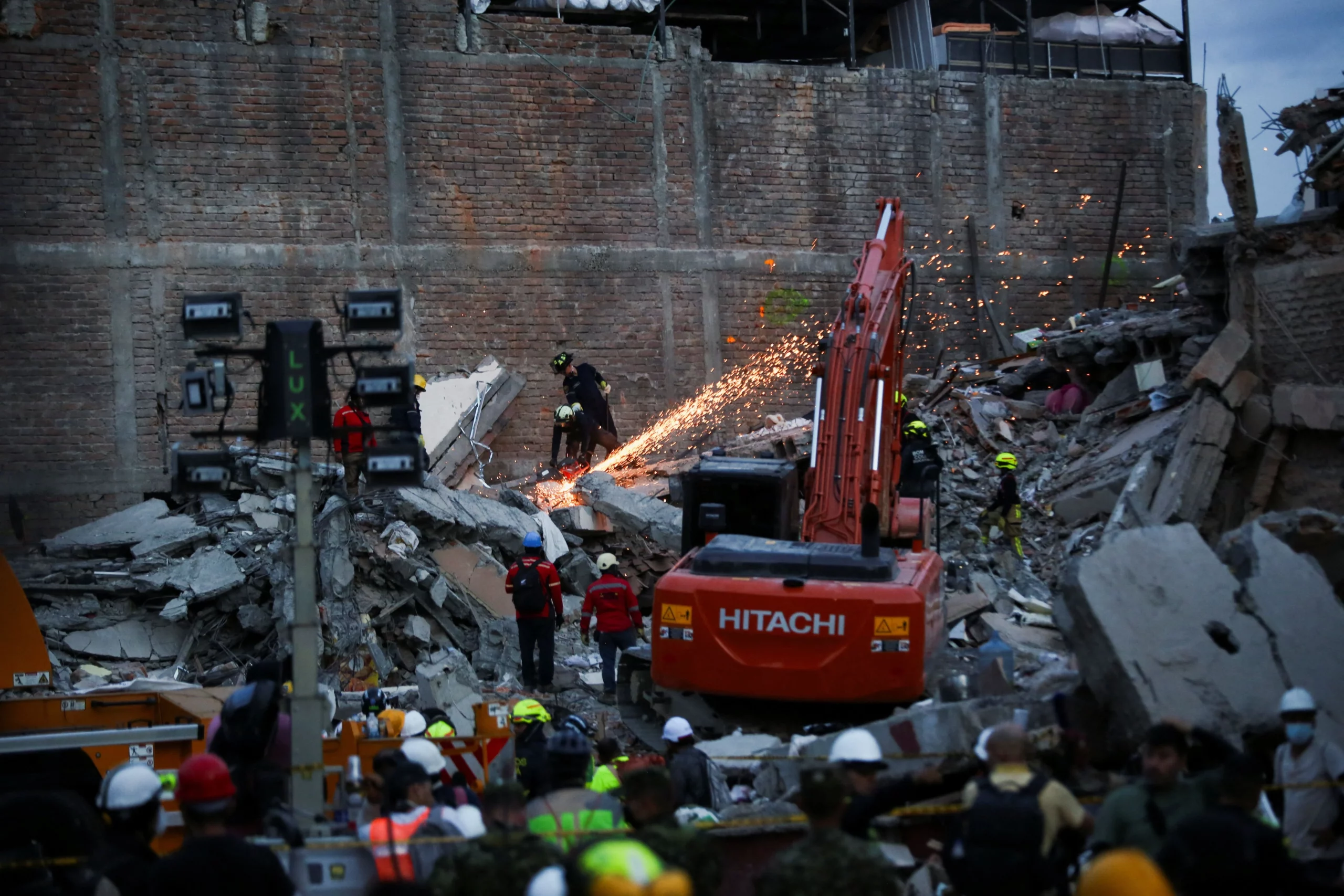
The 7.4-magnitude earthquake of 10 August was Colombia’s strongest in nearly half a century. It killed 331 people and affected more than 361,000, per the disaster agency UNGRD.
The economic damage goes far beyond homes. Shops, factories, warehouses and farms across the Eje Cafetero, the Cauca valley and Chocó lost buildings, stock and machinery.
Earlier estimates put total reconstruction needs close to US$12.9 billion over up to six years. Every week a damaged business stays closed, jobs and suppliers fall away with it.
Small and mid-sized companies are the most exposed. They rarely carry earthquake insurance, and they cannot wait months for state compensation.
Part of a wider money race
The CAF deal lands in a week of financial pledges. Davivienda and BBVA have both offered mortgages at 8 percent to quake victims, and the state student lender Icetex froze collections.
President Abelardo de la Espriella has publicly asked banks to lower interest rates. He wants families to be able to rebuild or buy a dignified roof.
Corporate money is arriving too. The Gilinski family pledged US$48 million to rebuild hospitals and schools in Cali, and other companies have announced donations.
What makes this package different is its target. It is the first large facility aimed specifically at keeping damaged companies alive rather than rebuilding homes.
What comes next
The Cali-based bank will now identify eligible companies through its branches in the affected departments. Neither institution has published application criteria or interest rates yet.
The speed of disbursement will be the real test. A one-year loan approved in November helps nobody whose payroll is due in September.
Watch also whether other multilateral lenders follow. CAF’s move puts pressure on bigger institutions to open similar windows for Colombian business.
Background: Brazil Police Raid Municipal Offices in Banco Master Pension Probe.
Background: Auto Draft.
More: Colombia news in English, every day from The Rio Times.
Frequently Asked Questions
What did CAF and Banco de Occidente announce?
They signed a memorandum to channel up to US$50 million in credit to companies damaged by Colombia’s 10 August earthquake. Portafolio headlined the wider package, including an existing credit line, at US$150 million.
Is the US$150 million a donation?
No. It is bank credit that companies must repay, with terms of up to one year. Only up to US$50 million is firmly earmarked; the rest is an uncommitted revolving credit line.
What can companies use the money for?
Working capital, restoring operating capacity, replacing or modernising damaged machinery, and rebuilding supply chains broken by the earthquake.
What is CAF?
CAF is the Development Bank of Latin America and the Caribbean, a multilateral lender owned by the region’s governments. Its executive president is the Colombian Sergio Díaz-Granados.
How much will Colombia’s earthquake reconstruction cost?
Early estimates put the total close to US$12.9 billion, spread over as many as six years. The 7.4-magnitude quake killed 331 people and affected more than 361,000.
Connected Coverage
For the household side of the money race, read Colombia’s Earthquake Reconstruction Turns to 8 Percent Mortgages and Frozen Student Loans, published earlier today.
Sources
Portafolio (Colombia), 28 August 2026, on the CAF and Banco de Occidente agreement; UNGRD balance of 24 August 2026 via BluRadio; France 24, 17 August 2026, on the Gilinski family donation; El Heraldo, 18 August 2026, on the president’s call for lower interest rates.
This article was produced by The Rio Times’ automated newsroom system. How we use AI · Report an error · Editorial responsibility: Matthias Camenzind, Editor-in-Chief