China Plan to Cut Food Imports Threatens Brazil Soy and Beef Exports
BRAZIL · MARKETS
Key Facts
—The plan. China’s 15th Five-Year Plan, approved in March, makes food security and self-sufficiency a priority.
—The risk to Brazil. Analysts estimate roughly $50bn to $60bn a year in Brazilian farm exports to China is exposed.
—The soy number. One estimate sees Chinese soy imports falling about a quarter, or some 23.5m tonnes, by 2030.
—Not overnight. The shift is expected to be gradual, with market adjustments along the way, not a sudden cut-off.
—The concentration. China takes close to a third of Brazil’s farm exports and the bulk of its soybeans.
—The flashpoint. The plan lands after tighter Chinese checks returned Brazilian soy cargoes earlier this year.
China’s drive to grow more of its own food and diversify suppliers is the quiet counterpoint to Brazil’s record farm sales, putting tens of billions of dollars in soy and beef exports at long-term risk under Beijing’s new five-year plan.
What the five-year plan signals
China approved its 15th Five-Year Plan in March, the blueprint that will guide policy through 2030. Among its priorities is food security, with a clear push toward growing more at home and relying less on imports.
For Brazil, that is a warning rather than an immediate blow. The country has spent years becoming the indispensable supplier to the world’s largest food importer, and the plan questions how durable that role is.
Five-year plans tend to set broad direction more than precise targets, but China tends to follow through over time. Treating the document as mere rhetoric has been a costly mistake for exporters before.
Beijing’s strategy blends several aims at once. It wants higher domestic output, a wider range of suppliers, modern farming, and new protein sources that lean less on imported grain.
Some of these levers are already visible. Chinese researchers have worked on higher-protein corn varieties to cut the soybean meal needed in animal feed, and the plan leans on building a more diversified food supply system.
Analysts caution that geography limits how far China can go. With scarce land and water, it will keep importing land-hungry crops like soybeans for years, even as it works to trim the volumes.
The numbers at stake for Brazil
The scale is large. A consultancy estimate puts the Brazilian farm exports exposed to this shift at roughly fifty to sixty billion dollars a year, a meaningful slice of the country’s trade.
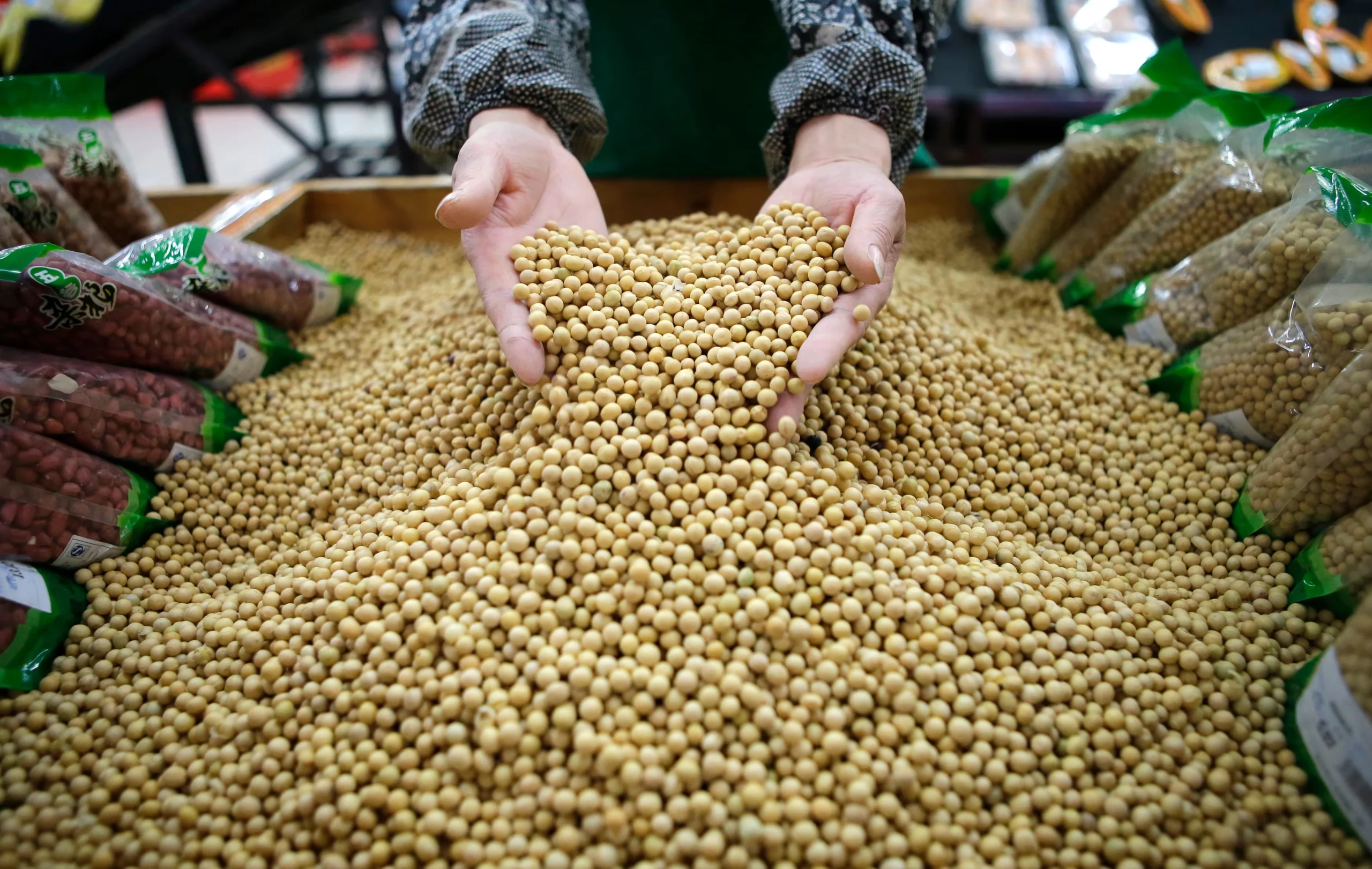
Soybeans are the sharpest vulnerability. The same analysis suggests Chinese soy imports could fall by about a quarter by 2030, equal to more than twenty million tonnes a year.
Beef is exposed too. Brazil is already pressing to renegotiate a tariff-free quota, with surplus volumes facing a steep import tax that eats into the value of those sales.
The experts who modelled this stress it is not a cliff edge. They expect a gradual decline with market adjustments, but they are clear that the direction of travel points downward.
Even a slow drift matters at this scale. Brazil ships most of its soybean crop to China, so a steady erosion of demand would weigh on prices, port volumes and farm investment in the producing states.
The concentration problem
Brazil’s exposure flows from its own success. China takes close to a third of all Brazilian farm exports and the lion’s share of its soybeans, a concentration that has only deepened during the US-China trade war.
That dependence cuts both ways. It made Brazil the winner while China shunned American soy, but it also means any change in Chinese buying lands disproportionately on Brazilian accounts.
Competition is sharpening as well. If China trims overall imports, Brazil may also face renewed rivalry from the United States and Argentina for the volumes that remain.
A US-China thaw would add to that pressure. Any deal that reopens American soybean flows to China would chip away at the share Brazil captured while Beijing was shunning US grain.
Why this matters now
The plan does not arrive in a vacuum. Earlier this year, tighter Chinese phytosanitary checks led to the return of a string of Brazilian soy cargoes, a reminder of how quickly the relationship can tighten.
It also sits against a run of record Brazilian harvests and export figures. The strong present can mask a weaker future if the structural demand that underpins it begins to erode.
For investors, the message is about diversification. Brazil’s agribusiness has thrived on a single dominant buyer, and the plan is a prompt to think harder about what happens if that buyer steps back.
There are partial offsets. Brazil has been opening new markets across Asia, the Middle East and North Africa, and adding processed and value-added products that are less tied to raw commodity flows.
But none of those markets rivals China’s sheer size. Replacing even a slice of Chinese demand would take years of patient diplomacy and new trade deals, which is why the plan is being read so closely in Brasília.
More: Brazil news in English, every day from The Rio Times.
Frequently Asked Questions
What is China’s five-year plan changing?
The 15th Five-Year Plan, approved in March, prioritises food security and self-sufficiency, pushing China to grow more at home and diversify away from heavy reliance on imports.
How much is at stake for Brazil?
A consultancy estimate puts roughly $50bn to $60bn a year in Brazilian farm exports to China at risk over time, with soybeans the most exposed product.
Will the cut happen suddenly?
No. Analysts expect a gradual decline with market adjustments rather than a sudden halt, but they see the long-term trend pointing toward lower Chinese demand.
Why is Brazil so exposed?
China takes close to a third of Brazil’s farm exports and most of its soybeans. That concentration means any shift in Chinese buying hits Brazil’s trade accounts hard.
Connected Coverage
For the wider picture, see our guide to Brazil’s agribusiness in 2026, the record first-quarter export figures, and our earlier look at the risks in China’s soybean strategy.
This article was produced by The Rio Times’ automated newsroom system. How we use AI · Report an error · Editorial responsibility: Matthias Camenzind, Editor-in-Chief