Vik Muniz Gets His Biggest-Ever Retrospective, Free in Central Rio

Art
Key Facts
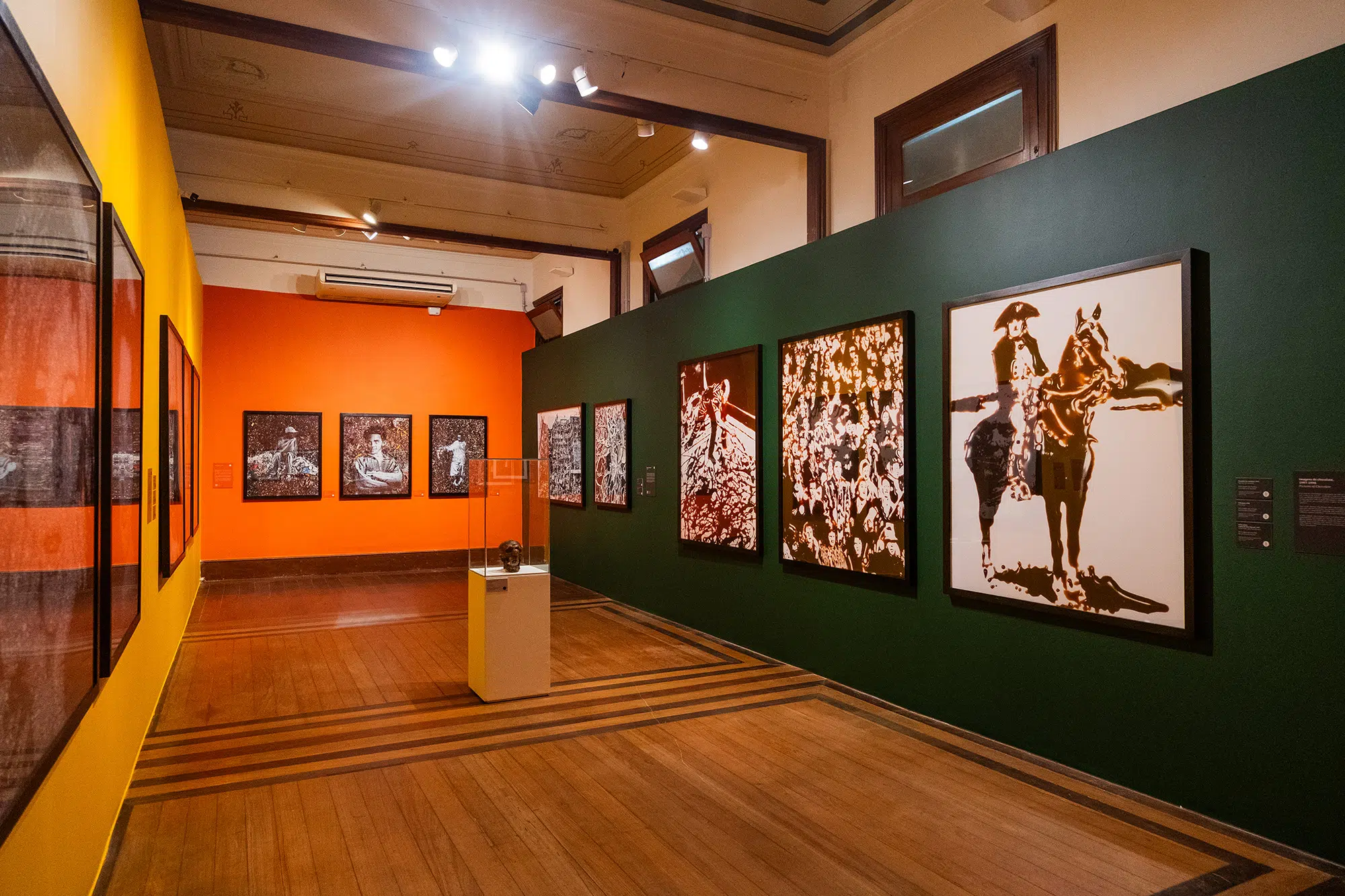
—The show. “Vik Muniz – A Olho Nu” is the largest career survey ever staged of the Brazilian artist, at the CCBB in central Rio.
—The scale. Nearly 250 works from 43 series, spanning 1987 to 2026, across two floors.
—The dates. On view until September 7, 2026, open Wednesday to Monday, 9am to 8pm.
—The cost. Free, with timed tickets from the box office or the CCBB website.
—The showpiece. A suspended pterosaur with an 8.2-metre wingspan, made from polymer infused with ashes of Brazil’s National Museum fire.
The largest Vik Muniz retrospective ever mounted is open, free of charge, in central Rio de Janeiro. It may be the best-value cultural afternoon in the city this winter, gathering nearly two hundred and fifty works by one of Brazil’s most internationally recognized living artists.
Titled “A Olho Nu,” or “With the Naked Eye,” the exhibition fills the ground and first floors of the Centro Cultural Banco do Brasil in the old center. It runs until September seven, and admission costs nothing.
What the Vik Muniz retrospective actually shows
If Muniz’s name is unfamiliar, his story may not be. He is the artist behind “Waste Land,” the Oscar-nominated documentary that followed him working with the pickers of a vast Rio landfill to turn their portraits into art.
His signature trick is making images out of unlikely materials, then photographing them: sugar, chocolate, scrap, diamonds, dust. What you see from across the room dissolves, up close, into the raw stuff it was built from, and that gap is the whole point.
Curated by Daniel Rangel, the survey runs from early sculptures that few visitors will have seen to the photographic series that made his international reputation. It spans more than three decades and forty-three distinct bodies of work.
The Rio staging is bigger than the earlier stops in Recife and Salvador, which together drew more than a hundred and fifty thousand visitors. Around twenty extra works were added here, including five created this year for the show.
The curator frames the retrospective as a plunge into Muniz’s visual grammar rather than a simple chronology. The artist keeps returning to the same question of how images are made and read, so older and newer work speaks to each other rather than sitting in neat order.
The pieces to look out for
The single most striking object hangs in the rotunda. It is a pterosaur with an eight-point-two-metre wingspan, moulded from polymer infused with ashes from the fire that gutted Brazil’s National Museum in 2018.
Near the entrance sits a ten-metre circular carpet printed with his “Medusa Marinara,” the Greek myth rendered in tomato sauce. Also on the ground floor is a full-size Ferrari Berlinetta sculpture, more than four metres long and weighing six hundred and fifty kilograms, that reproduces a childhood toy car.
Six series make their debut at this stage of the tour, and the closing timeline includes video monitors and an interview with the artist. For a foreign resident, it is a rare chance to see a globally collected Brazilian artist at full scale, at home, at no cost.
A market moment, too
The Rio show coincides with fresh commercial interest in Muniz’s work. A piece by the artist is being offered in an online sale at Christie’s that closes on July seventeen, a reminder that the museum-floor acclaim runs alongside a live auction market.
That market context matters for a visiting collector or a curious investor. Muniz’s photographic editions trade internationally, and his major pieces have fetched six-figure sums at auction, so a free public survey of this depth is unusual for an artist of his standing.
The value is sharpened by the setting. Reaching the CCBB costs little more than a single metro fare of under eight reais (roughly $2), and the surrounding old center rewards an afternoon on foot.
Highlights nearby include the belle-époque Confeitaria Colombo and the restored port promenade a short walk north. After Rio, the retrospective travels on to the CCBB in Brasília in September and to Belo Horizonte in March 2027.
For now, the fullest version of it is the one on Rua Primeiro de Março.
Where and when is the Vik Muniz retrospective?
It is at the Centro Cultural Banco do Brasil in central Rio de Janeiro, at Rua Primeiro de Março sixty-six, and runs until September seven, 2026. The show is open Wednesday to Monday, from nine in the morning to eight in the evening.
How much does it cost to visit?
Admission is free. Timed tickets are collected at the box office or through the CCBB website, and it is worth booking ahead on weekends and match days when the center is busy.
Who is Vik Muniz?
He is a Brazilian artist, born in São Paulo, known worldwide for building images out of unusual materials and then photographing them. He is widely recognized abroad through the Oscar-nominated documentary “Waste Land,” about his project with recyclable-waste pickers near Rio.
Connected Coverage
Rio Turns Its Winter Into a $1.4 Billion Tourist Season
Rio Creative Economy Summit Pumped $99m Into the City, Study Finds
Brazilian Cinema’s Two-Year Run: From Salles to Mendonca Filho
More: Brazil news in English, every day from The Rio Times.
Frequently Asked Questions
How much does it cost to get into the Vik Muniz retrospective?
Admission is completely free. You just need to pick up a timed ticket at the box office or through the CCBB website.
How big is this exhibition and how long is it on?
It's the largest Vik Muniz retrospective ever staged, with nearly 250 works across 43 series spanning 1987 to 2026, spread over two floors. The show runs until September 7, 2026, open Wednesday to Monday from 9am to 8pm.
What is the most eye-catching piece in the show?
The standout object is a suspended pterosaur with an 8.2-metre wingspan, made from polymer mixed with ashes from the 2018 fire that destroyed Brazil's National Museum. It hangs in the rotunda as both a spectacle and a quiet memorial to that loss.
This article was produced by The Rio Times’ automated newsroom system. How we use AI · Report an error · Editorial responsibility: Matthias Camenzind, Editor-in-Chief
The Rio de Janeiro Guide
What The Rio Times publishes for foreigners in Rio de Janeiro, Brazil.
This month
Coming up in Rio de Janeiro
- Whindersson Nunes Plays Rio's Qualistage on 18 October, Tickets From US$13.50 18 Oct
- Black Pantera Opens Brazil Tour at Rio's Circo Voador on 24 October 24 Oct
- Mondial de la Bière in Rio de Janeiro, Brazil: 1,500 Beers at Pier Mauá, October 29–November 1 29 Oct
- Maro Plays Circo Voador in Rio de Janeiro on 3 November 3 Nov
Living in Rio de Janeiro
- Réveillon Copacabana 2027: New Year's Eve in Rio — Fireworks, Traditions and Guide
- Rio vs São Paulo Safety for Expats, District by District
- Rio's Armed Group Map Put 1.6 Million People Under One Faction
- Rock in Rio 2026: What Travelers and Expats Need to Know
Nightlife
Understand Brazil