Chile TAG Toll System Explained Ahead of Santiago Toll Cut

CHILE · TRANSPORT
Key Facts
- —The country Chile, a long South American country whose capital, Santiago, is crossed by privately run urban highways that charge tolls electronically, with no booths.
- —What happened On Monday, 12 October, President José Antonio Kast announced cuts of 10% off-peak and 25% at peak on Autopista Central.
- —How you pay A TAG, a small windscreen device, is read by overhead gantries, and the account holder is billed by distance and time band.
- —The 2026 rates On Autopista Central, 103.9 pesos per kilometre off-peak, 207.8 at peak and 311.8 in the most congested slots (about US$0.11, US$0.21 and US$0.32).
- —Without a TAG On Autopista Central, a day’s tolls cost double, paid online between day 11 and day 30; unpaid trips risk a fine.
- —From 1 January 2027 Kast said the cut starts then for TAG users who pay within 60 days, if an administrative review clears in time.
The Chile TAG toll system charges drivers on Santiago’s urban highways through a windscreen device, with no booths and no stopping. On Monday, 12 October, President José Antonio Kast said Autopista Central will cut those charges by up to 25% from 1 January 2027.
For a visitor in a rental car, the charges add up without a single toll booth in sight. This explainer covers how it works, what drivers without a TAG pay, and what the announced Autopista Central cut changes.
How the Chile TAG Toll System Works
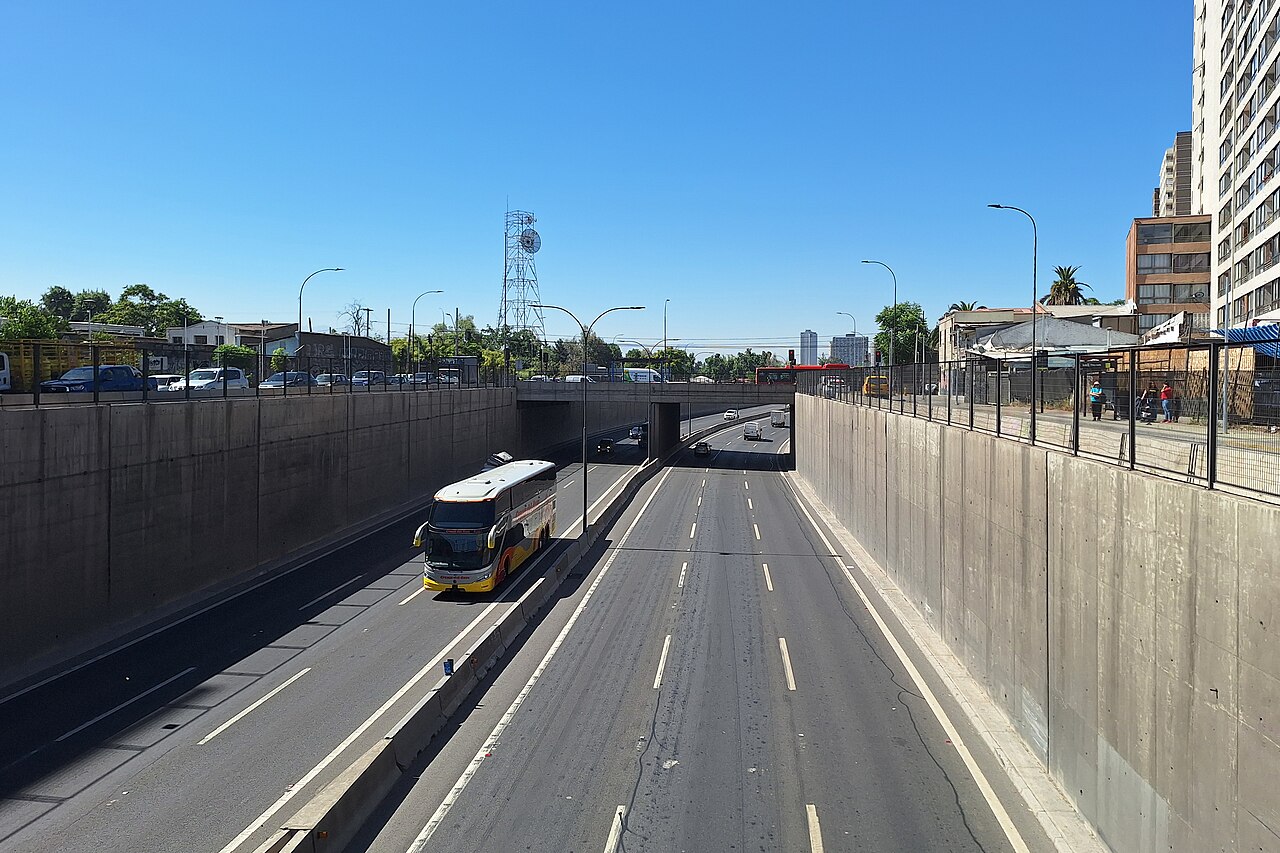
Santiago’s urban highways use free-flow tolling: overhead gantries read a TAG, a small electronic device fixed to the windscreen, as cars pass at speed. Autopista Central opened in 2004 and runs about 62 kilometres along two axes, the Ruta 5 and General Velásquez, according to the Presidency.
Autopase, the billing service of the Autopista Central concession company, says the road was the first in South America to use free-flow tolling. It also says Chile pioneered a TAG that works across different highways.
Under the TAG toll system, each driver gets a device from one operator, by home delivery or at a sales office. Autopase lets drivers check online which operator holds the contract for a given licence plate.
Why Rush Hour Costs Up to Three Times More
The TAG toll system charges by distance and time band at each gantry. Autopista Central’s 2026 published schedule sets 103.9 pesos per kilometre off-peak (about US$0.11) and 207.8 at peak (about US$0.21).
The most congested slots cost 311.8 pesos per kilometre (about US$0.32). A car on the 1.75-kilometre northbound stretch from the Alameda avenue to the Mapocho river pays 181.86 pesos off-peak (about US$0.19).
At peak it pays 363.73 pesos (about US$0.37), and in congested slots 545.60 pesos (about US$0.56). Peak and congested windows differ by gantry, direction and day of the week, and some run into the early afternoon.
Larger vehicle categories pay two or three times the car rate on the main axis. The current schedule runs from 17 March to 31 December 2026, and conversions use about 977 pesos per US dollar on 12 October.
What Drivers Without a TAG Pay
Staying outside the TAG toll system does not make the road free. Under Autopista Central’s late-payment system, a day’s trips cost the sum of the gantries passed, multiplied by two.
Santiago’s single day pass, which covered six urban highways for a flat 12,720 pesos (about US$13), ended on 30 June 2025, Emol and Meganoticias reported. Each highway now bills trips without a TAG itself.
Drivers settle Autopista Central trips on the official portal pasastesintag.cl from the 11th to the 30th day after the trip. Miss that window, and the operator’s 2026 schedule applies a penalty toll of 11,432 pesos (about US$12) per day for a car.
The operator also reports the plate to the Ministry of Public Works (MOP), which runs Chile’s road concessions. The ministry then files a complaint with a local police court for a serious traffic offence, Autopase explains.
Autopase puts that fine at 1 UTM, Chile’s inflation-indexed monthly tax unit, worth 72,151 pesos (about US$74) in October. Unpaid fines go on the national register of unpaid fines and can block a car’s yearly circulation permit.
Separately, the Concessions Law punishes unpaid tolls with five times the debt, or fifteen times for repeat cases, capped at 20 UTM (about US$1,480).
What the 2027 Autopista Central Cut Changes
The Presidency’s statement says TAG users get 10% off the base off-peak rate and 25% off peak and congested rates. Within the TAG toll system, the benefit covers users who pay their bills within the first 60 days.
Kast said the cut starts on 1 January 2027 “if everything goes to schedule”, Cooperativa reported. The statement itself gives no start date.
The Presidency’s own example: a 100,000-peso bill (about US$102) from off-peak trips would fall to 90,000 pesos (about US$92). An all-peak bill would drop to 75,000 pesos (about US$77), and an evenly split one to 82,500 pesos (about US$84).
The statement calls Autopista Central the busiest concession-run urban highway in the Santiago region. Its operator is VíasChile, controlled by the Spanish group Abertis, which has negotiated Santiago road deals before.
In return, VíasChile gets a concession about 20 months longer, said Louis de Grange, minister of both Public Works and Transport, as quoted by Cooperativa. The agreement still faces an administrative review in the coming weeks, the Presidency says.
What It Means for You
US visitors renting a car in Santiago enter the TAG toll system on any urban highway, since there are no cash booths. Before driving off, ask the rental firm whether the car carries an active TAG and how tolls are passed on.
On Autopista Central, a car without a working TAG is still billed double, and an unpaid trip can become a fine after 30 days. The January discount helps regular commuters most, and only if they pay on time.
What Is Not Known
The 2027 rate schedule, to which the discount will apply, has not been published. Officials have not explained how the 60-day payment test will be checked in practice.
No date has been given for the end of the administrative review. Kast said De Grange is talking to other urban highways, but no other agreement has been announced.
More on this story: Chile to Cut Autopista Central Tolls by Up to 25%.
More: Chile news in English, every day from The Rio Times.
Frequently Asked Questions
Do I need a TAG to drive in Santiago?
You need one on the concession-run urban highways, which use the TAG toll system instead of booths. On Autopista Central, trips without a TAG are charged double and must be paid online between day 11 and day 30.
How much does Autopista Central cost per kilometre?
In 2026 a car pays 103.9 pesos per kilometre off-peak, 207.8 at peak and 311.8 in congested slots. That is about US$0.11, US$0.21 and US$0.32.
When does the Autopista Central TAG discount start?
Kast said 1 January 2027, if the administrative review clears in time. It covers TAG users who pay their bills within the first 60 days.
Does the discount apply on other Santiago highways?
No. The agreement covers Autopista Central only, while the minister is talking to other urban highways about similar deals.
Sources: Presidency of Chile, statement of 12 October (via BioBioChile), 12 October 2026; Autopista Central, 2026 toll schedule, 17 March 2026; Autopase, About the TAG, 13 October 2026; Autopase, Legal framework, 13 October 2026; Autopase, Did you drive without a TAG?, 13 October 2026; Pasaste Sin TAG portal, 13 October 2026; Cooperativa, 12 October 2026; BioBioChile, 12 October 2026; Autopase, Disabled TAG clients (fine and penalty toll), 13 October 2026; Internal Revenue Service (SII), UTM values 2026, 13 October 2026; Emol, End of the day pass, 17 June 2025; Meganoticias, Paying without a TAG, 3 July 2025.
This article was produced by The Rio Times’ automated newsroom system. How we use AI · Report an error · Editorial responsibility: Matthias Camenzind, Editor-in-Chief
Living in or visiting Santiago? See this month's events and our Santiago city guide with rents, safety and upcoming concerts.