Brazil · Metropole
Key Facts
—Who he was. Cazuza, one of the most quoted lyricists Brazil has produced.
—The band. He fronted Barão Vermelho before a celebrated solo career.
—A short life. He died in 1990 at the age of 32 from an AIDS-related illness.
—The output. In a nine-year career he sold millions of records and scored a long run of hits.
—In the news. He was the honored figure at this year’s Brazilian Music Awards on June 10.
—Why it matters. His songs still bind Brazilian generations and travel as cultural shorthand.
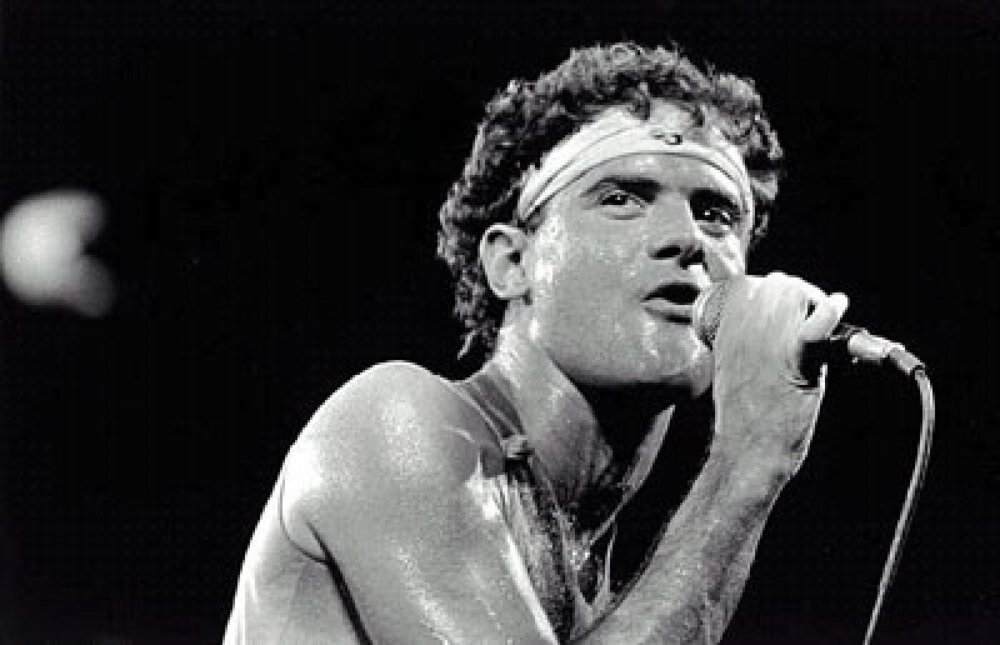
More than three decades after his death at 32, Cazuza remains a defining voice of Brazilian rock, a songwriter whose words still surface in protests, love letters and karaoke bars across a country that never quite let him go.
The man who shaped Brazilian rock
For readers outside Brazil, a name like Cazuza needs introduction, because at home it needs none. Born in Rio de Janeiro in 1958, he became the frontman of Barão Vermelho, a band at the heart of the explosion of Brazilian rock in the 1980s, before launching a solo career that turned him into one of the most beloved and quoted artists the country has known. He wrote and sang in a way that felt confessional and urgent, mixing tenderness, defiance and dark humor, and that voice arrived at a moment when Brazil was emerging from years of military dictatorship and hungry for exactly that kind of honesty.
His career was brief but intense. In roughly nine years he sold millions of albums and produced a string of songs that became standards, the kind of tracks that several generations now know by heart. What set him apart was the writing. His lyrics were poetry as much as pop, quoted in conversation and graffiti, studied for their craft and repeated for their feeling. That combination, a rock star who was also a genuine poet, is why his name still carries weight decades later, and why he is treated less as a nostalgia act than as a permanent part of the national songbook.
A death that became a symbol
Part of Cazuza’s enduring power comes from how his life ended. He died in 1990 at just 32, from an illness related to AIDS, at a time when the disease was poorly understood and heavily stigmatized. He had spoken openly about his condition, and his decline, played out partly in public, turned him into a symbol as much as a singer. He became a face of a generation confronting mortality young, and his late songs, written in the shadow of illness, took on an almost unbearable poignancy that has only deepened with time.
That symbolic weight matters because it explains why his work refuses to fade. Songs written by a young man staring down his own death carry a directness that keeps finding new listeners, and his openness about illness gave the country a rare, human reference point during a frightening era. The result is an artist whose meaning is layered: he is a great writer, a rock icon, and a kind of national memory all at once, which is why his catalogue is revisited rather than retired.
Why a new generation keeps singing him
The clearest recent proof of his standing came this week, when Cazuza was the honored figure at the 33rd edition of the Brazilian Music Awards, held in Rio on June 10. The ceremony was built around his catalogue, with artists from across the generations, from veterans to current pop stars, taking turns reinterpreting his songs. Building an entire night around a man who died 36 years ago, and handing his music to performers young enough to be his grandchildren, is the kind of tribute reserved for figures a culture considers foundational.
That a room full of contemporary stars can reach for his songs and have a young audience sing along is the real measure of his legacy. His work spans protest, romance and raw confession, which gives performers from very different styles a shared text to draw on, and gives listeners of any age something to recognize. For Brazil, Cazuza functions as a piece of common language, a set of lines and melodies that bind people across decades and divides. For an outsider trying to understand the country’s emotional life, learning who he was is a shortcut into how Brazilians feel about their own music, their history and themselves.
It helps, too, to place him among his peers. Cazuza is spoken of in the same breath as other towering figures of Brazilian rock, the artists who turned a borrowed genre into something unmistakably local in the years around the end of the dictatorship. What distinguished him within that company was the literary quality of his words and the rawness of his delivery, qualities that let his songs cross from the radio into the realm of quotation and memory. Decades on, that is why a national music prize can be built around him without feeling like an exercise in nostalgia, and why each new generation of Brazilian artists seems to discover him as if for the first time.
Frequently Asked Questions
Who was Cazuza?
He was a Brazilian singer and songwriter, a defining voice of 1980s Brazilian rock who fronted the band Barão Vermelho before a celebrated solo career, known for poetic, confessional lyrics.
How did he die?
He died in 1990 at the age of 32 from an AIDS-related illness, having spoken openly about his condition, which made him a symbol of a generation as well as a celebrated artist.
Why is he in the news now?
He was the honored figure at this year’s Brazilian Music Awards on June 10, where artists across generations performed his songs in tribute.
Connected Coverage
Cazuza Tribute Headlines Brazil Music Awards Star Lineup
Brazil Music Awards Reveal a Recorded-Music Market Split Into Niches
This article was produced by The Rio Times’ automated newsroom system. How we use AI · Report an error · Editorial responsibility: Matthias Camenzind, Editor-in-Chief
Read More from The Rio Times