Capital Flight from Hong Kong: A Sign of China’s Financial Struggles
Hong Kong’s stock market is sending signals that investors can’t afford to ignore. As foreign capital flows out, Chinese officials are taking notice, recognizing the city’s crucial role as a financial gateway.
The Hang Seng Index, Hong Kong’s market barometer, paints a picture of recent struggles. UBS strategist Angus Chan’s forecast of 20,000 points by 2025 suggests muted growth ahead.
This tepid outlook stems from persistent geopolitical concerns, including potential U.S.-China trade friction. Mainland Chinese firms now dominate Hong Kong’s exchange, comprising up to 80% of its market value.
Tech giants Meituan, Alibaba, and Tencent alone make up a quarter of the Hang Seng Index. This concentration highlights Hong Kong’s evolving role in China’s financial landscape.
Unlike mainland markets, Hong Kong offers foreign investors unrestricted access. This openness makes it a key indicator of global sentiment towards Chinese assets.
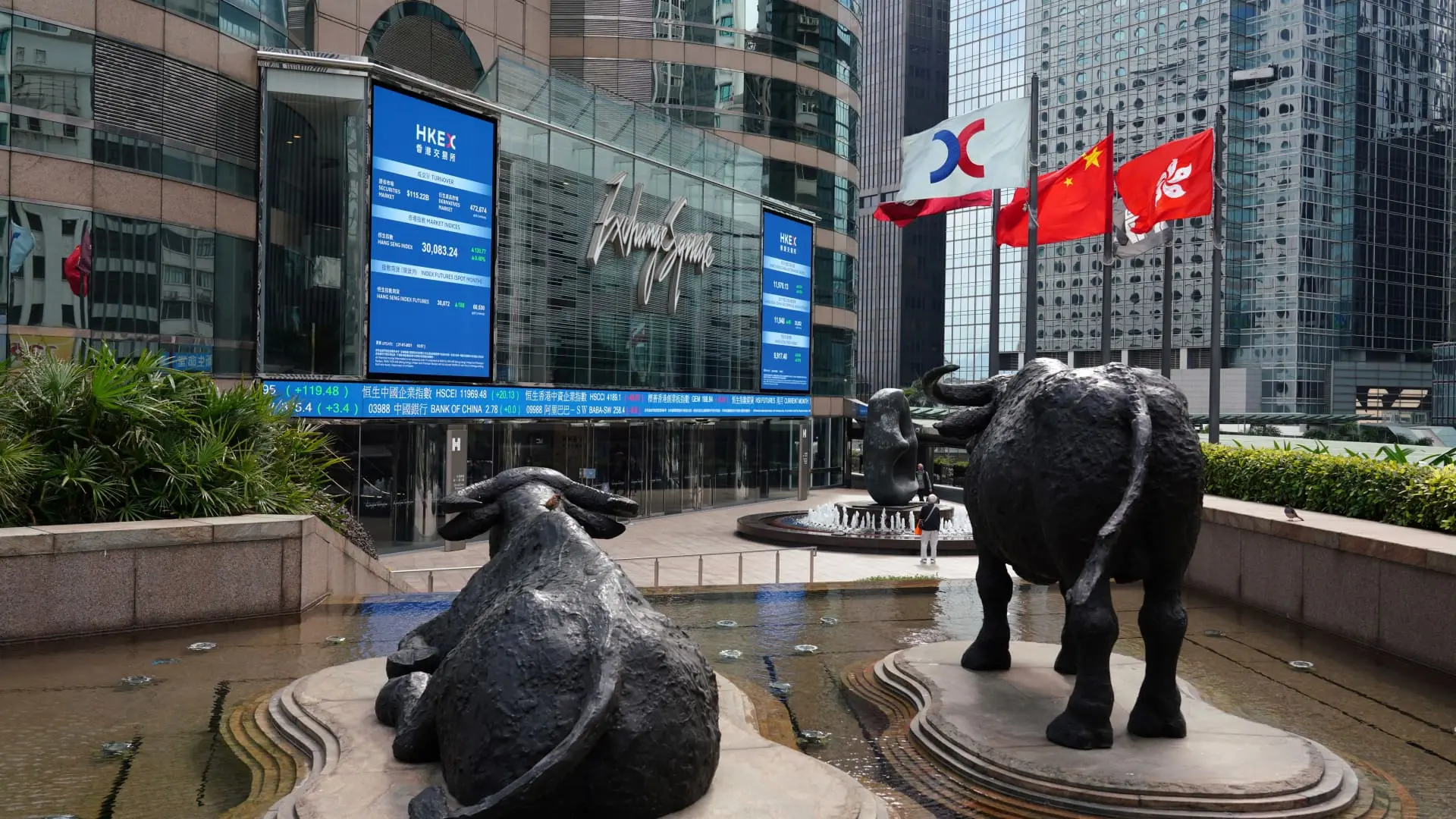
Recent performance suggests waning enthusiasm, with the index shedding 40% over four years through 2023. A shift in the investor base is underway.
Mainland Chinese traders now account for a fifth of Hong Kong’s market activity. They’re drawn by relative bargains, as identical shares often trade 50% cheaper in Hong Kong than on mainland exchanges.
Hong Kong’s Market Activity
Hong Kong’s position as a financial bridge faces headwinds. Political unrest and worries about China’s property sector have dampened its appeal.
Some foreign firms are reconsidering their Hong Kong listings, with L’Occitane’s recent delisting a notable example. Chinese leadership recognizes Hong Kong’s strategic importance.
Vice Premier He Lifeng’s recent comments underscore efforts to bolster the city’s role in China’s economic development. This support aims to preserve Hong Kong’s international financial connections.
For investors, Hong Kong’s market presents a conundrum. Its low valuations – trading at just nine times earnings – suggest potential opportunities.
Yet, these bargains come with risks tied to China’s economic trajectory and global relations. Hong Kong’s stock market serves as a window into China’s financial future.
Its performance will likely reflect broader trends in Chinese economic policy and global integration. As this story unfolds, it carries implications for investors, policymakers, and businesses worldwide.
This article was produced by The Rio Times’ automated newsroom system. How we use AI · Report an error · Editorial responsibility: Matthias Camenzind, Editor-in-Chief