Budget Proposal for 2020 Cuts 49 Percent of Investment in Sports
RIO DE JANEIRO, BRAZIL – Without a ministry to defend its interests, sports loses strength in the Jair Bolsonaro (PSL) government.
In the proposal for the Annual Budget Law (LOA) for 2020 sent to the National Congress, the president proposes that investment in sports be R$220 (US$55) million, almost half of the R$431 million reais that was proposed by Michel Temer in LOA for 2019.

Compared to the last Olympic cycle, the investment cut is even greater. Excluding expenses related to the Olympic legacy, the reduction in investment in comparison with the one for 2016 is 74 percent, without any adjustment for inflation.
This proposal considers only expenses with activities (such as the Athlete Scholarship and the National Training Network) and projects (implementation of infrastructure included.) The Ministry’s operating expenses, such as mandated transfers, payroll and general administration, which are now part of a larger and broader Citizenship portfolio, are not included.
Including the cost of managing the Olympic legacy, the budget reserved for sports in 2020 is R$220 millions. In the 2019 proposal, the budget was R$431 million, and R$722 million in 2017, which was the first year after the end of the massive investment for the Rio Olympics.
The budget reserved for the preparation of athletes and training of professionals for the High-Performance Sport, that was R$105 million in 2016, suffered a drastic reduction under Temer, and has now dropped to only R$3 million. The same goes for the “preparation of teams to represent Brazil,” an item that fell from R$40 million in 2017 to R$1 million this year; this amount will remain the same in next year’s budget.
This means that, if the budget is approved as is, all high-performance sports will have R$4 million from the federal government to qualify and prepare for the Tokyo Olympic Games. In 2016, the year of the Rio Olympics, that amount was R$241 million. In 2017, the first year of the new cycle, it was R$93 million.
The proposed budget for sports infrastructure was also significantly reduced. The main proposal of Minister Osmar Terra in sports, the program to implement the Citizenship Station Sports (former Sports Initiation Center-CIE) will have only R$10 million, compared to the R$50 million of the 2016 budget, the last one from President Dilma. Temer reserved R$44 million for the CIEs in 2019.
For the management and improvement of the National Training Network, Bolsonaro only allocated R$10 million in 2020. In 2017, in the first year of the program, the budget provided for R$90 million. In the 2020 version of the LOA there is a reserve of R$9 million for the implementation of a high-performance sports structure, as opposed to the R$35 million from last year.
There is a reduction even in items dedicated to so-called sports for all (implementation of open-air academies and social projects, for example), an official justification to unite Sports, Culture and Social Development in the same ministry.
Together, the items for these programs totaled R$104 million in LOA 2019 and are now only R$84 million. In 2016, these items, which had nothing to do with high-income sport or the Olympic Games, totaled R$175 million reais.
For the third consecutive year, the LOA foresees R$70 million for the Athlete Stock Exchange. As it became clear in 2018, the amount does not pay even half of the program, which costs around R$140 million per year.
Right at the beginning of this year, the Ministry of Citizenship fulfilled its promise of 100 days of government and “restructured” the budget, including among the beneficiaries athletes who had been cut by Temer at the end of 2018. Now, however, the budget proposal for 2020 is to return to the value that was insufficient last year.
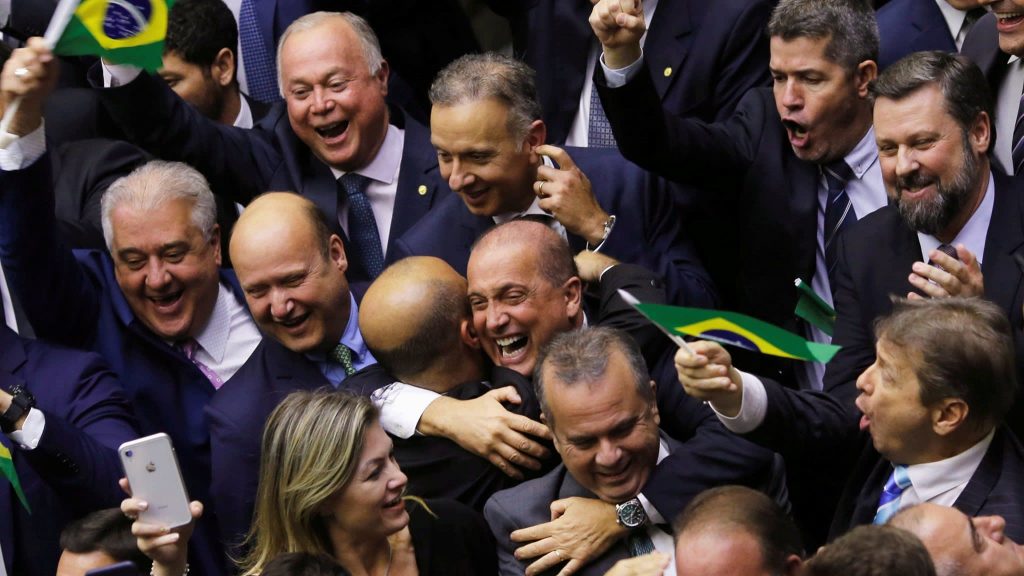
The budget will still be voted by Congress, where it usually undergoes changes, with the inclusion of individual amendments by voting blocs. In this year’s budget, for example, Congress has allocated more than R$330 million extra for sports, concentrated, however, in funds for projects and small works in the electoral districts of several deputies and senators. For the high performance sports, there was even a cut, in the amount of R$5 million.
More: Brazil news in English, every day from The Rio Times.
This article was produced by The Rio Times’ automated newsroom system. How we use AI · Report an error
Read More from The Rio Times