Brazil’s Supreme Court to Rule on Ban of Blood Donations by Gays
SÃO PAULO, BRAZIL – Brazil’s Supreme Court (STF) is scheduled to hear an appeal this week that may lift a restriction that many Brazilians don’t even know about: men who have had sex with other men in the last twelve months are not allowed to donate blood. The rule has made many homosexuals lie to health officials during their well-being interview.

Guilherme Rocha is a 37 years old resident of Brasília, Brazil’s capital. “I think I must have donated eight to ten times before telling them I was gay,” he tells The Rio Times.
Rocha says that when he finally had the courage to tell interviewers he was a homosexual, he was told he could no longer give blood. He says after the ‘ban’ he never again tried to donate, but kept receiving telephone calls from the blood bank.
“The blood center called me a few times because they needed my blood type and I told them to write down that I was gay and that I was prohibited from donating,” he says.
The norm goes back to 1993, when Anvisa (National Health Surveillance Agency) established that people living with HIV and/or with a history of belonging or belonging to “groups at risk for HIV/AIDS” could not donate blood. At that time, Brazil was facing the peak of the AIDS epidemic, and gay and bisexual men were disproportionately affected by HIV/AIDS.
Rocha, however, says that what interviewers should be looking at now are signs of risky behavior and not risk groups.
“One issue of the discussion is that the concept of ‘risk group’ no longer exists, but rather that of ‘risk behavior’. (Supreme Court Justice) Alexandre de Moraes says we (homosexuals) have the ‘immunological-window’ risk (time when individuals are more prone to getting diseases), but this risk is valid for everybody who donates. So, it doesn’t make sense to place restrictions only for gays,” argues Rocha.
According to the PSB (Brazilian Socialist Party), entity which filed the petition, the Anvisa rule ‘offends the dignity of those involved and removes the possibility of exercising human solidarity’.
“If that were not enough, we must highlight the current – and enormous – shortage at Brazilian blood banks. According to recent surveys, it is estimated that, due to the rule 19 million liters of blood are no longer donated annually,” notes PSB officials.
The political party filed an ADI (Direct Action of Unconstitutionality) against the rule, but one of the Justices asked for time to review the issue. This was in 2016, almost four years ago.
According to the Anvisa regulation, the restriction for heterosexual people only exists if the person has had sex with more than three people in a period of twelve months. For gay and bisexual men, however, just one other man in the last twelve months can ban you from donating.

“(With the rule) gay and bisexual men who have exams up to date, are in a stable relationship and/or always use condoms, cannot donate! Even though all the blood collected was tested before reaching those in need. In other words, this restriction is prejudicial,” argues Leandro Ramos, director of NGO All Out. The entity started an internet petition campaign to pressure Brazil’s highest court to lift the restrictions.
“With the maintenance of norms of this nature, we pass on the idea that gay and bisexual men are potentially sick, as well as passing the idea that the rest of the population would be ‘immune’ to contagion. And that is a big mistake. A double mistake,” says Mariana Chaves from the Brazilian Institute of Family Law (IBDFAM).
The Ministry of Health argues that the twelve months of sexual abstinence are part of a set of health rules to protect those who will receive the transfusion from possible infections and follows the recommendation of the World Health Organization (WHO) and the Pan American Health Organization (PAHO). Both the Ministry and Anvisa state that sexual orientation should not be used as criteria for donor selection and that the rule is not discriminatory.
And this is where the controversy lives. Although the current order determines that the selection criterion is risky sexual practice and not sexual orientation or gender identity, that is not what occurs every day in dozens of blood banks across the country.
Rocha says that after he stopped donating regularly he only came back to a blood bank once, in 2010, and once again had to lie.
“I came back once to help a friend who had cancer and has my blood type. I lied (to interviewer), in another hospital, and again everything went well. They accepted my blood,” he says.
According to Adriana Galvão, former president of the Commission for Sexual Diversity at the OAB São Paulo Chapter, the restriction by blood banks in regards to gay men is unconstitutional and has no objective criteria.
“If it is proven that the blood is infected, it is an obvious, logical response. But if a man comes and says he is gay, that excludes him without any logical criteria. Restricting a person’s right without even testing their blood is assuming that their blood is sick,” says Galvão.
LGBT+ groups are now hopeful that the country’s Supreme Court will change the underlying prejudice.
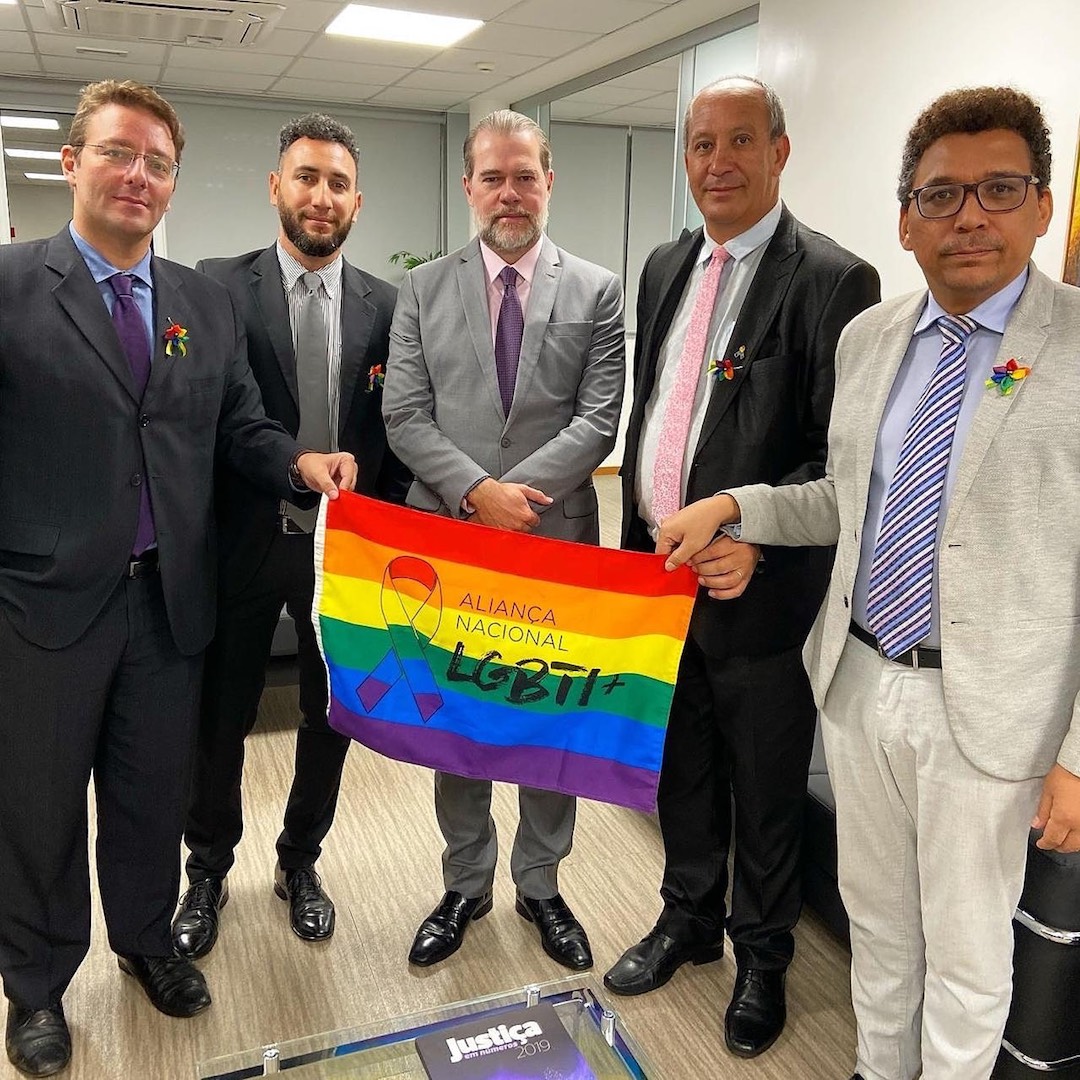
“We expect the same predisposition from the Court that it had during the ruling on homophobia,” Lucas Siqueira, administrative director of Grupo Dignidade (Dignity Group) told The Rio Times.
According to Siqueira, every time a homosexual man walks into a blood bank to donate and is refused, it strengthens the discrimination towards a big slice of society. “The practice is discriminatory. Those who want to do good (donate) and are truthful (in interview) are penalized,” says the executive.
Siqueira believes that if the Supreme Court rules to do away with the restriction, blood banks will obey the ruling.
“When the Court ruled in favor of same-sex marriages the notaries across the countries obeyed; when it ruled homophobia was a crime police stations also looked into those complaints so I don’t see why blood banks would not obey the Court and allow for those with non-risky behaviors to donate,” concludes Siqueira.
Brazil’s Supreme Court is scheduled to rule on the question on March 19th.
More: Brazil news in English, every day from The Rio Times.
Editorial responsibility: Matthias Camenzind, Editor-in-Chief · Editorial standards · Report an error