Brazil’s Guedes says in U.S.: ‘Contrary to what they say, Brazil is not seen badly abroad’
Brazilian Economy Minister Paulo Guedes said that Brazil is in the process of changing its image abroad and that the government has taken a whole series of measures to achieve this.
According to him, the external “war” scenario at the beginning of Jair Bolsonaro’s term is a thing of the past. The country is now recognized for its currency, taxation, and democratic progress.
“Contrary to what people say, Brazil has not been viewed badly abroad. Foreign countries recognize Brazil’s progress in taxation, currency, and democracy and are impressed by what Brazil has achieved,” Guedes told reporters Thursday (14).
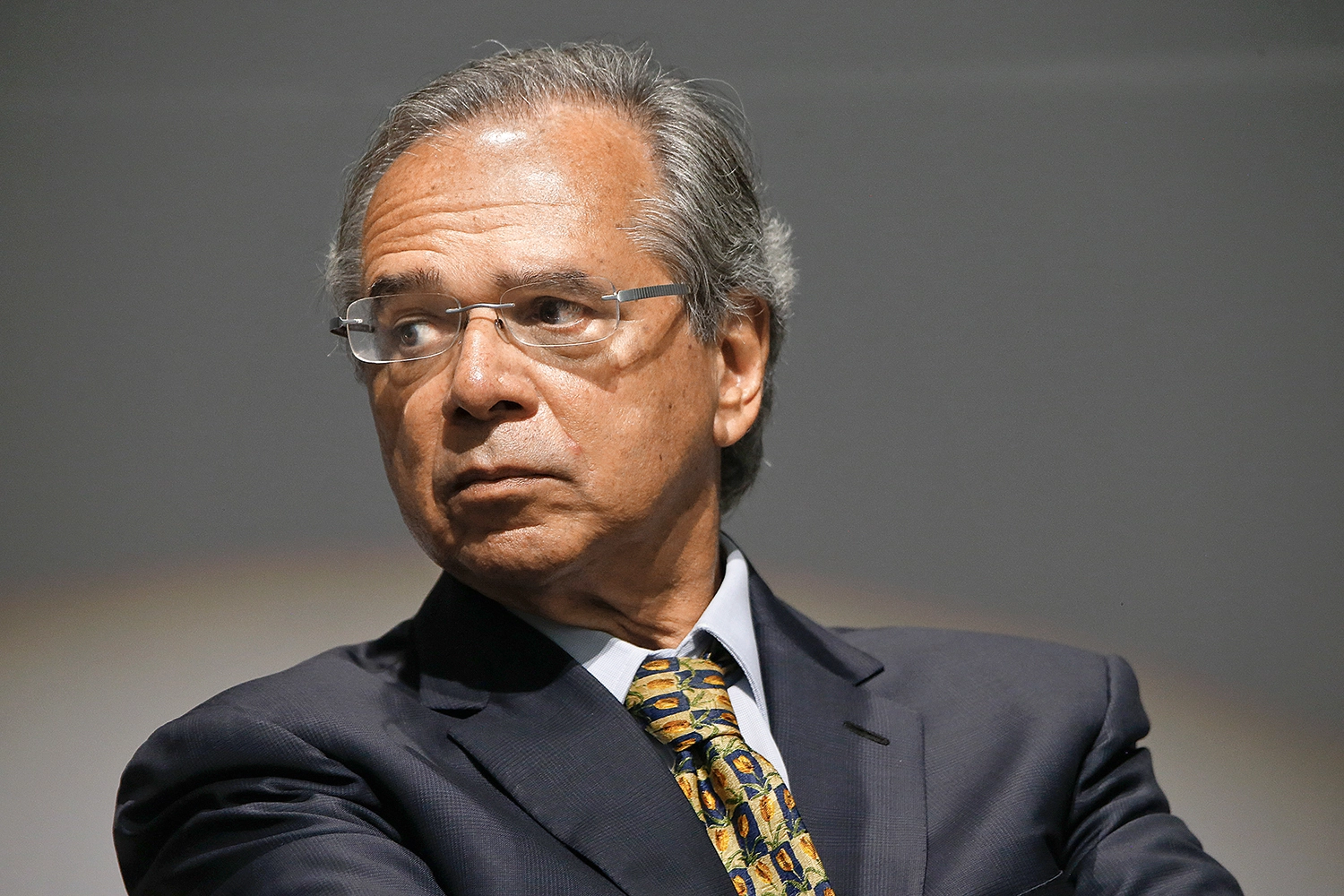
He again compared Brazil’s economic situation with that of developed countries.
According to Guedes, the story that emerging economies reacted later and had to learn from advanced economies is no longer true.
For example, the minister reiterated that inflation expectations for Brazil this year have been revised downward and growth upward.
“The prejudice against Brazil is dissolving,” he said, adding that Brazil opened its economy while the world was afraid.
The minister also commented on the agreements with India and Indonesia on environmental progress.
The goal, he said, is to get other countries to pay Brazil for environmental services, i.e., for preserving their forests.
“The world will pay us for preserving these public goods,” he said, claiming that other developed countries have already shown interest.
Commenting on his participation in the G-20, a group that includes the world’s largest economies, the minister said that infrastructure, sustainable finance, and taxation would be the focus of the meeting.
On this occasion, he also highlighted the positive aspects of the Brazilian economy.
According to Guedes, the breakfast hosted by India on Thursday morning focused on food and energy inflation.
The minister said the meeting was a kind of informal changing of the guard.
This is because Indonesia holds the G-20 presidency, which will pass to India next year.
According to Guedes, the coffee organized by India was attended by only a few countries, between eight and nine.
In addition to Brazil, the United States, represented by Treasury Secretary Janet Yellen, and names such as Saudi Arabia and Germany are also present.
Guedes also praised India and gave an optimistic forecast for the country.
“Brazil defends India because it is a democracy with a well-functioning transmission and a model for the world. India’s population will be greater than China’s,” he said.
ARGENTINA
Paulo Guedes also said that the bilateral meeting with his Argentine counterpart Sergio Massa was held at the request of Argentina, which asked Brazil for help raising funds.
He denied that the meeting was about the presidency of the Inter-American Development Bank (IDB).
He explained that this institution should play a central role in providing the country with the financial support it needs to overcome the current crisis.
Guedes said Brazil has already helped Argentina in its negotiations with the IMF.
Last week, the country agreed with the agency on another US$3.8 billion disbursement, bringing the total to about US$17.5 billion.
“Inflation has skyrocketed in Argentina and continues to rise sharply,” the Brazilian minister told reporters.
Guedes also expressed a willingness to help Argentina even though the current government is leftist.
“The Argentine leadership is not politically allied with us, but if it does well, it is good for the region. We cannot allow ourselves to be contaminated by political wars, which is normal in a democracy,” he explained.
Speaking about the points that interested Brazil in its relations with the neighboring country, Guedes said that Argentina had sizeable natural gas reserves that could benefit the country, seeking to reindustrialize with cheap energy.
He also mentioned the possibility of facilitating agricultural exports with the Transperuana, which would shorten these trips by six days.
The Brazilian minister also defended a common currency for Latin America: the real peso.
According to Guedes’ forecast, in 10 to 15 years, there will be five or six single currencies worldwide.
Therefore, the region could have its currency, which would help economies that have lost their currencies due to crises.
“We can create a continental currency, and Brazil would be the anchor for Latin America,” he said.
More: Brazil news in English, every day from The Rio Times.
This article was produced by The Rio Times’ automated newsroom system. How we use AI · Report an error · Editorial responsibility: Matthias Camenzind, Editor-in-Chief