As investors across the globe held their breath this Monday, the Brazilian Real saw the U.S. dollar dip by 0.57%, closing at R$5.62.
This movement occurred in anticipation of pivotal monetary policy decisions from major central banks scheduled later in the week.
Despite an early rise, the dollar settled lower, reflecting a global sentiment of caution.
On Wednesday, monetary policy committees from Brazil, the United States, and Japan will make critical decisions on their interest rates.
Market participants are keenly observing, as these outcomes will set the financial tone for the coming months. In contrast, on the international stage, the dollar gained against most currencies.
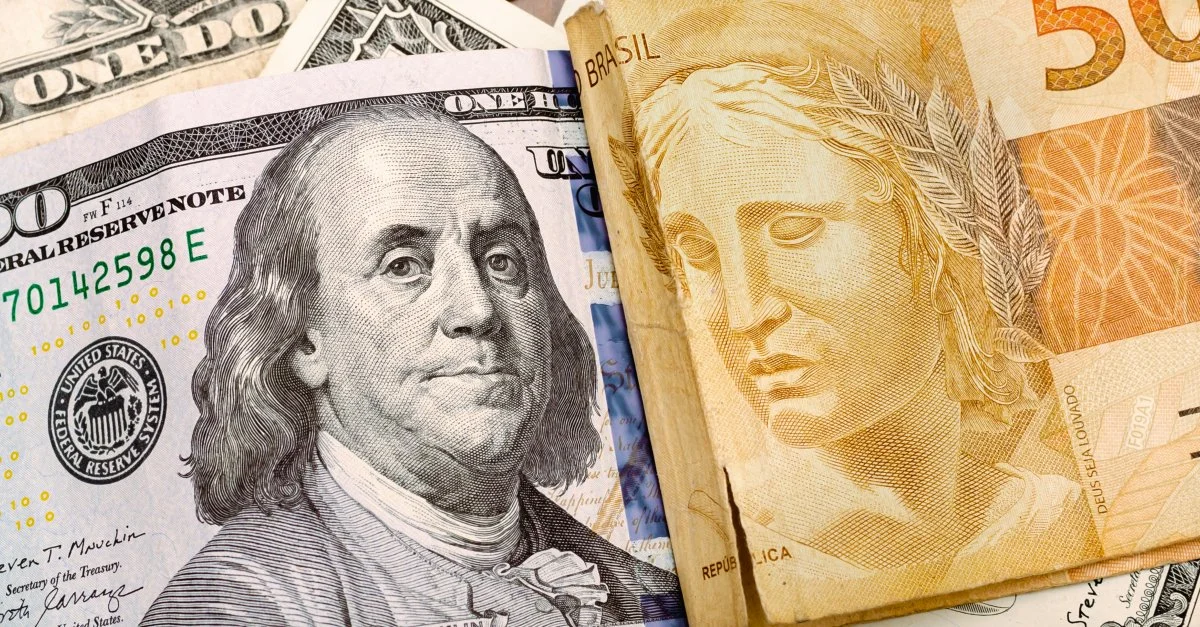
The Brazilian commercial dollar experienced a slight decline, finishing at R$5.625 for buying and R$5.626 for selling.
Meanwhile, the first expiration futures on the B3 exchange decreased by 0.71%, hitting 5,628 points. Just last Friday, the spot dollar closed at R$5.658, marking a 0.19% rise.
Throughout the month, it has seen a cumulative increase of 0.62%. This Wednesday is a crucial day for investors.
The Bank of Japan (BoJ), the U.S. Federal Reserve (Fed), and Brazil’s COPOM (Central Bank’s Monetary Policy Committee) are all poised to announce their decisions.
There is mounting speculation that the BoJ might raise its interest rates due to recent currency movements, enhancing the value of the yen.
Meanwhile, the Fed is widely expected to maintain its rates between 5.25% and 5.50%.
Central Bank Policies and Global Market Implications
Market analysts are particularly focused on the Fed’s future signals, as bets increase on a potential rate cut by September, with another reduction possible by year’s end.
Lower U.S. interest rates could weaken the dollar by reducing the yields on U.S. Treasury bonds, making them less attractive to investors.
The potential for an interest rate increase by the Bank of Japan also casts a spotlight on their meeting. This development has implications for emerging market currencies, including the Real.
Simultaneously, the COPOM is expected to maintain Brazil’s Selic rate at 10.50% annually.
This decision comes amid concerns about inflation expectations becoming unanchored in an increasingly uncertain global environment.
Economists surveyed by Brazil’s Central Bank raised their inflation forecasts for the end of this year and next.
They project the IPCA (Broad Consumer Price Index) to close at 4.10% in 2024 and 3.96% in 2025, which is above the official target center of 3%.
These unfolding events illustrate how interconnected our global financial systems are and the significant impact central bank policies can have across borders.
The coming days will not only help shape investment strategies but also test the resilience of emerging markets amid shifting economic tides.
This article was produced by The Rio Times’ automated newsroom system. How we use AI · Report an error · Editorial responsibility: Matthias Camenzind, Editor-in-Chief
LatAm Markets: Live Signals → — real-time movers, turnover leaders and FX across Latin America.