Brazilian Municipal Elections Will See Largest Digital Campaign in Country’s History
RIO DE JANEIRO, BRAZIL – The 2018 presidential race was marked by being the first to use digital media on a large scale to influence voting, whether by messaging Apps like WhatsApp or through social media.
With the progress of technologies and their increasingly ostentatious presence in people’s daily lives, it was inevitable that the next election would be even more influenced by this type of voter hunt, but the novel coronavirus pandemic has amplified the potential for the November race for mayor and city council positions to be the most digital in the country’s history.
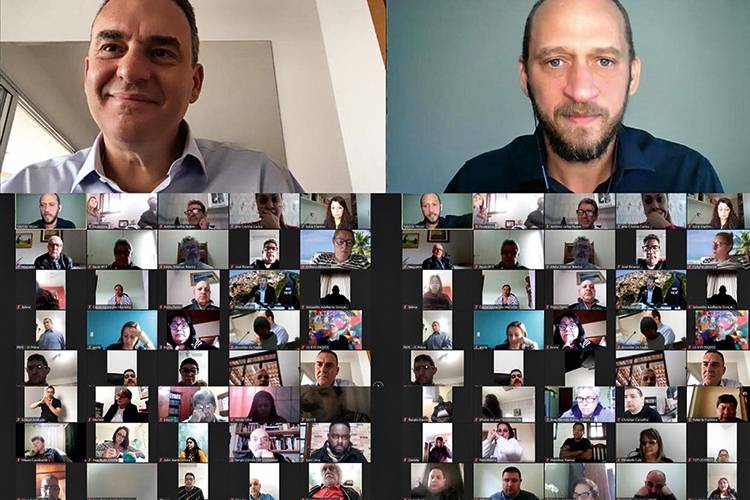
As a result of the restrictions enforced to contain the virus, face-to-face events in public places – street walks with militant supporters, traditional rallies, photos with children on their arms, effusive hugs, and mass distribution of candidates’ handbills – all will be things of the past.

Instead, digital flyers, selfies, videos, mass messages addressed to a specific voter profile, online debates, and even innovations such as “live rallies” will come into play.
Officially, the race will start on Monday, August 31st, with the beginning of political parties’ conventions (the end of this phase will take place on September 16th). In practice, the dispute has already begun, with great backstage movement to adjust to this new reality.
If the digital impact on elections that led Jair Bolsonaro to the presidency shocked many people, the novelties for this year tend to surprise even more. Among them will be the premiere of the Chinese TikTok short video network in an election in the country.
“The App will be the game changer in this election, particularly to engage young people in Brazil,” said VEJA American publicist Arick Wierson, who was an image consultant in Bolsonaro’s campaign and is expected to work in the 2020 municipal elections (but does not disclose which clients he is negotiating with).
Digital posters will be another new feature, a kind of card with candidates’ photo and number, which is already on sale on websites. Consecrated during the pandemic, live streams will tend to become “live rallies” in politics.
On Friday, August 28th, the Superior Electoral Court (TSE) unanimously decided that events broadcast with performing artists are banned since the law prohibits shows as electoral propaganda, but it is difficult to prevent an artist from saying “hello” to his favorite politician during a live video.
Pre-candidates have already started using the tool – São Paulo candidate for Mayor Guilherme Boulos (PSOL) has a YouTube show called Boulos Invadiu Minha Casa (Boulos Invaded My Home), while the PCdoB mayoral candidate in Porto Alegre, Manuela d’Ávila, has spent the past few weeks making live streams with neighborhood associations.
The “Electoral Big Brother” should also become popular, in which the candidate broadcasts videos and photos daily with his family, friends, and the community. In Rio, Eduardo Paes (DEM) recently posted a picture of a barbecue in his backyard wearing a Vasco [Rio’s second-most popular soccer club] shirt.
“Those who manage to make this seem legitimate will do better”, says the founder of Ideia Big Data, Maurício Moura, who attended digital marketing courses for MDB and RenovaBR candidates.
However, simply having a large range of tools at hand is not enough to be successful. In 2018, presidential candidate Henrique Meirelles posted almost 250 times a day and finished behind unknowns João Amoêdo and Cabo Daciolo. A factor available today to make the most of the digital campaign is the fact that the networks have perfected targeting methods, which for politics is almost revolutionary.
Now, Facebook enables the mayor of São Paulo – and candidate for re-election – Bruno Covas (PSDB), who has undergone cancer treatment, to produce a video intended only for people who follow associations that fight the disease, for instance. Georeferencing is also possible, that is, publications targeted to certain neighborhoods and streets, which, in a municipal election, is a pot of gold.
“These new features lead to what we call segmentation. It’s not the young public anymore, but the young people from the periphery who skate and don’t follow politics,” explains marketing consultant Daniel Braga. Over the past months, he, along with other experts in the area, has dedicated himself to training PSDB pre-candidates.
The schedule includes issues such as the most appropriate times for posting, how to react to fake news, and the best position for a selfie. Braga will also be responsible for the digital strategy of Joice Hasselmann, the PSL pre-candidate for mayor of São Paulo.
Amid a certain degree of euphoria over the potential created, the increase in the use of the Internet raises some relevant concerns. The battlefield that opens up in the digital environment will be conducive to irregularities of all sorts, such as the ostensible anticipation of the campaign.
It officially begins on September 27th, but is already in full swing on social media, taking advantage of the fact that it is not limited to radio and TV propaganda – which begins on October 9th and will also be an important tool in the pandemic election.
Another threat is the old 2018 problem that still haunts this year’s dispute: fake news. Pressured, Facebook, Twitter, Instagram, and WhatsApp have become more judicious with political accounts and quicker to limit the reach of, or even remove, fake content.
The new threat now comes from deepfakes, well-produced collages of pictures or sounds to make it appear that a candidate said or did something. With the high demand, people have also started to emerge selling prohibited services such as a database for mass messaging on WhatsApp.
Source: Veja
More: Brazil news in English, every day from The Rio Times.
This article was produced by The Rio Times’ automated newsroom system. How we use AI · Report an error · Editorial responsibility: Matthias Camenzind, Editor-in-Chief
LatAm Markets: Live Signals → — real-time movers, turnover leaders and FX across Latin America.