Brazil Ends a $93bn Pension Fight Over a Number Nobody Ever Proved
Politics
Key Facts
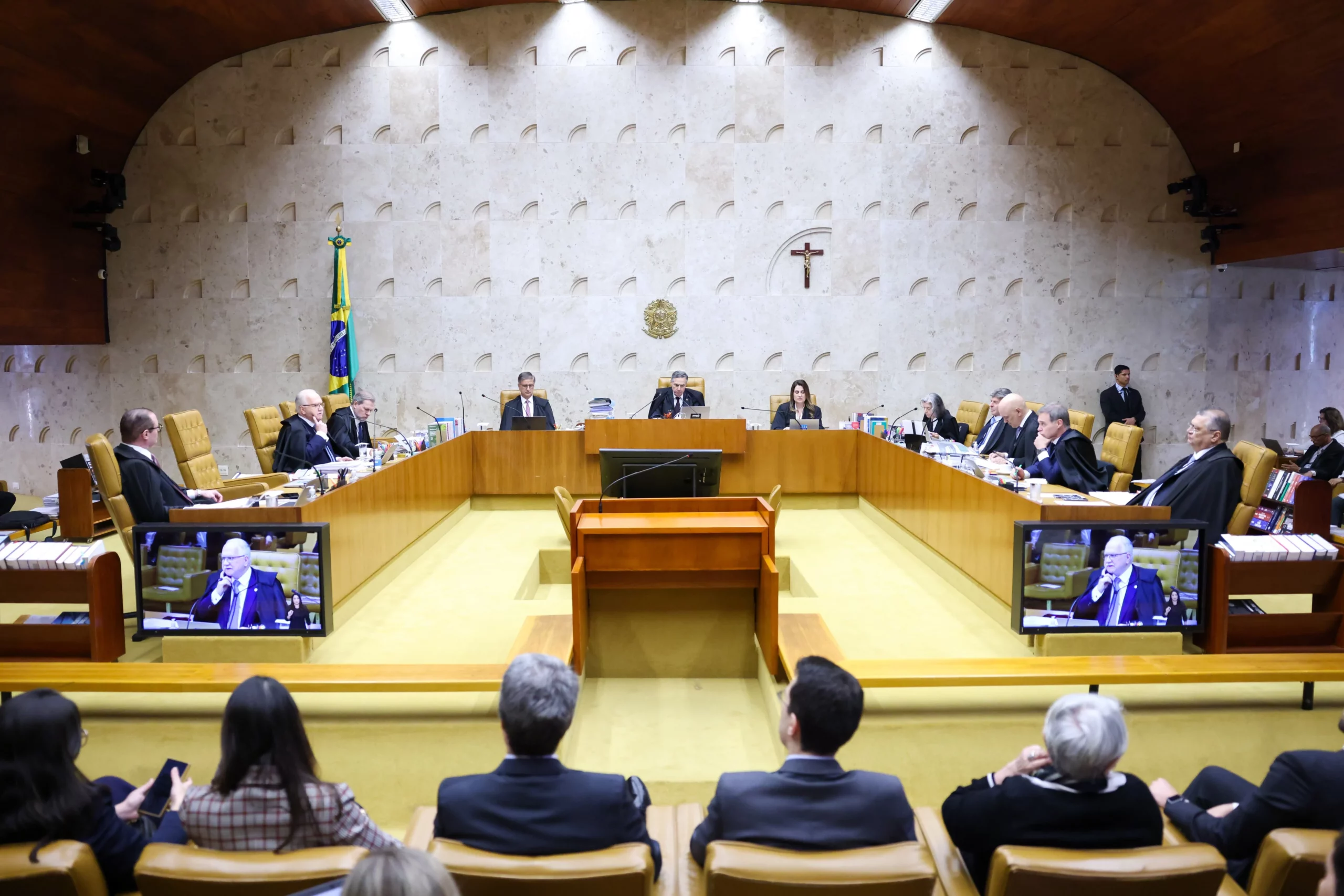
—The closure. The Supreme Court published the final judgment on July 9, ending an eleven-year case with no further appeal possible.
—The government’s number. The federal government estimated the revision could cost R$480bn ($93.2bn), on a scenario in which every eligible retiree recalculated.
—The other number. Pension lawyers tracking the case put the realistic cost near R$3bn ($582m), a gap of about one hundred and sixty times.
—The scale. The INSS pays 24.3 million pensions and injects R$47.4bn ($9.2bn) into the economy every month.
—The vote. Justices rejected the last appeal seven to three, with Dias Toffoli, Edson Fachin and André Mendonça dissenting.
—The consolation. Retirees who won early and were paid do not repay, and those with pending cases owe no legal costs or expert fees.
The Brazil pension revision known as the revisão da vida toda died quietly on Thursday. That was the day the Supreme Court published the paperwork closing a case fought for eleven years, though it never produced an honest number.
Two figures shadowed this case from beginning to end. The government said four hundred and eighty billion reais; the lawyers for the retirees said three billion.
Only one of those numbers reached the newspapers with any regularity, and it was the larger one. The court has now ruled without ever settling which was closer to the truth.
What the Brazil pension revision was asking for
Brazil replaced its currency in July 1994, launching the real to end years of runaway inflation. A pension reform five years later decided that only contributions made after that date would count toward a retiree’s benefit.
The logic was defensible. Wages paid in the old, collapsing currencies were very hard to convert into meaningful comparisons, and including them risked distorting every calculation.
But the rule caught a specific group. Workers who had earned well before 1994 and less afterwards found their best years erased from the arithmetic entirely.
Their argument was narrow, and it was not that the transition rule was wrong. It was that a retiree should be allowed to choose the older formula when the older formula paid more.
The court has now answered that the transition rule is what Brazilian lawyers call cogente. That means it applies whether or not the individual likes the result, and there is no right to pick the better of two formulas.
The number that won the argument
Set the government’s estimate against what Brazil’s pension system actually spends. The INSS, the state pension institute, pays out roughly forty-seven billion reais a month across twenty-four million retirements, according to its own published figures.
On that arithmetic, four hundred and eighty billion reais equals about ten months of every pension Brazil pays to everyone. The lawyers’ three billion equals under two days.
The gap is not a rounding dispute. It is a factor of roughly one hundred and sixty, and the two sides were not measuring the same thing.
The government modelled a world in which every retiree who might benefit did benefit, with more than fifteen years of back payments each. Reporting on the estimate has consistently described it as a pessimistic scenario rather than an expected one.
The lawyers modelled the people who would actually qualify, a group they consider small. The revision only helps a worker whose pre-1994 earnings were high and whose later earnings were not.
A ceiling and an expectation are different objects. Cited side by side for years, only the ceiling stuck.
Why the Brazil pension revision took eleven years
The case reached the Superior Court of Justice, which ranks below the Supreme Court, in 2015, and that court approved the thesis in 2019. The Supreme Court then approved it too, in December 2022, and retirees began winning.
In 2024 the same court reversed itself, deciding the opposite way in a related case about pension formulas. Everything won in between was suddenly built on nothing.
For a foreign investor reading Brazilian country risk, that sequence is the story. A supreme court granted a right, then withdrew it, while thousands of citizens reorganised their finances around the grant.
What happens now
Cases frozen since 2023 resume this week, and lower courts have been told to apply the ruling and archive the files. Retirees drawing a higher pension under a court order will see it fall back.
The court did soften the landing. Money already paid under judicial decisions issued before April 2024 does not have to be returned, and claimants whose cases were still pending owe no legal costs, losing-party fees or accountants’ bills.
Three justices wanted more than that. Dias Toffoli proposed preserving the revision for anyone who had sued between December 2019 and April 2024, the window when the law appeared to be on their side.
He drew the court president and one colleague, and lost. The government keeps a contingency it never had to price precisely, and twenty-four million retirees keep the formula they started with.
What was the revisão da vida toda?
It was a legal argument that Brazilian retirees should be allowed to include contributions made before July 1994 when calculating their pensions, if that produced a larger benefit. A 1999 reform had excluded those older contributions to avoid distortions from the hyperinflation era, and the Supreme Court has now confirmed that exclusion is mandatory rather than optional.
Do retirees who already received extra money have to give it back?
No, because the court ruled that sums paid under judicial decisions issued up to April 5, 2024 are not repayable. It also waived legal costs, losing-party fees and expert accounting charges for claimants whose cases were still pending on that date. Those now drawing a higher benefit under a court order will nonetheless see it revert to the original amount.
Why did the cost estimates differ so much?
The federal government modelled a maximum scenario in which every potentially eligible retiree recalculated and claimed more than fifteen years of back payments, giving a figure of four hundred and eighty billion reais. Lawyers for retirees argued the realistic universe was far smaller, since the revision only benefits workers whose pre-1994 earnings exceeded their later ones, and put the cost near three billion.
More: Brazil news in English, every day from The Rio Times.
Frequently Asked Questions
What was the final vote in the Supreme Court ruling on the revisão da vida toda?
The justices rejected the last appeal by a vote of seven to three. The dissenting votes came from Dias Toffoli, Edson Fachin, and André Mendonça.
How far apart were the government's and pension lawyers' cost estimates for the revision?
The federal government estimated the revision could cost R$480bn ($93.2bn) if every eligible retiree recalculated. Pension lawyers tracking the case put the realistic cost near R$3bn ($582m), a gap of about one hundred and sixty times the smaller figure.
Do retirees who lost the case owe any money or legal fees as a result of the ruling?
Retirees with pending cases owe no legal costs or expert fees. Those who won early and were already paid do not have to repay anything.
Connected Coverage
Lulinha INSS Probe: Police Flag Spain Trip as Possible Flight
Banco Master: PF Expert Probed Over Moraes-Toffoli Files
São Paulo Launched 26,700 Homes Nobody Bought. Rates Explain Why.
This article was drafted with automated assistance and reviewed before publication. How we use AI · Report an error · Editorial responsibility: Matthias Camenzind, Editor-in-Chief