Brazil Partners with Oxford Project for Covid-19 Vaccine Production Research
RIO DE JANEIRO, BRAZIL – Brazil’s federal government sent a reply to the British Embassy and to the president of the AstraZeneca laboratory, accepting the proposed cooperation agreement for the technological development, and Brazil’s access to the Covid-19 vaccine.
The agreement provides for the purchase of batches of the vaccine and technology transfer. If efficacy is proven, 100 million doses will be available to the Brazilian population.
The vaccine is being developed by Oxford University and AstraZeneca and is one of the most promising in the world. In Brazil, the technology will be developed by the Ministry of Health’s subsidiary Fiocruz (Oswaldo Cruz Foundation).

The agreement consists of two stages. It begins with an arrangement in which Brazil also undertakes the risks of research. In other words, it will pay for the technology even if the final clinical trial results are not available. In the second stage, should the vaccine prove effective and safe, the purchase will be expanded.
In this initial, risky stage, there will be 30.4 million doses of the vaccine, worth a total of US$127 (R$697) million, including the technology transfer and production process costs of Fiocruz, estimated at US$30 million. The two lots to be made available to Fiocruz, of 15.2 million doses each, should be delivered in December 2020 and January 2021.
According to Camile Giaretta Sachetti, director of Science and Technology of the Secretariat of Science, Technology, Innovation, and Strategic Supplies, the trial results will be assessed on a monthly basis, but the plan is for the preliminaries for stage three to be ready between October and November, with delivery taking place in December this year and January 2021.
“Patients will obviously be monitored for a year, but by October or November we will have preliminary data on the vaccine,” she said during a press conference on Saturday, June 27th.
If the vaccine is safe and effective and is registered in Brazil, in addition to the 30 million initial doses, a further 70 million doses will be produced, worth an estimated US$2.30 per dose, totaling 100 million vaccines.
The elderly and health care professionals would receive it first
People with co-morbidities, the elderly, and public health and safety professionals would first receive the vaccine against the novel coronavirus, according to the Ministry’s Health Regulations Secretary, Arnaldo Correia de Medeiros. “Once the vaccine’s efficacy is proven and guaranteed, as well as its safety, we will prioritize the population that is most vulnerable to this disease,” he said at a press conference on Saturday, June 27th.
According to him, as soon as the first 30 million doses reach Brazil, the vaccine distribution will be “very fast”. “This country has extensive experience in vaccination. We have the SUS (National Health System). Distribution is only a matter of weeks”.
According to Hélio Angotti Neto, Secretary of Science, Technology and Strategic Supplies, “we covered 90 million people for influenza.” This shows that the country would be able to quickly distribute the estimated 100 million doses against covid-19.
The government says it has conducted several studies to reach that number of doses. They analyzed whether they would be used for herd immunity, as well as the number of people in the priority group. With this number, in addition to the coverage of all elderly people, people with co-morbidities, and health and safety professionals, vaccines will be provided to teachers, indigenous people, prisoners, rescue professionals, and public transportation drivers.
“This would be the coverage that these 100 million doses could reach,” Medeiros said.
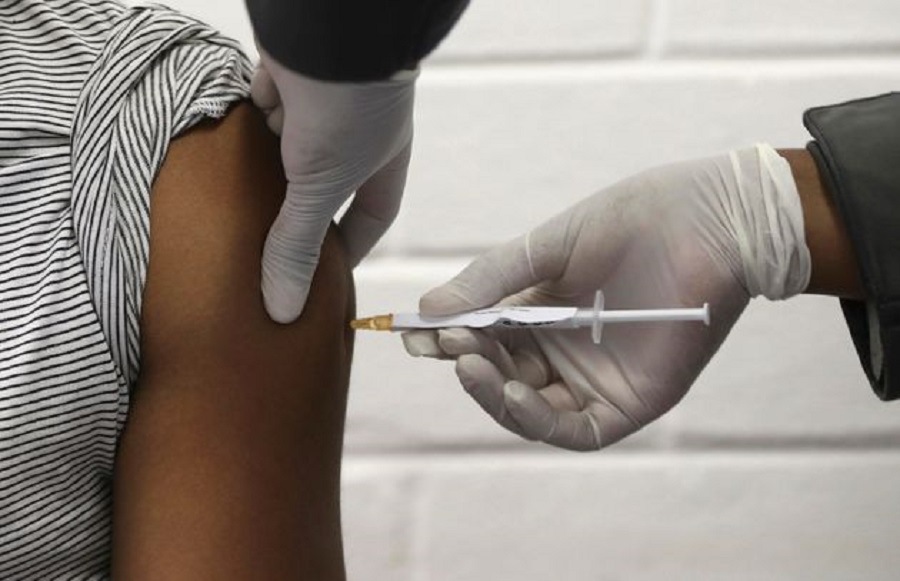
The partnership is positive, even if it goes wrong
The federal government considers that the research and production risk is required due to the urgency to find an effective solution for the maintenance of public health and safety for the resumption of Brazilian growth.
The Oxford vaccine is the most advanced in the world and has shown a very significant immune response, but if in the final trials the vaccine fails to prove safe, the government will not use it.
Medeiros said that even if the vaccine fails to prove effective, the country will still benefit, as it will have access to supplies that can be used in domestic vaccine production. “They will be able to help in the manufacture of other vaccines in our technology park. We will learn a transfer of technology from a vaccine that will be effectively produced in our territory. Part of that money is to improve the Biomanguinhos technology park, the Fiocruz laboratory.”
Source: Agência Brasil
More: Brazil news in English, every day from The Rio Times.
This article was produced by The Rio Times’ automated newsroom system. How we use AI · Report an error · Editorial responsibility: Matthias Camenzind, Editor-in-Chief