Bolivian Religious Right-wing Joined Protests Opportunistically, Says Researcher
RIO DE JANEIRO, BRAZIL – In late 2019, Latin America seems determined to put any certainty on the political cycles in the region’s democracies to the test. First came the protests that paralyzed Ecuador, led by social movements, particularly the indigenous, in an uprising that forced the government to sit down at the table and negotiate with the country’s traditional populations.

Then it was Chile, a model of stability for some, of inequality for others, that erupted in street protests led by youths who are setting fire to the Constitution inherited from Pinochet’s dictatorship.
Now it is Bolivia where, in a mere three weeks, an escalation of events has prompted President Evo Morales’ re-election to move from questioning to a forced resignation, exile and the uncertainty of who will govern the country in the long term.
Agência Pública interviewed Sue Iamamoto, a professor at the Department of Political Science at the Federal University of Bahia (Ufba), who has been researching Bolivian politics and social movements in the country since 2008 to understand what led Evo Morales’ government, the first indigenous president, to collapse in the face of protests.
Author of the book “Bolivian nationalism in times of national pluralism”, Sue points out how the first Bolivian indigenous president had been amassing wears from the people who elected him from the start, without ever managing to fully please the right-wing that is now confronting him. According to the researcher, the right-wing was opportunistic in taking advantage of a government already worn out by denunciations of authoritarianism to satisfy conservative and religious agendas that exclude the indigenous people from the concept of a single nation that they so arduously advocate.
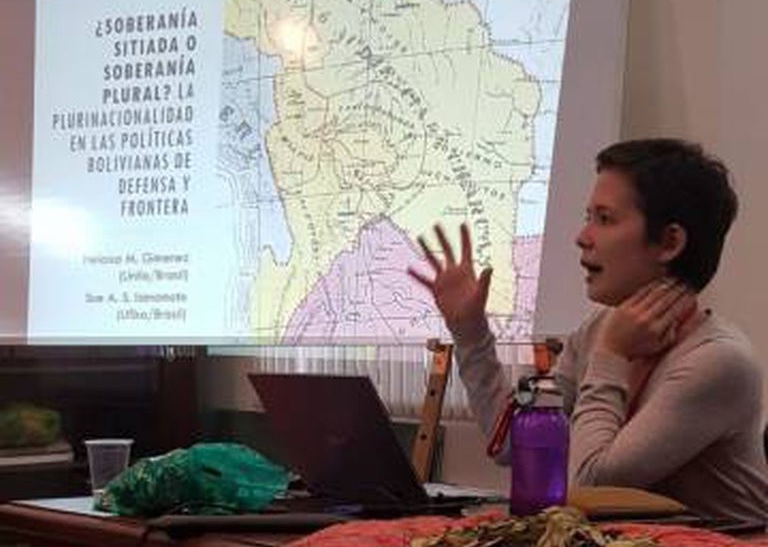
Sue is categorical: Evo’s resignation was a coup, yes. According to the researcher, although the Armed Forces do not point to wanting power for themselves, “the fact that the Army suggested that Evo Morales resign was an institutional breach” that could turn into a “coup d’état” if Evo’s party is prevented from disputing the elections to appoint the next president.
Question. The drastic resignation of Evo Morales, trapped by the armed forces and after protests across the country, seems to be completely contrary to the 13-year old picture of the first indigenous president elected in Bolivia, with broad popular support, who brought with him hopes and promises of change for a more equal country. How was this possible?
Was there a consensus at the beginning of the government that gradually eroded or was it a problematic path from the outset?
Answer. Evo Morales came to power in the 2005 elections, achieving more than 50 percent of the votes. His popular agenda, which we usually refer to as the “October agenda,” proposed the Constituent Assembly, greater representation of indigenous peoples in Bolivia, the nationalization of gas and agricultural reform.
In this regard, Evo’s mandate was initially marked by a process of change, particularly in relation to land and the autonomy of indigenous peoples, which was carried out only partially, shall we say. This is because the first years of government were very tense, with challenges coming from various groups.
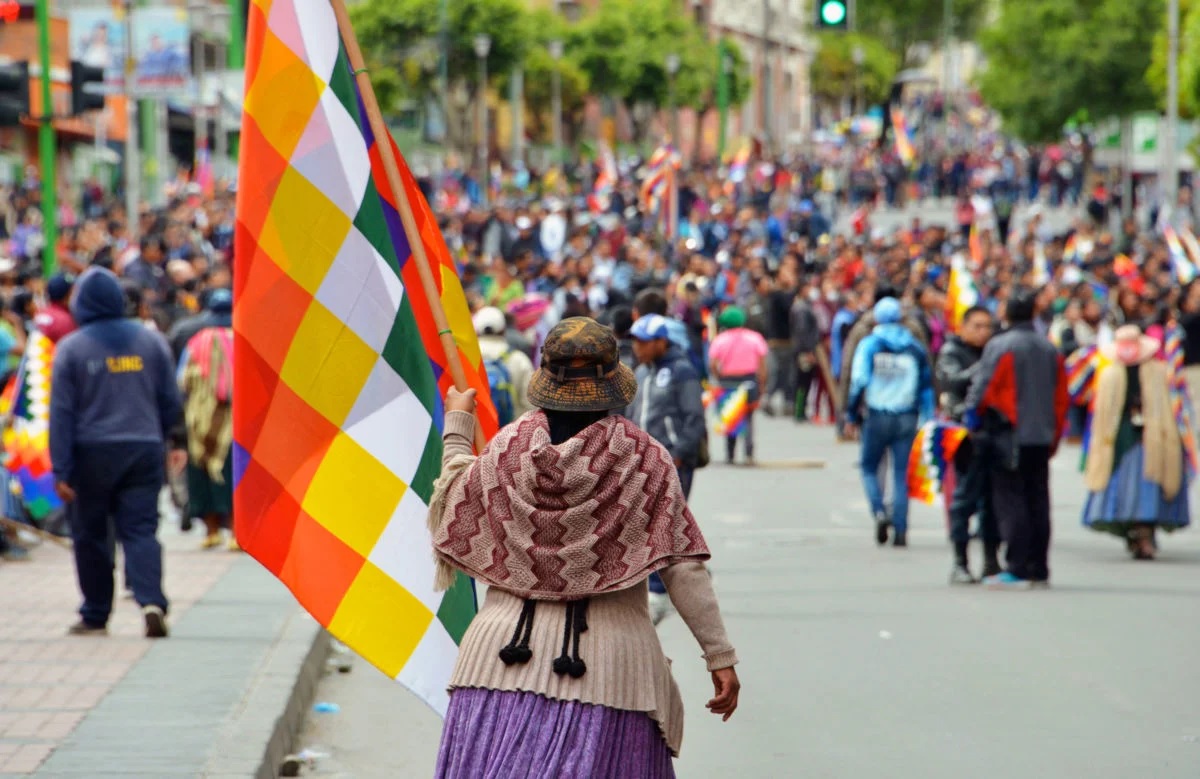
In 2008, for instance, there was the Porvenir Massacre [massacre commissioned by the then governor of the state of Pando, an influential opponent of Evo Morales, who left at least 20 people dead, most of them rulers].
There was also mobilization in Santa Cruz, calling for departmental autonomy during the process of approval of the Constituent Assembly in 2007 – which is not unrelated to the current context [at the time, the Santa Cruz civic movement protested for autonomy in the region and criticized the plurinational indigenous government].
The Cabildos [municipal leaders, mainly in the regions of Santa Cruz and La Paz] were very active at this time, at the beginning of Evo’s government, demanding departmental autonomy, a regionalist agenda. It is in this context, as I said, quite tense, that Bolivia inaugurates the plurinational state recognizing the indigenous peoples and guaranteeing a number of rights that were not previously contemplated.
However, the Constitution undergoes a succession of agreements with opposition sectors, which demand reforms so that it can be accepted. Evo’s government is progressively becoming more hegemonic, in the sense of reaching more agreements with the right-wing, with business sectors, even with the multinationals, such as mining, while at the same time abandoning some of the agendas that he previously advocated.
Evo is becoming more and more developmentalist, he aligns himself with this agenda of national integration, of exploitation of natural resources, of national development based on an extractive approach – a vision perhaps more aligned with the indigenous peoples of the West, in particular. In short, a wear and tear is emerging.
Source: El País
More: Latin America news in English, every day from The Rio Times.
This article was produced by The Rio Times’ automated newsroom system. How we use AI · Report an error
Read More from The Rio Times