Bolivia decrees expulsion of Cuban activist Jorge Castro
By Mauricio Rios Garcia
On December 19, Bolivian citizens became aware of a complaint through social networks that was extremely worrying. The Cuban citizen activist for Human Rights in his country, Magdiel Jorge Castro, published a video in which he affirms that the General Directorate of Bolivia ordered him to leave the country within 15 business days “for disturbing public order” and due to to the criticisms that he permanently makes against the regime of Miguel Díaz-Canel.
Castro has denounced that when he went to the Migration summons, his officials had a file containing all his publications on social networks with denunciations against the communist regime in Cuba, as State Security usually does on the island. Castro also described the fact that Bolivia adheres to a totalitarian state, as “an extremely disastrous precedent.”
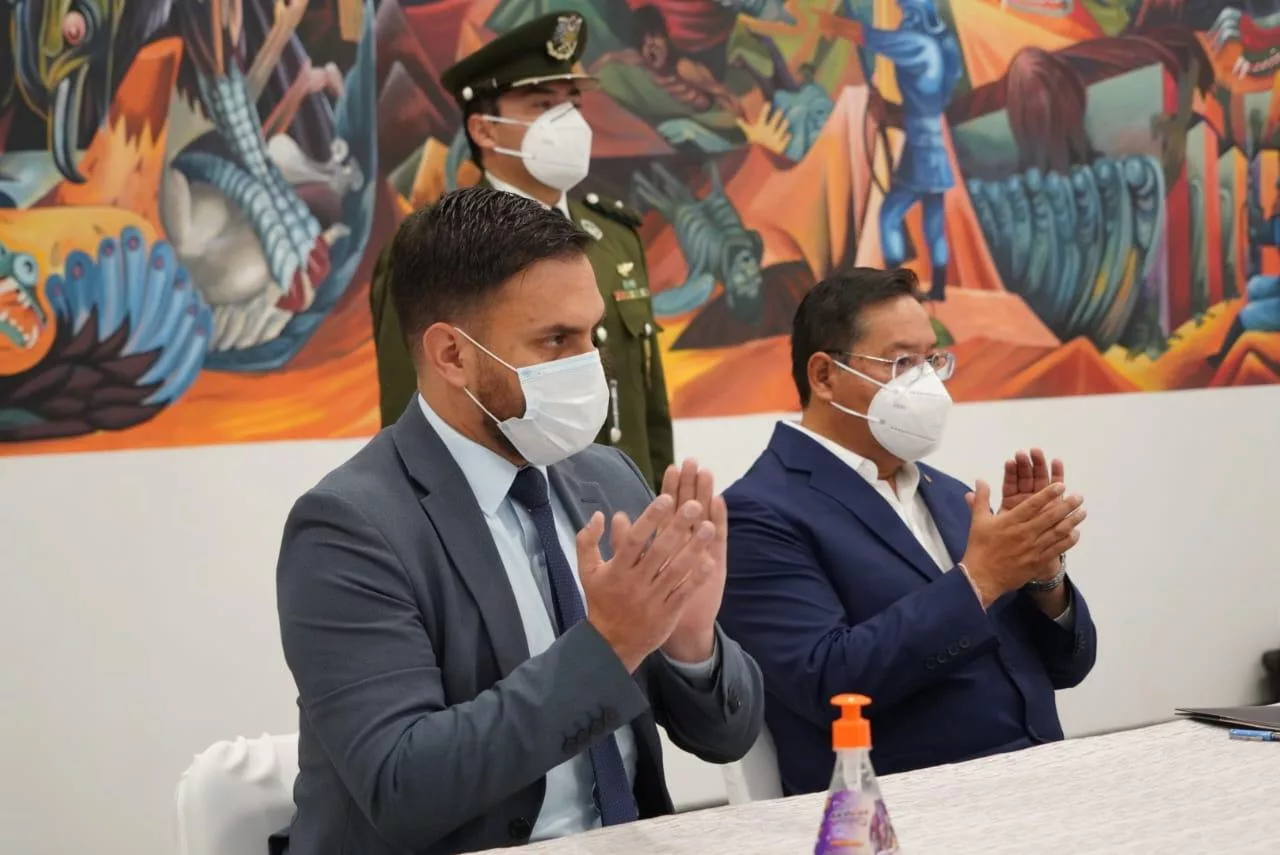
In this regard, the Minister of Government, Eduardo del Castillo, had an exchange with the Bolivian press from which the following fragment is rescued:
– Is having a critical opinion against the government a crime in the country, Minister?
‘Of course it’s not a crime. Freedom of thought is guaranteed, anyone can say what they think, but they cannot interfere in political matters. I ask you, if a Bolivian goes to the United States, can he freely express his opinion against his government? He can’t do it.
– The opinion (of Jorge Castro) is not against his government, but against the Cuban, minister.
In Bolivia he is not going to come to do what any foreign citizen wants.
Regarding Minister Del Castillo’s response, Castro said: “Mr. Minister of Government, my activism is for democracy in Cuba, I am a Cuban citizen with every right to express myself about my country, this is arbitrary.”
Regarding his expulsion, Castro has assured on his social networks that the official press of the Díaz-Canel dictatorship echoed the arbitrary and abusive decision of the Arce Catacora regime, stating that the real reason for the deportation is due to Jorge Castro’s relationship with Non-Governmental Organizations such as Ríos de Pie, which would have supported the alleged coup against Morales in 2019, and opposition political groups from Santa Cruz, a department that until a couple of weeks ago undertook a 36-day general strike demanding Arce the Carrying out a housing population census in order, among other things, to resign the public budget and parliamentary seats in accordance with the law, once the new demographic and national poverty reality is known after more than 10 years.
Supporting the claims of the communist regime in Cuba is an editorial published by the Argentine far-left daily Página 12, dated July 11 of this year, specifically against Castro.
Jorge Castro has denied this accusation. However, the abuse of the Plurinational State is so difficult to support, that even Amnesty International, which is not usually precisely characterized by defending Human Rights when it is the extreme left that violates them (in fact, for years it refused to consider terrorist groups such as ETA in Spain, or the FARC and the ELN in Colombia, as terrorist groups), described the expulsion of this Cuban citizen as an “arbitrary act” and a “disastrous precedent of persecution.”
In addition to everything, it is worth noting the fact that Magdiel Jorge Castro lives in Bolivia. In this sense, if perhaps Castro were a political refugee in this country he would have to meet certain conditions to preserve such status. However, this activist has not commented on Bolivian politics, but rather on that of his country of origin.
The young activist is currently in the process of appealing his deportation, but so far the scandal has only served to draw even more attention not only to the long arm of the island’s communist regime, but also to the country’s submission to a foreign force like that of the “Yankees” of the United States, which the traditionally left-wing parties such as Evo Morales or Arce Catacora have always reproached “neoliberal” governments for.
In short, the Plurinational State of Bolivia is not a State of Law, not only because of the expulsion of a citizen with rights that should be recognized internationally, but also because it has submitted its sovereignty to the opinions of another country, and even worse, to that of a bloody regime like the one that Miguel Díaz-Canel has inherited from Fidel and Raúl Castro in Cuba, for which it is to be expected that both the Attorney General’s Office and the opposition legislators would have to take action on the matter because it constitutes a series of crimes such as Treason.
With information from La Gaceta
More: Bolivia news in English, every day from The Rio Times.
Editorial responsibility: Matthias Camenzind, Editor-in-Chief · Editorial standards · Report an error