Bolivia Is Ending Its Fixed Dollar Rate. Here Is Why It Matters

Markets
Key Facts
—The change. Bolivia plans to abandon its fixed exchange rate, frozen since 2011, and move to a market-determined floating system during 2026.
—The old peg. The official rate has sat at about 6.96 bolivianos per dollar for 15 years, backed by reserves the country no longer has.
—The gap. A parallel street rate had climbed far above the official one, exposing how overvalued the peg had become.
—The author. The shift is part of President Rodrigo Paz’s push to fix the worst economic crisis in a generation.
—The risk. A float can end a dollar shortage but may push already high inflation higher in the short term.
Bolivia is preparing its biggest monetary change in 15 years, moving to a floating exchange rate after clinging to a fixed dollar peg it could no longer afford. For a country in crisis, it is a defining gamble.
For more than a decade, Bolivia fixed its currency, the boliviano, at about six point nine six to the dollar. That stability was a point of national pride, but it depended on having enough dollars in reserve to defend the rate.
Those reserves have collapsed. Years of falling natural-gas exports drained the country’s dollar cushion, leaving the official rate looking increasingly detached from reality.
The government now plans to let the market set the price of the currency instead. The move, confirmed by the economy ministry, would unify the exchange rate under a single, floating system that moves with supply and demand.
Why the floating exchange rate is happening
The clearest symptom of the problem was the gap between two prices. The official rate stayed frozen while a parallel street rate soared, so in practice Bolivians were already paying far more for dollars than the books admitted.
Defending an overvalued peg without reserves is close to impossible. It leads to shortages, because at the official price there are simply not enough dollars to go around, which is what triggered Bolivia’s long fuel queues.
A float is meant to fix that by letting the price rise until supply and demand balance. In theory, once the rate reflects reality, dollars reappear and the queues ease.
The change fits a broader reform drive. President Rodrigo Paz, who took office late in 2025, has already cut fuel subsidies and is trying to steer the economy back toward market pricing.
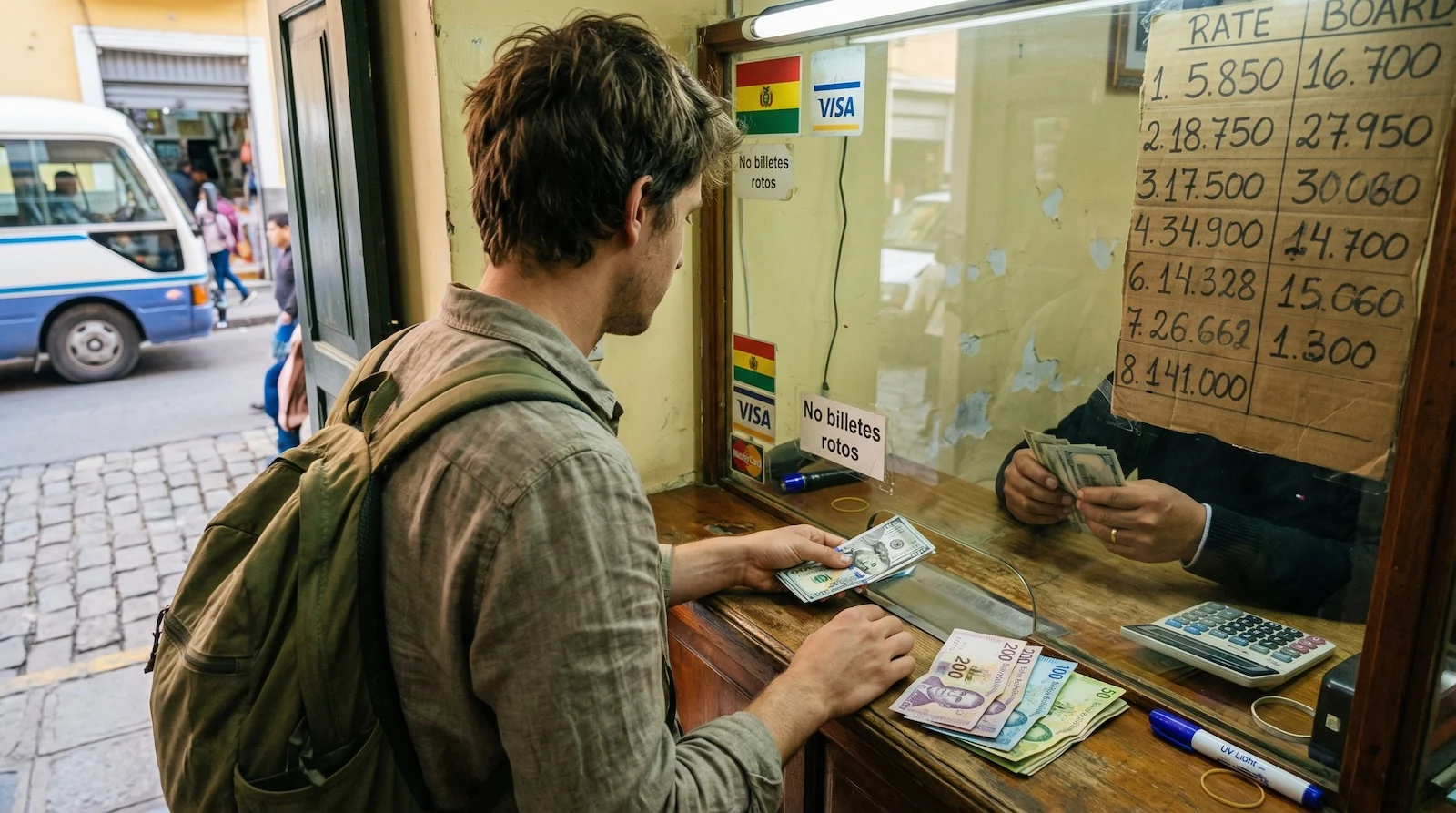
What the floating exchange rate means for households
The hard part is the short-term pain. When a currency floats after being propped up, it usually weakens, which makes imported goods more expensive and can push inflation higher.
Bolivia is already dealing with the fastest price rises in about four decades. Layering a currency adjustment on top risks a further squeeze on households before any relief arrives.
Savers face questions too. Anyone holding dollar deposits in local banks will watch closely how and when they can access their money during the transition.
The government’s bet is that short-term pain buys long-term stability. If the float restores confidence and brings dollars back, the economy can begin to steady rather than keep bleeding reserves.
Why a foreign reader should care
Bolivia is a cautionary tale being studied from Argentina to Turkey. It shows what happens when a commodity-funded economy defends an overvalued rate for too long and runs out of room.
For investors, the float is the clearest test of whether Bolivia’s reforms are real. A credible, well-managed transition would mark a genuine turn, while a botched one could deepen the crisis.
Sequencing will decide the outcome. A float paired with credible spending cuts and outside financing has a chance of working, whereas one attempted with empty reserves and no anchor can spiral into faster inflation.
The lithium angle raises the stakes further. Bolivia holds some of the world’s largest reserves of the battery metal, and a functioning currency and stable economy are what any serious foreign investor would need before committing capital there.
What is Bolivia’s floating exchange rate change?
Bolivia plans to abandon its fixed exchange rate, frozen at about six point nine six bolivianos per dollar since 2011, and move to a market-determined floating system during 2026. The rate would then move according to supply and demand rather than being held at a set level.
Why is Bolivia ending its dollar peg?
Years of falling gas exports drained Bolivia’s dollar reserves, leaving it unable to defend the fixed rate. That produced dollar shortages and a soaring parallel street rate, so the government is floating the currency to bring the official price back in line with reality.
Will the change raise prices?
In the short term it may, because a floating currency usually weakens at first, making imports more expensive and adding to inflation that is already the highest in about four decades. The government’s hope is that the move ends the dollar shortage and steadies the economy over time.
More: Bolivia news in English, every day from The Rio Times.
Frequently Asked Questions
Why is Bolivia abandoning its fixed exchange rate?
Bolivia's fixed exchange rate of about 6.96 bolivianos per dollar became unsustainable because the country's dollar reserves collapsed after years of falling natural-gas exports. Without enough dollars to defend the peg, the official rate became increasingly detached from reality, prompting the government to move to a market-determined floating system.
How long has Bolivia maintained its fixed exchange rate?
Bolivia has maintained its fixed exchange rate for approximately 15 years, with the official rate frozen since 2011. The rate of about 6.96 bolivianos per dollar was considered a point of national pride but ultimately could not be sustained without adequate reserves.
What are the risks of Bolivia switching to a floating exchange rate?
While a floating exchange rate can help end the dollar shortage Bolivia has been experiencing, it may push the country's already high inflation even higher in the short term. The shift is described as part of President Rodrigo Paz's effort to address what is considered the worst economic crisis in a generation.
Connected Coverage
Bolivia Economy 2026: Fuel Shortages, Inflation Surge
Bolivia Economy 2026: Political Break, Reform Agenda, What’s Next
Latin America Economy 2026: Growth, Tariffs and Opportunities
This article was produced by The Rio Times’ automated newsroom system. How we use AI · Report an error · Editorial responsibility: Matthias Camenzind, Editor-in-Chief