Economic crisis in Peru: Who is to blame, Pedro Castillo or Russia’s invasion of Ukraine?

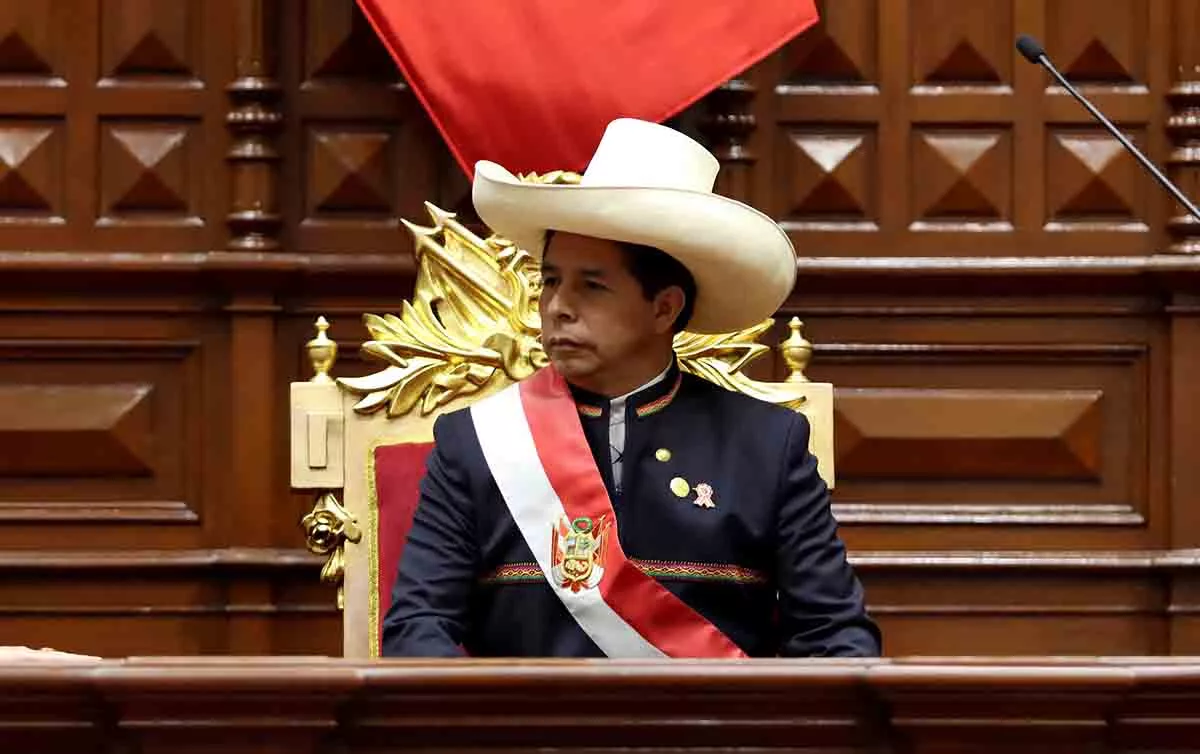
RIO DE JANEIRO, BRAZIL – On July 28, 2021, Pedro Castillo assumed the Presidency of Peru, from that moment on, several specialists pointed out that his government plan, added to the characters that accompanied him in the shadows, were going to generate instability in the Peruvian economy.
As the months went by, the president cleared himself of all blame and alleged that the crisis the country was going through was the product of the COVID-19 pandemic and, later, the war between Russia and Ukraine.
Read also: Check out our coverage on Peru
Thus, ‘inflation’, ‘price rise’, ‘food shortage’, among other terms that describe the current scenario, began to form part of the vocabulary of Peruvians. But who is to blame?
Flavio Ausejo, public policy specialist at the PUCP School of Government, in a dialogue with Infobae Peru, considered that “there are elements, external and internal, that we did not have before and are now affecting prices.” That is, the war on the other side of the world and the inefficient performance of the State, which is not responding to the needs and demands of society.
HOW MUCH BLAME DOES PEDRO CASTILLO HAVE IN THE RISING PRICES?
If it is a matter of finding a person responsible for this crisis, there are elements that are attributable to both the Government and the context, that is, to the COVID-19 pandemic and Russia’s invasion of Ukraine.
As for war, it generates economic blockades and affects the world economy by altering markets, variations in foreign currencies and costs due to changes in transits. “It is no longer easy to move around the world, you have to avoid certain spaces that are in conflict,” added Ausejo.

“Everything on the planet has been engulfed by the war between Russia and Ukraine. There was growth in China, in India, as in other countries that were taking off and had projects underway, but everything has been turned upside down,” he said.
However, these countries have known how to react to the international scene, very different from what happened in Peru, where the inaction of the State has caused serious repercussions on the already crumbling economy of Peruvians.
“We expected the State to become an actor that has a high performance to generate positive expectations, to make sectoral public policies and to be able to ensure that public services are provided at a minimum quality standard in all parts of Peru,” said the official. specialist.
For all this to happen, trained personnel are needed, at the level of decision and action, who can carry out an adequate exercise of the activity as public servants: “None of these points raised has happened, everything has happened the other way around: very poor expectations, absent sectoral public policies and the decisions that have been taken have been to dismantle aspects that operated moderately well”.
“A government that has a logic of good performance, that is, that is effective and that takes into account the economic dimension, must have the mechanisms that allow mitigating the rise in prices,” he said.
STATE INACTION
For Ausejo, the Government has not known how to manage expectations by not having the capacity to be able to make a fine reading of what the international context is marking, and of the internal elements that exist in the country to be able to act accordingly.

In that sense, he referred to non-existent or poorly used public policies, which should generate new engines to develop the country, but none of this happened. “The Government had to employ sectoral public policies to expand agricultural activity, continue developing tourism, and work hard with the plantations, in search of generating more income in the face of low tax collection,” he specified.
Instead, the administration of Pedro Castillo implemented specific measures, such as the exemption from the General Sales Tax (IGV) for certain foods in the basic family basket and the increase in the minimum vital wage.
“These are measures that show that whoever is analyzing the problem is not having a correct reading of the public problem they are trying to solve. So, they are giving a public policy response to a public problem, they are identifying two specific and isolated interventions, but they are not attacking the real problem, which is the increase in prices”, he concluded.
More: Brazil news in English, every day from The Rio Times.
Editorial responsibility: Matthias Camenzind, Editor-in-Chief · Editorial standards · Report an error