RIO DE JANEIRO, BRAZIL – The conflict unleashed in Bolivia by the results of the general elections on October 20th – which favor the government while the opposition claims fraud – has not found a political or institutional solution.
Groups of protesters for and against President Evo Morales face each other every day in several cities across the country, which has left at least three dead and dozens wounded.

The police are unable to ensure order in the country, although it is unclear whether this is because the government is asking them to refrain in some cases, because they do not The social organizations of the cities leading the conflict, self-styled “civic committees,” are asking for the president’s resignation and the call for new elections, an option that is inconceivable for governability.
In parallel, these committees are rejecting the electoral audit being carried out by the Organization of American States, through which the Government hopes to settle the conflict.
The political opposition, headed by candidate Carlos Mesa, has lost ground and joined the stance of the civic committees, albeit more moderately.
On Wednesday, a serious episode of violence broke out in Cochabamba, Morales’ home region. Early in the day, a group of coca planters, former comrades in the struggle of the now-president, left the countryside and headed for the city which had been blocked in several points.
Throughout the day there were clashes with stones and sticks between peasant groups, the customary protagonists of Bolivian social struggles, and urban youths armed with shields and helmets. A 20-year-old died and dozens of people were injured.
The mayor of Vinto, a militant of the governing Movement to Socialism (MAS), was held for several hours and intimidated by a group of demonstrators who accused her of financing and leading the people who had attempted to unblock and disrupt the opposition picket lines.
La Paz and especially its suburb of El Alto, inhabited mainly by rural migrants, are the only cities in the country still maintaining a certain degree of stability, although there are some blockades, marches, and demonstrations from both sides, and every night there are clashes between university students who try to reach Murillo Square, where the government is based, and police who prevent them from reaching it.
There is an ongoing strike in the other cities in the country with varying degrees of adherence. After almost two weeks of protests against the alleged electoral fraud, the strikers claim that they are now very tired, although no one is publicly talking about suspending the demonstrations.
Conversely, civic committees are seeking to radicalize the strikes with pickets on international roads, which are beginning to be set up by truckers, while passenger transport operators are generally on the government’s side.
The most visible leader of the protest, Fernando Camacho, head of the civic committees of the province of Santa Cruz, traveled to La Paz to deliver a “letter of resignation” to the Government Palace, prepared so that Evo Morales would only need to sign it.
His arrival raised havoc because, in a first attempt, a group of MAS militants entered El Alto airport prepared to attack him.
The government was forced to remove him in a small plane. Hours later, Camacho, who was carrying “only a letter of resignation and a Bible” in his hands, landed again in El Alto and was able to leave the airport after a complex police operation, amid applause and booing.
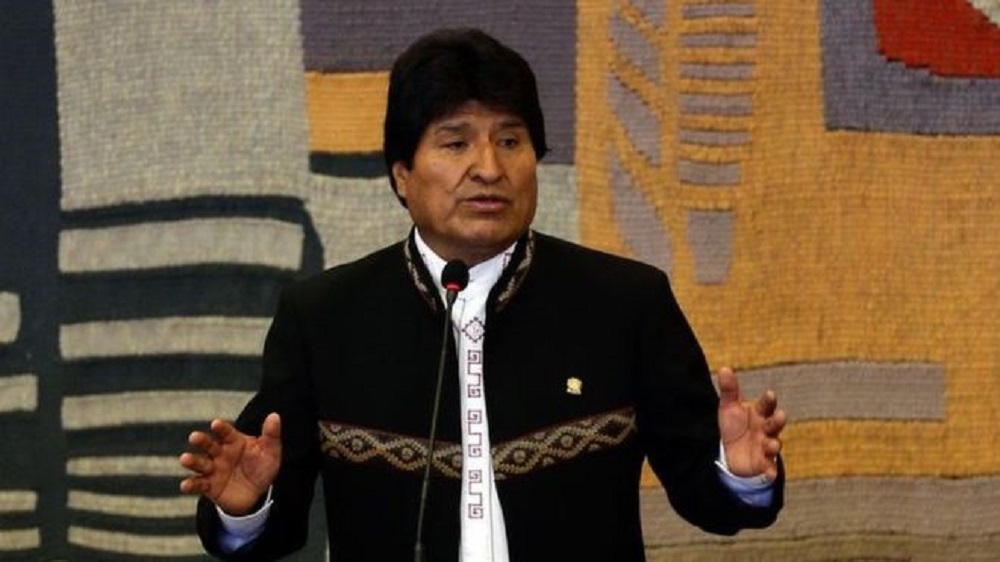
Camacho turned the delivery of his letter to Morales into his main mission after his 48-hour ultimatum for the president to resign had ended, which caused humorous comments on social media. However, his efforts to get to the seat of government had again projected him as the man of the hour.
Evo Morales said he would not declare a state of emergency, which in Bolivia is called a state of siege and historically associated with strong and violent military action.
The Armed Forces are in barracks and said that, if needed, they will enforce “constitutional order”.
Source: El País
More: Latin America news in English, every day from The Rio Times.
This article was produced by The Rio Times’ automated newsroom system. How we use AI · Report an error · Editorial responsibility: Matthias Camenzind, Editor-in-Chief