Organ transplants in Brazil gain impetus and become more efficient with new techniques
RIO DE JANEIRO, BRAZIL – After only one month of waiting for a liver transplant, pensioner Vivian Lima de Araújo went to the top of the queue. “I received this fantastic news, but I knew I wouldn’t last much longer,” she says.
At 61, Vivian, who lives in Itaboraí, 45 km from Rio, had to be hospitalized frequently due to complications from her disease, severe cirrhosis. On November 15, when her phone rang with the news that it was her turn, she was told she was not yet first in line. That place belonged to little Davi Moraes, only 6 six years old. Even so, she would receive a new liver – or part of it. Both were benefited thanks to a decision by surgeon Lucio Pacheco’s team, Coordinator of liver transplantation at the Rede D’Or Hospitals, who opted to divide the donated organ and save two lives instead of one.
“I was born again; now it’s a new life,” celebrates Vivian.
Pacheco explains that the technical name of the procedure is split liver.
“This method takes more work, but when we manage to do it with technical excellence, it is possible to help two people in the transplant queue from a single liver,” explains the surgeon.

This type of surgery is rare in Brazil due to its complexity. Thanks to advances in technology and scientific knowledge, it should occur more often. Three teams are needed. One to capture and divide the organ, and the other two ready to perform the transplant. In this specific case, the two patients were from Pacheco. The feat involved two Rede D’Or hospitals and more than 24 professionals, including five surgeons. One was responsible for preparing the organ, and two were present in each transplant performed.
For transplant surgeon Ben-Hur Ferraz Neto, a lecturer at the University of São Paulo and one of the most outstanding references in the area, the absence of a protocol to determine the parameters of this type of procedure in the country also contributes to it not happening frequently.
“Outside Brazil, there is a split liver policy that determines that, whenever the donor has ideal criteria, the split should be done. If not, it is necessary to justify why it was not done,” says Ferraz Neto.
Although it can be split, there is a minimum volume of the liver that the person needs to receive to stay alive. It varies according to the receiver’s weight. According to Pacheco, the minimum is 0.8% of body weight. For example, a person who weighs 100 kg has to receive 800 g of the liver. Usually, an adult patient receives about 60% of the liver, while a pediatric patient gets 40%. The donor’s characteristics are also fundamental: he needs to be young and without fatty liver problems.
As pointed out by Pacheco, the risk of complications in split-liver transplants is also higher. The main ones are bleeding from the cut area of the organ and leakage of bile, a liver secretion.
Besides coordinating the liver transplant team for 25 years, Pacheco is a patient. The doctor says that in January, he had to undergo a transplant.
“I have always defended transplantation and, after going through this, I was happy to have always fought for organ donation. I am only alive because a family said, “yes, I want to donate“. And, besides my life, they saved the lives of those who received the kidneys, the heart, etc.,” celebrates the surgeon.
The area of transplants is among the most evolved in Medicine. Since the 1950s, with the consolidation of surgical techniques, the operative methods have progressed, the equipment has been refined, organ harvesting has improved, and anti-rejection drugs have become more refined and have fewer side effects. Today, the chance of success of liver and kidney transplants, which are among the most successful, is around 90%. Thirty years ago they were no more than 70% and 60%, respectively.
Covid complicates the queue
Between the diagnosis and Covid-19’s discharge, systems analyst Henrique Nascimento, 31, lived through a semester of intense care, amid intubation, Extracorporeal Membrane Oxygenation (ECMO), and tracheotomy. Due to the severity of his condition, he became the front-runner for a double lung transplant. But the procedure had to be postponed because of a bacterial infection and his weakened state.
“I prayed to God that the right lung would come. When the first one arrived, it was for a person. The second one arrived and went to someone else. And then mine came.” That is how Nascimento recalls the weeks before he had to undergo a double lung transplant, three months ago, because of the infection:
“Today, I see life in a whole different way. I want to hug my brother, parents, wife, son, and in-laws. I want to be with my friends, my band. For a while, I thought this would never happen again,” he recalls, who, before Covid, was healthy.
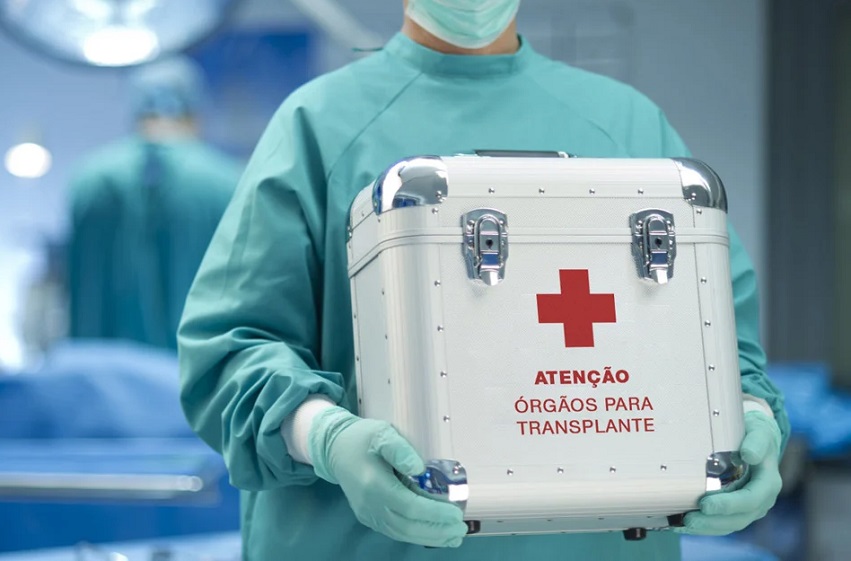
Data from the Brazilian Transplant Registry (RBT) show that the number of procedures shot up 37% from January to March this year – pulled by the 90% jump in the number of cornea transplants, paralyzed during part of the pandemic – compared to the same period in 2020.
The nephrologist Geraldo Bezerra Júnior, professor of Medicine at the University of Fortaleza, Edson Queiroz Foundation (Unifor), assesses that the increase in the queue was predictable because of Covid itself, a systemic disease that affects several organs. Besides the lungs, the patient can have kidney sequels and even need a transplant.
The statistics show signs of recovery compared to last year, but they still do not reach the level they reached before Covid. With 20,292 transplants in the first three quarters of 2019, there was a 16.8% drop in 2021. There is an exception for bone marrow, which was stable – an increase of 0.8% – comparing the two periods.
RBT data through September 2021 account for 48,300 people in the transplant queue. In 2019, the same period, there were 36.4 thousand.
“The idea was that in January 2021, there would be a progressive increase in donation and recovery of transplants, at least equal to 2019. But what happened? The second wave of Covid again led to a drop in donations and transplants – explains the Brazilian Association of Organ Transplantation President (ABTO), José Huygens Parente Garcia. – From August on, donation and transplants started to increase, mainly due to vaccination, decreasing Covid mortality. So, we expect to reach the 2020 index by the end of the year, and for 2022, the 2019 mark.
More impacted
According to Doctor Daniela Salomão, technical responsible for the transplant sector of the Health Department of the Federal District (SES-DF), cornea transplantation was the most impacted during the pandemic. As it is not considered a life-threatening surgery, it was postponed in most cases.
The challenge now is to increase the diagnosis and the surgeries for those on the waiting list. In the doctor’s evaluation, it will be possible to have a better idea of the reflexes on transplants with this new scenario.
“With people seeking the hospital units and inserting themselves in the system, maybe we will see some enrollments above the usual average in transplants, but not because there was a worsening in the population’s health or something similar, but because this was dammed,” assesses Salomão.
With information from O Globo
More: Brazil news in English, every day from The Rio Times.
Editorial responsibility: Matthias Camenzind, Editor-in-Chief · Editorial standards · Report an error