iFood, 99Food and Rappi: More Deliverers (and More Tips) During Pandemic
RIO DE JANEIRO, BRAZIL – More deliverers, more orders and more tips. With quarantine and social isolation measures in place, in addition to accelerated delivery growth, delivery companies have received thousands of new drivers onto their platforms and have seen an increase in tips – reaching almost 50 percent of orders in some cases.
Rappi has reached a peak of 300 percent growth in the number of applications for deliverers on the app and is recruiting partner deliverers. It has tripled the number of hires of personal shoppers, the ones in charge of shopping at the supermarket for clients. It also noted an increase in the number of delivery partners delivering by cars registered on the Colombian delivery platform.

99Food, the new service of 99 transport company, founded in November, also saw an increase in the number of deliverers registered on the platform. Currently, 99Food is present in Curitiba, Paraná, and Belo Horizonte and Divinópolis, Minas Gerais. Last month, it recorded a 20 percent increase in the number of orders placed on the platform.
The number of deliverers on iFood increased from 147 thousand to 170 thousand between February and March. Another relevant data is the increase in registrations. Around 175,000 people applied to join the platform in March, compared to 85,000 the previous year.
In addition to the new applications, the delivery platform also saw thousands of deliverers returning after a few months of inactivity. If in February 12,000 deliverers returned to the platform after months of inactivity, in March that number stood at 26,000 returns.
The company says it has no exact data on the motive behind the increase in delivery staff, and that, compared to February, March is historically a more hectic month for the company, as it is shorter in days and includes the Carnaval holiday. Nevertheless, Bruno Montejorge, iFood’s communications director, believes the situation is strongly linked to the pandemic scenario. “Many have lost their main source of income and are turning to apps.”
For Montejorge, managing the number of deliverers on the platform is a challenge. “We have a responsibility to provide opportunities for those seeking income, but we cannot include everyone on the platform, because it would dilute the income for those who are already working,” he says. “The challenge is to keep the system balanced.”
Tips and compensation
iFood says it has noticed an increase in consumer solidarity with deliverers, with an increase in tips. The platform has increased the amount for tips, paid in full to deliverers (R$1, R$3 and R$5), up to R$2, R$5 and R$10. Thus, R$735,000 were paid in tips to the delivery staff in March, an increase of 218 percent compared to February.
Over the last two weeks of March, the most-tipped deliverer in the country is from Rio de Janeiro, benefiting from the app’s feature 56 times in 15 days, says the company.
According to Montejorge, the average bill has also increased. If before the crisis people ordered individual meals to feed themselves during the workday, today they are ordering for the whole family. The platform also saw an increase in certain categories – the bakery segment, for one, saw sales more than double in the month. “It’s a very common habit in São Paulo to eat a bun or sandwich at the bakery before work. Today, in the home office madness and with children studying from home, they order the delivery”, says the director.
For Rappi, there was a 50 percent increase in the percentage of people tipping, particularly on weekends. The average figures have increased 80 percent and more people are tipping over R$5. Within a few weeks, the number of orders with tips has reached 50 percent. In addition, in only 10 days, more than 2,400 people donated 8,000 “digital food baskets”, a collection of more than R$400,000 on the Rappi platform.
Safety
In early April, the São Paulo Regional Labor Court ruled that the Rappi and iFood delivery platforms must provide financial assistance to deliverers on leave because of the coronavirus pandemic. The compensation should be based on the average daily amount paid in the 15 days preceding the ruling and should be at least one minimum monthly wage (R$1,024 or US$200).

iFood says it has released over 40 informational pieces about the care to be taken in deliveries since early March, in addition to distributing hand sanitizers and other safety equipment to deliverers. The company has set up two solidarity funds of R$1 million each, to support quarantined delivery workers and partners who are part of risk groups.
To distribute personal protective equipment (PPE), it parks vans in different points in the city and calls for deliverers to remove items without crowding. “iFood pays for this route for the deliverer up to the van,” Montejorge says.
According to 99Food, in addition to offering personal accident insurance, deliverers have access to kits containing N95/FFP2 masks and 70 percent alcohol gel for cleaning hands, bags and handlebars. DiDi Chuxing, owner of 99Food and 99, has created a special aid fund for drivers and delivery partners affected by Covid-19, which will reach US$10 million to assist the international markets in which the company operates.
Rappi reports that it has purchased hand sanitizers and masks for partner deliverers and has strengthened safety measures in the “dark kitchens” and with deliverers working within partner supermarkets.
Demonstration
App deliverers dispute the claim that they are getting paid more for the runs. Yesterday, a group stopped a stretch of Paulista Avenue, in São Paulo, to protest the drop in the amounts paid to them.
“The stoppage is about taxes, they are paying us very little,” complains a deliverer who remained anonymous, in a video released on Instagram. “It’s a failure to communicate with us, people block us over nothing. We want transparency in the apps,” adds another anonymous deliverer.
According to reports collected in the video, the companies are paying between R$6 and R$7 for deliverers to travel 15 kilometers. “Nobody gave us anything, neither a mask nor hand sanitizer,” says another deliverer.
In a note, iFood reports that it has become aware of the actions of its delivery partners and stresses that it understands the importance of demonstrations and fully supports freedom of expression. Regarding the pricing applied, the company says it has not changed the figures and takes into account a number of factors such as the type of route taken.
iFood also says that it makes no sense to block deliverers for no reason. “Mistakes, if they occur, should be reported by the deliverer in the channel ([email protected]) where we analyze each case individually. If there is a mistake, we will reactivate the account,” it adds.
The company further clarifies that it has been distributing hand sanitizers since March 27th, and that the distribution of masks began on Friday. iFood reiterates that it maintains official channels for any clarifications, doubts and guidance, which can be used by deliverers in these and any other cases.
Similarly, Rappi recognizes the right to free peaceful demonstration and continuously seeks dialogue with partner deliverers in order to improve their experience. Rappi also states that it continues to apply the same criteria in the delivery price – which varies according to weather, day of the week, time, delivery zone, distance traveled and order complexities – and only blocks partner deliverers in case of non-compliance with the platform’s Terms and Conditions.
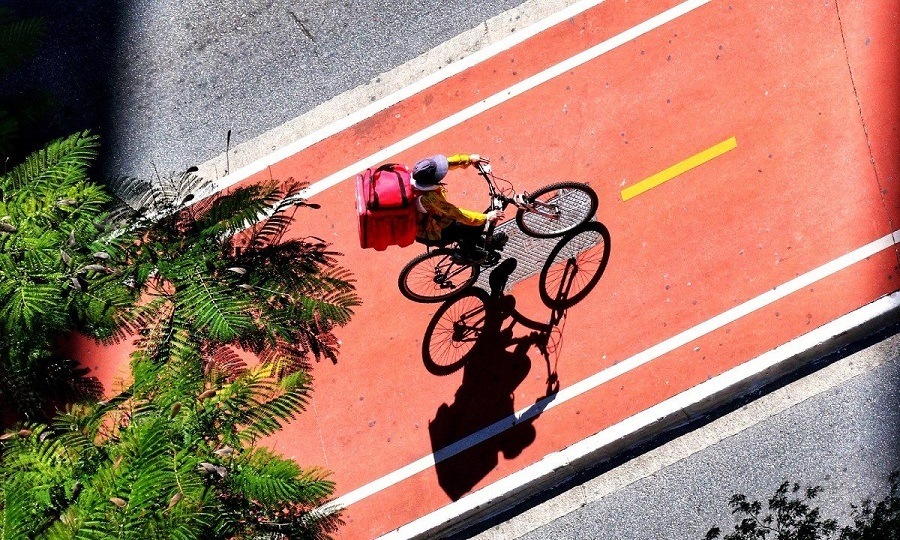
In addition, the company has real-time support for partner deliverers, has reinforced the service team, and has reviewed the cash flow, in view of the significant increase in orders. “We have purchased hand sanitizers and masks for partner deliverers, and are working to increase their distribution, as well as guiding them on their use procedures,” says the company in a note.
Source: Exame
More: Brazil news in English, every day from The Rio Times.
This article was produced by The Rio Times’ automated newsroom system. How we use AI · Report an error · Editorial responsibility: Matthias Camenzind, Editor-in-Chief