Banking Revolution Should Boost Competition Among Fintechs and Banks in Brazil
RIO DE JANEIRO, BRAZIL – Two new tools – PIX and open banking – promise to revolutionize the Brazilian banking system and, as a result, to heat up competition in the market. To prepare for this new stage, while banks are heavily investing in technology (read more below), the so-called fintechs have decided to go shopping. The startups specialized in the financial sector have expanded their acquisitions of small technology companies, brokers, and investment managers in recent months.
Scheduled to start operating on November 16th, PIX, the new Brazilian instant payment system, will change the way people pay bills and make purchases, by removing the need for cash or cards. Among the advantages is the option of using only a cell phone number, for instance, to make a transfer without the need for an account, agency, ID, full name, and all other data required today. Or withdraw money from a store without an ATM card, or password using only the ID.
Open banking – a system for sharing data, information, and financial services by the banking clients themselves on technology platforms – is scheduled for the end of November and should provide greater user autonomy. A good payer client, with an account at a particular bank and almost going into overdraft, may be offered a cheaper credit from another bank, even without an account at that institution.

With an eye on this evolution, fintechs seek to increase their field of action. An expert in regulation and organization of the financial and capital markets, attorney José Luiz Rodrigues points out the high demand of fintechs by consulting companies for the design of acquisition processes. The law office assisted four entrepreneurs in the area last week alone.
“In the past five years, fintechs have been structuring themselves, but still focused on specific services to place themselves in the market. Now, with open banking, many of them have found the opportunity to make their operations more comprehensive,” he says. “Fintechs are coming together to become stronger.”
Last month’s purchase of Magliano Invest, the oldest brokerage house in the country with 90 years of operation, by Neon Pagamentos, founded only four years ago, is but one example. The list is long, despite the crisis triggered by the pandemic. In June, XP announced the purchase of majority stakes in two fintechs: Fliper, for investment consolidation, and Antecipa, a digital platform for the anticipation of receivables such as amounts to be received by shopkeepers for credit card purchases.
This month, the market witnessed the dispute between Stone Pagamentos and Totvs for the purchase of Linx, a software developer for retail and e-commerce. The figures involved amount to R$6 billion (US$1.2 billion).
In Nubank’s case, acquisitions crossed borders. The company bought two systems development companies this year – Plataformatec, in January, and the American Cognitect, in July. “We have grown at a very fast pace, of 40,000 clients per day,” says Nubank co-founder Cristina Junqueira. “And this, no doubt, includes the development of products and services that we will offer in the context of open banking and instant payment.”
According to the executive, the systems will dramatically increase competition. “The market will undergo a period of consolidation and we are always attentive. If there is any company that has products consistent with our vision, we may be interested.”
INSPER Finance professor Ricardo Rocha emphasizes this assessment. “There will be a definition about which fintechs are going to become big companies and which are going to fail.” According to him, the trend is for the cost to financial clientd to decrease. “It is the continuity of the digital revolution. The innovation will promote important changes.”
Although Banco Itaú believes that PIX will come to include millions of people in the financial system, it says that the innovation will provide security and conflict management challenges. “Our investments are focused on offering our clients the best experience, with simplicity and, above all, security,” says Carlos Eduardo Peyser, strategy director for SMEs and open banking at Itaú Unibanco.
New business
Executive Director of Dinamo Networks, which operates in digital identity security and encryption, Marco Zanini says that financial and non-financial companies have realized that PIX will create opportunities. In many cases, to be part of the system, the option is to acquire digital portfolios that are already in the market, have the technology and a customer base. “With PIX, we will go from 30 or 40 institutions competing in retail to over 900. Of course, the price war will grow.”
In June, Facebook announced WhatsApp Pay, leveraging existing payment arrangements with some local partners, drawing even more attention to this market. However, the initiative was suspended by the Central Bank, which authorized tests but did not provide the final word on the service.
The Central Bank has been expanding initiatives to encourage competition in the banking system. “Typically, regulatory bodies create rules for an existing market. This is one of the few cases in which the regulatory body has anticipated the market, creating the regulatory framework for PIX,” says Carlos Daltozo, head of variable income at Eleven.
According to Daltozo, transformations will be gradual. “New entrants need to adjust to prerequisites such as security, regulation, and minimum capital. Banks should initially feel an impact on TED and DOC rates, in addition to debit transactions. On the other hand, they will have to sustain the service to companies, as they have more robust fraud prevention tools.”
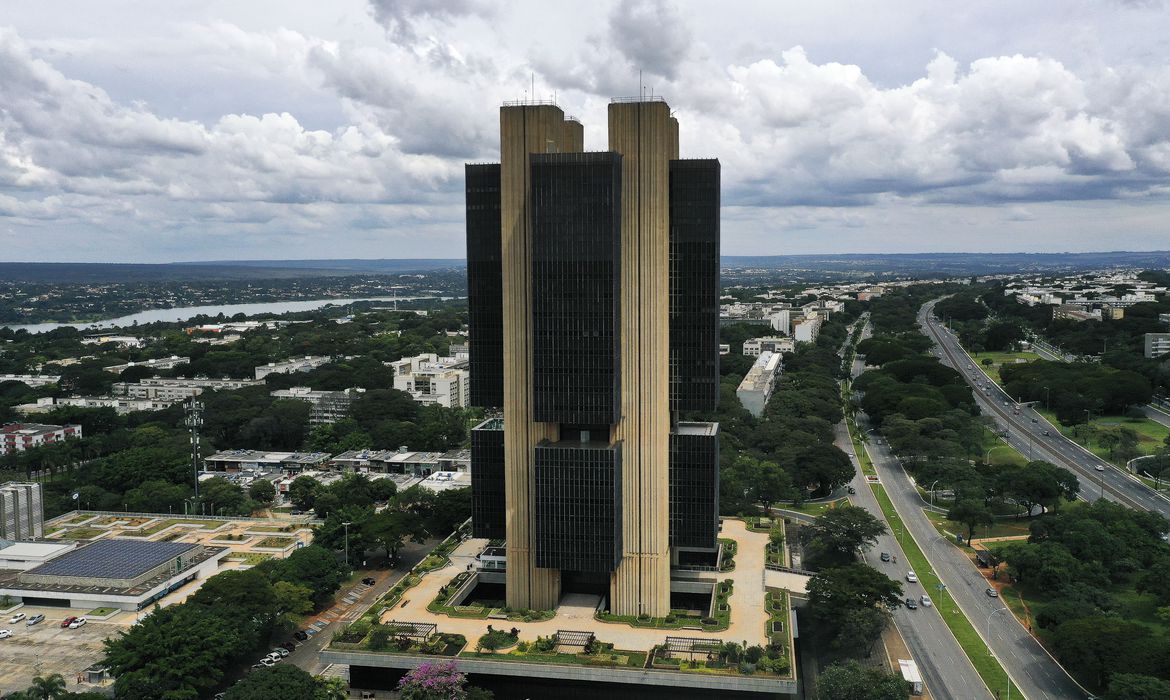
Banks invest R$24.6 billion in technology
Traditional banks are also investing in technology and security to adjust to the revolution. According to the executive director of Innovation, Products and Banking Services of the Brazilian Federation of Banks (FEBRABAN), Leandro Vilain, the investments made by the sector in technology amount to R$24.6 billion per year. “Banks have always worked as sponsors of innovations in the country and have a history of investments in technology and expertise in digital operations.”
The executive said that the FEBRABAN believes that the PIX system and open banking will be essential to increase banking competition in the country. “With them, clients will have greater convenience and facilities and will be able to choose better offers and credit opportunities and services available in the market,” he said.
However, the organization states that the rules should be the same for all participants, be they traditional banks or new competitors.
For FEBRABAN, greater competition and access to more client data will allow productivity gains and cost reductions. However, Vilain states that these initiatives “will not be able” to reduce the spread (the difference between the cost of funding and what is actually charged to the client).
“This is a problem to be addressed, but its causes are related to factors such as default, lack of guarantees, high taxation, and legal insecurity in financial contracts,” says Vilain. “These problems are faced regardless of whether they are traditional banks or those that are emerging.”
‘Whoever provides the best service will lead,’ says Central Bank director on fintechs
João Manoel Pinho de Mello, director of Organization of the Financial System and Central Bank Resolution, says that the result of the introduction of PIX and open banking will be increased efficiency and competition among financial institutions. “Of course, whoever provides better services at lower prices will lead.”
“The main driver behind this revolution is efficiency, low cost, and open platforms. What PIX does is create an efficient platform in which everyone is involved. The platform is attractive on the user’s side, due to 24/7 settlement. On the payer’s side, we are guaranteeing a number of features as convenient as what is offered by other means of payment, such as cash, slips, and cards.”
Does it mean more competition?
We can expect more efficiency and more competition. Obviously, whoever provides better services at lower prices will lead.
Apparently, PIX will be an advantage to the storekeeper, who will be able to receive the payment immediately, unlike with the use of cards. Won’t this be a major blow to the card industry?
The card industry, mainly from 2010 onwards, with the de-verticalization and the breakdown of exclusive relations with brands, has undergone a revolution. There has been a decrease in costs for retailers and an increase in card penetration. Today, 40 percent of individual consumers’ expenses are made by debit and credit cards. It is a successful industry.
PIX has advantageous features, but I believe that the card industry will continue to play an important role. It may be transformed. PIX, in fact, is very efficient for the receiving end. Whoever uses PIX’s platform will pay very little and the settlement occurs on time. This avoids the cost of working capital and the establishment becomes less susceptible.
On October 5th the registration of PIX’s keys (cell phone, e-mail, or ID) will begin. What will prevent someone else from using my cell phone number, for instance, to make or receive transactions?
From the point of view of vulnerability, PIX is no different than other means. It is the same type of identity validation in place for other means. We are confident that PIX will be as safe as, or safer than, the other payment methods.
Source: O Estado de S. Paulo
More: Brazil news in English, every day from The Rio Times.
This article was produced by The Rio Times’ automated newsroom system. How we use AI · Report an error · Editorial responsibility: Matthias Camenzind, Editor-in-Chief