Bolsonaro Considers Issuing Decree Allowing Mineral Extraction in Amazonian Reserve
RIO DE JANEIRO, BRAZIL – Jair Bolsonaro’s government is considering reissuing the decree promulgated by his predecessor Michel Temer, that sought to extinguish the National Reserve of Copper and Associates (RENCA), a preserved forest of 46,450 square kilometers located in the states of Pará and Amapá, in northern Brazil.

The goal is to allow the mineral exploration of a part of this area, which is equivalent to half the size of Portugal.
In 2017, then-president Michel Temer tried to end the environmental protection of the area under the same justification – commercial exploration. However, pressure from public opinion and representatives of the Brazilian artistic class caused him to revoke the decree on the subject.
A year later, without any hype, Temer published a decree that leaves open the opportunity for mineral exploration in the area. So far, no new exploration has been recorded, according to technicians from the Ministry of Mines and Energy.
The proposal on the development of studies to extinguish the RENCA emerged early in Bolsonaro’s administration and was reinforced in April, when the president visited Macapá (AP) inaugurating an airport. It gained traction last week after he was questioned by government officials.
“I had lunch with the president last week and he told me that he has commissioned the studies,” said Lucas Barreto, the deputy leader of the government in the Senate. He is one of the main advocates for the release of part of the reserve area for mining.
Two advisors with access to the Planalto Palace confirmed Barreto’s version and said the decision on the issue is close to being taken.
Before making any announcement about RENCA, on Tuesday, Bolsonaro signed the provisional measure on land tenure, called by the opposition “MP Grilagem” (“Provisional Measure on Land Grabbing”).
The provisional measure will enable the self-declaration of ownership of rural properties of up to 1,650 hectares that are not registered. Approximately 600,000 areas are expected to be registered, some of them in the Amazon.
Opposition leader in the Senate, Randolfe Rodrigues, brought his concern about the issue to the Climate Conference in Madrid (COP 25) this week, where he is taking part in a number of meetings and panels with environmental authorities and foreign government representatives.
“Everyone I talk to is scandalized by the possibility of extinguishing the RENCA”, said Rodrigues.
According to the senator, the government has given several signs that a decree is about to be signed and the public speeches of the Minister of the Environment, Ricardo Salles, show that Brazil has dealt with the subject improperly.
“The minister’s speech at the COP 25 clearly showed a sense of hostage-taking. The summary of his speech is this: I have the forest, if you don’t give me money, I will cut it down”.
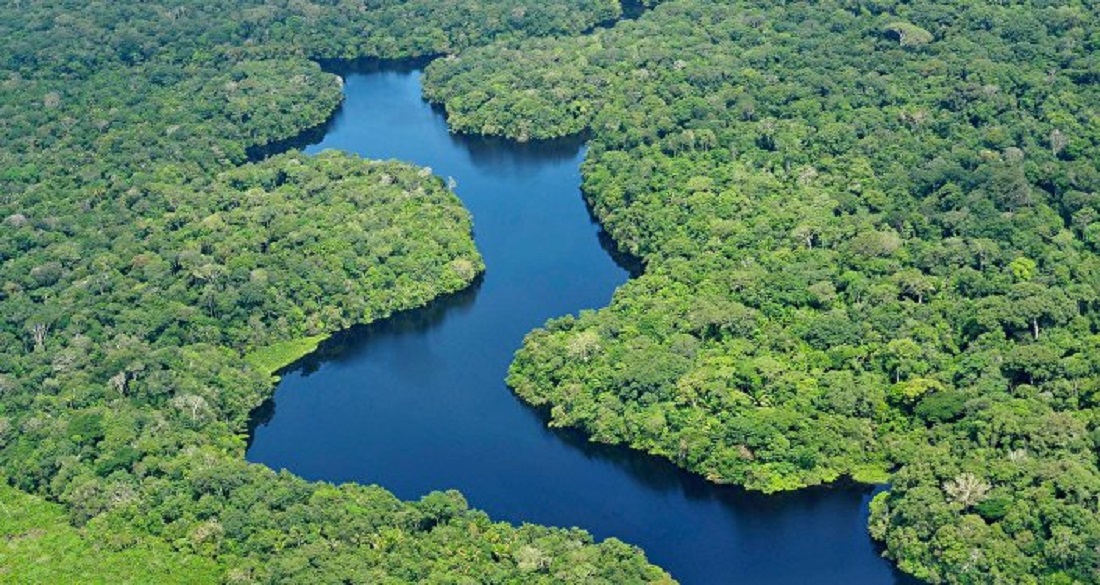
Established 35 years ago, RENCA covers five protected areas in which, according to current legislation, mineral exploration could not be carried out. There are two indigenous lands and three integral protection conservation units.
There are also four other conservation units for sustainable use, which, in theory, could be explored. According to the WWF (“World Wildlife Fund”), about 30 percent of RENCA could be used for extraction purposes.
Senator Barreto, an advocate of the area’s exploitation, says that this area does not reach four percent, the equivalent of approximately 2,160 square kilometers. “We don’t want all the trees to be felled. We want mineral exploration of a small parcel to help develop our state,” he said.
Supporters of RENCA’s total or partial extinction say that gold, iron, phosphate, titanium, manganese, niobium, phosphorus and tantalum could be sourced there. “Studies in the 1970s and 1980s say we would have more than a trillion dollars to explore. Imagine this updated figure,” said Senator Barreto.
In his assessment, the environmental damage would be localized, since only mountainous regions would be explored, under strict supervision and, in case of the need for environmental recovery, it could occur in up to three decades.
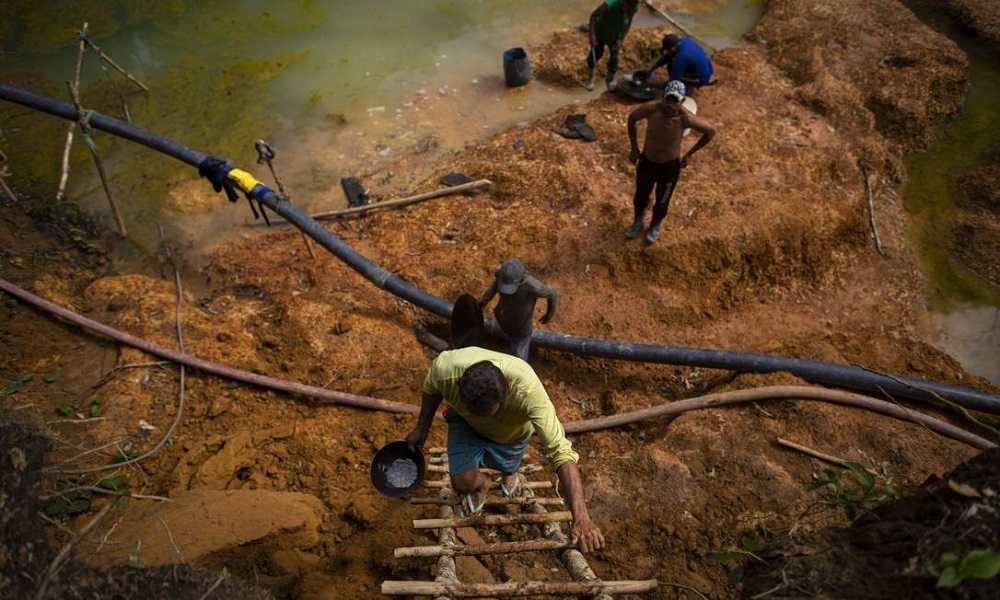
Unofficial data estimates that about 5,000 miners operate in the RENCA area and there are between 30 and 40 clandestine landing strips. “Today we are environmental slaves. Our people are starving. And a frame on the wall with pictures of trees does not fill our bellies. The revocation of the RENCA will promote a legal order for artisanal mining,” said Barreto.
According to those working on projects in the area, the potential damage around the area to be explored is more worrying than any local impact. The RENCA area is isolated from urban planning.
Access is difficult: “In order to explore most of the ores, one has to plan a whole logistics system with roads, railroads, one has to have electric power. In other words, it would need a set of other projects that will probably be more impactful than mining itself,” said Décio Yokota, deputy executive coordinator of the Institute of Research and Indigenous Training (IEPÉ).
Under the argument that economic development of the area is needed, Yokoda argues that sustainable alternatives should be created for the region and not just projects that have their own purpose. “The large hydroelectric dams, the mining companies, are destroying, exploiting, extracting and when they close, it is the end, really. It doesn’t generate local wealth,” he said.
And he added: “The social and economic situation of the cities near the RENCA is extremely serious. I am sure that all the residents of these cities want any new opportunities, even if it is a nuclear power plant”.
Source: El Pais
More: Brazil news in English, every day from The Rio Times.
This article was produced by The Rio Times’ automated newsroom system. How we use AI · Report an error · Editorial responsibility: Matthias Camenzind, Editor-in-Chief