Brazil Settles a 30-Year Land Fight Over 33,000 Hectares
Politics
Key Facts
—The land. Brazil regularized about 33,000 hectares of the former Giacomet-Marodin estate in Paraná.
—The families. Around 2,000 families gain legal title, in the state’s largest-ever land-reform award.
—The fight. The dispute dates to 1996, when landless families first occupied the estate.
—The deal. It followed roughly two years of talks among federal agencies, courts and the owners.
—The complex. The wider area now holds 5,500 families across 24 communities in Paraná.
One of Brazil’s oldest land disputes has finally been settled. A major act of Brazil land reform has handed legal title over a vast contested estate to the families who farmed it for years.
For a reader following the region, the scale is what stands out. This is the largest single land-reform award in the history of Paraná, a wealthy farming state in Brazil’s south.
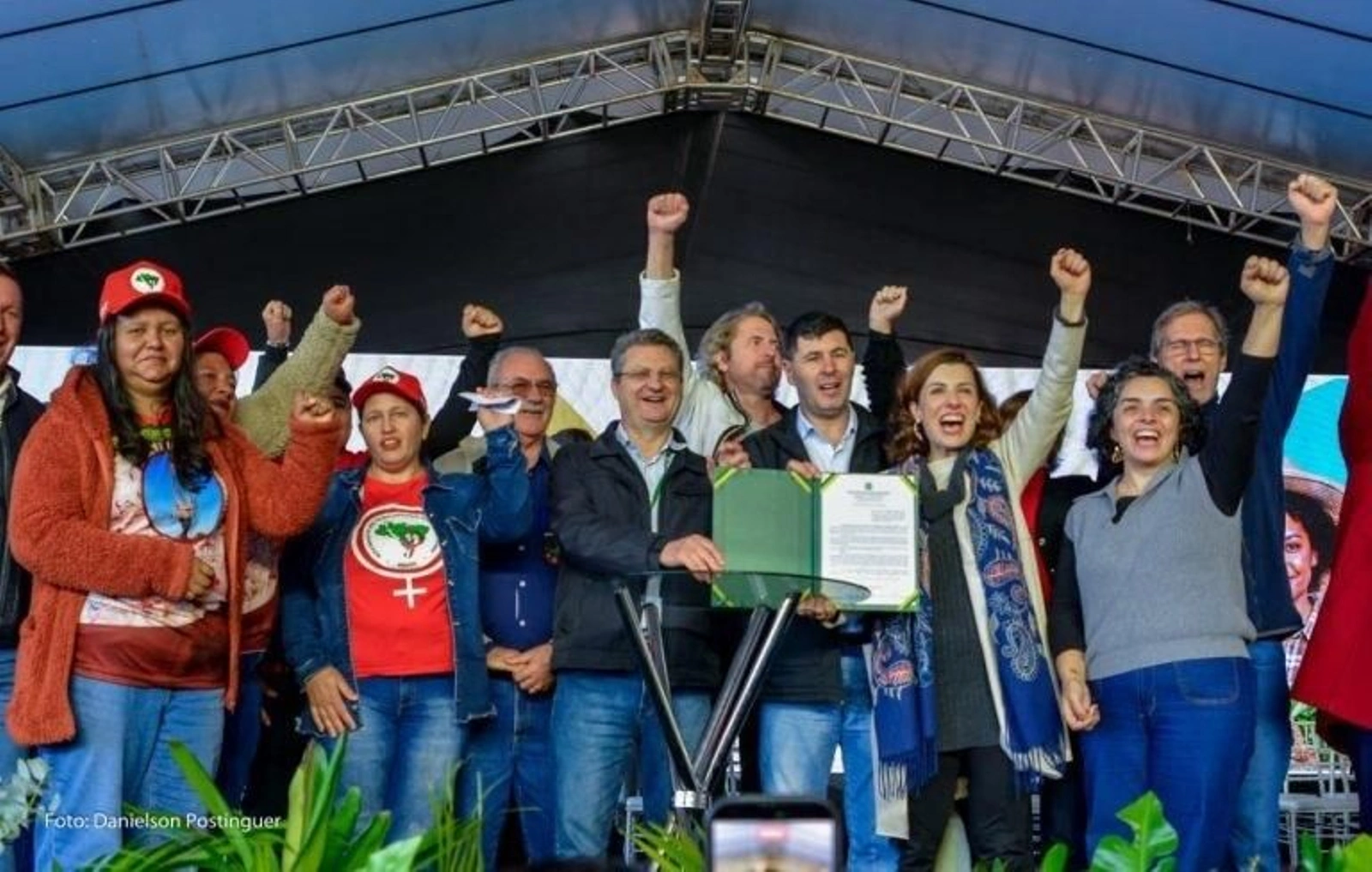
The government made it official this month. According to Brazilian reporting, the land agency Incra regularized about 33,000 hectares of the former Giacomet-Marodin estate, helping some 2,000 families.
How this Brazil land reform came about
The roots run deep. A timber company took over the area in the early 1970s, and its arrival brought the violent eviction of squatters and Indigenous people, with homes burned.
The turning point came in 1996. That year around 3,300 landless families staged the first mass occupation of the estate, a moment famously photographed by Sebastião Salgado.
Courts later found part of the holding to be illegally seized public land. Much of the roughly 83,000-hectare estate had been declared irregularly occupied, opening the door to redistribution.
The final step took patience. The settlement followed about two years of talks bringing together Incra, several ministries, the federal prosecutor’s office, the courts and the estate’s owners.
Why it matters, and what divides opinion
The government frames it as justice. The agrarian development minister called the move a victory for the social function of land over illegal appropriation and monoculture, tying it to a constitutional right of access to land.
The families point to a changed landscape. They say they replaced the old pine and eucalyptus monoculture with diversified, agro-ecological farming, and one community is reforesting with the seeds of an endangered palm.
Critics see a familiar tension. Landowners and much of the agribusiness lobby say occupations pressure the state into expropriation, and that reform should proceed strictly through the courts, not through invasions.
The wider context is political. Land reform is a signature theme for President Lula’s government. With an election looming, it lands as both a social milestone and a marker in Brazil’s long fight over who owns the countryside.
The territory is now vast. The wider Araupel complex holds about 5,500 families across 24 communities, which the landless movement calls the largest continuous land-reform area in Latin America.
Everyday life there has grown roots. The settlements run their own traveling schools teaching hundreds of pupils, and some communities sell organic-certified surplus alongside subsistence farming.
Recent hardship sharpened the moment. Many of the same families were hit by tornadoes that struck Paraná in late 2025, damaging homes, crops and the community’s central school.
Officials also framed it as a template. The government said the negotiated format, granting legal security without a drawn-out court battle, could serve as a model for other long-running land conflicts.
The number waiting is large. The landless movement says more than one hundred thousand families across Brazil still await regularization of the land where they already live. This deal does little to shrink that backlog on its own.
What land did the Brazil land reform cover?
About 33,000 hectares of the former Giacomet-Marodin estate, now known as Araupel, in Paraná state. Around 2,000 families gained legal title across three new settlements, the largest land-reform award in the state’s history.
How long did the dispute last?
Nearly three decades. Landless families first occupied the estate in 1996, and the final regularization followed about two years of talks among federal agencies, the courts and the owners.
Why is it controversial?
The government and landless movement call it a victory for land justice. Landowners and the agribusiness lobby argue that occupations should not force expropriation, and that reform should go through the courts.
Connected Coverage
Brazil Supreme Court Upholds Foreign Farmland Limits
Brazil Plano Safra 2026/27: A Record That Shrinks
Brazil 2026 Elections: Guide to Candidates, Polls and Key Dates
Background: Brazil Overhauls Tax System: A New Era for Business and Economy.
Frequently Asked Questions
How much land was handed over, and how many families benefited?
About 33,000 hectares of the former Giacomet-Marodin estate in Paraná were regularized, giving legal title to around 2,000 families. It is the largest single land-reform award in Paraná's history.
How long did this land dispute go on?
The dispute lasted nearly 30 years. It started in 1996, when around 3,300 landless families first occupied the estate, and the final settlement came after about two years of talks among federal agencies, courts and the owners.
Why do some people oppose this land reform deal?
Landowners and the agribusiness lobby argue that land occupations should not be used to pressure the government into expropriation. They say reform should happen strictly through the courts rather than through land invasions.
This article was produced by The Rio Times’ automated newsroom system. How we use AI · Report an error · Editorial responsibility: Matthias Camenzind, Editor-in-Chief