Brazil’s Top Court Closes Loophole Used to Buy Farmland
Key Facts
— —Brazil’s Supreme Court voted 9-0 on April 23 to uphold a 1971 law that restricts foreigners and foreign-controlled companies from buying Brazilian farmland.
— —Justice Alexandre de Moraes, who had initially voted against the restrictions, flipped his position and cited the need to protect “national sovereignty and critical minerals.”
— —The ruling lands three days after US-listed USA Rare Earth agreed to pay US$2.8 billion for the Pela Ema mine in Goiás — the largest rare-earths transaction in Latin American history.
— —The case was brought by the Brazilian Rural Society and backed by the government’s Attorney General, making the union between agribusiness and Brasília’s federal bench unusually public.
Brazil’s Supreme Court has just told the international investors circling the country’s farmland and its subsoil that the rules of 1971 still apply. The timing, three days after Washington bought Brazil’s only rare earths mine, is not an accident.
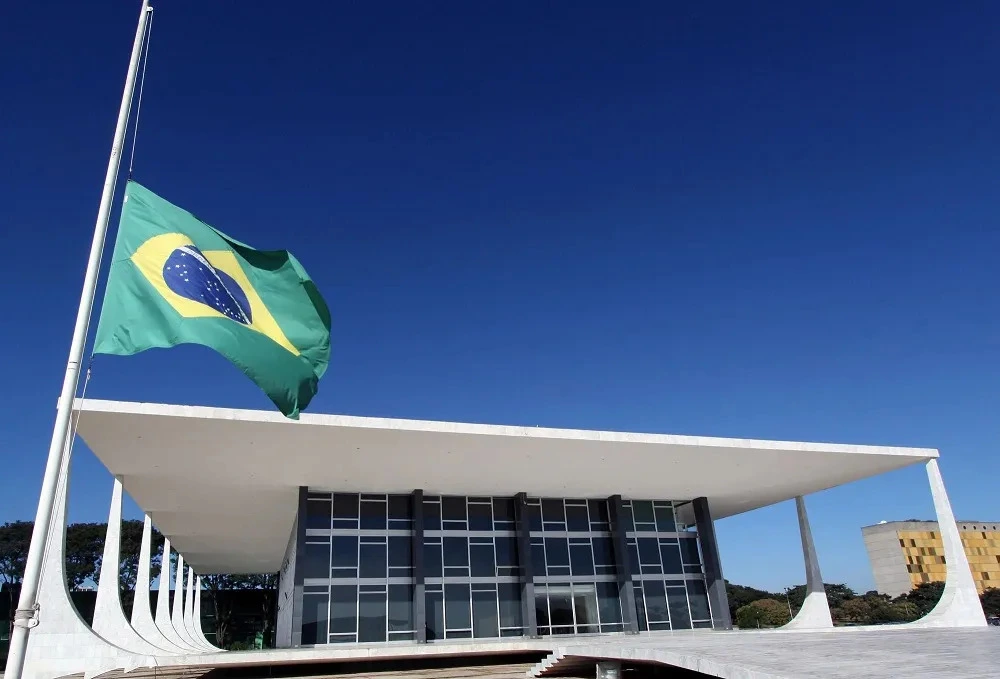
The Rio Times, the Latin American financial news outlet, reports that on Thursday April 23 Brazil’s Supreme Court voted unanimously to uphold the restrictions on Brazil foreign farmland ownership that have been on the books since the military government of 1971. The 9-0 vote closed a 25-year effort by parts of Brazilian agribusiness to open farmland to foreign-controlled Brazilian subsidiaries on the same terms as fully domestic buyers.
The original case was filed by the Brazilian Rural Society, one of the country’s oldest agribusiness associations. The Society argued that a 1995 constitutional amendment eliminated the distinction between “Brazilian companies” and “companies with foreign capital” and therefore made the 1971 law unconstitutional.
The Attorney General defended the law, arguing that the 1988 Constitution explicitly permits different legal treatment of foreign-controlled companies, and that the restrictions were needed to protect territorial sovereignty, prevent land speculation, and disrupt money-laundering schemes.
Why the Brazil foreign farmland ruling is about critical minerals too
The most-watched vote of the session was cast by Justice Alexandre de Moraes. Moraes had initially voted against the restrictions during the virtual session in March, then requested additional time to review the case. On Thursday, he returned with a rewritten opinion that explicitly linked farmland controls to minerals.
“Current geopolitics demonstrates the importance of preserving Brazil‘s internal and external security on the basis of the territorial question,” Moraes wrote. He added that the restrictions were necessary “to safeguard national sovereignty and critical minerals” — and he named lithium, rare earths, and nickel by category rather than abstractly.
That language matters. The 1971 law applies to rural property, but ionic-clay rare-earth deposits, lithium basins, and nickel-bearing land in states like Goiás, Minas Gerais, Bahia, and São Paulo all sit on the same legal framework.
Chief Justice Edson Fachin added that the Constitution “requires differentiated legal discipline between domestic Brazilian companies and those with foreign capital” and that the 1971 law was valid because it sets limits, not impassable obstacles.
The Serra Verde context the court did not name directly
Three days before the Brasília ruling, on April 20, the US-listed company USA Rare Earth announced a definitive agreement to buy 100% of the Serra Verde Group for approximately US$2.8 billion. As the Rio Times reported at the time, this is the largest rare-earths transaction ever signed in Latin America.
Serra Verde owns the Pela Ema mine in Minaçu, northern Goiás, the only scaled producer outside Asia of all four magnetic rare earth elements: neodymium, praseodymium, dysprosium, and terbium. The deal bundles a 15-year, 100% offtake agreement with a special purpose vehicle capitalised by US government entities and private investors.
None of the justices mentioned Serra Verde by name. They did not need to. Moraes referenced critical minerals in the same sentence he restated the restrictions, and Brazil’s only operating rare-earths mine had just been sold to a US-government-backed acquirer three days earlier.
The Serra Verde transaction itself is expected to close in the third quarter of 2026, subject to regulatory approvals “on both sides.” One of those sides is the Brazilian government, which under the 1971 law retains authority to authorise transfers of rural property to foreign-controlled buyers.
What the ruling actually does, and does not, change
The 1971 law does not prohibit foreign ownership of Brazilian farmland. It caps it. Foreign individuals and foreign-controlled companies cannot own more than 25% of the rural area of any single Brazilian municipality, and no single foreign nationality can own more than 40% of that 25%.
Transactions above defined thresholds require explicit authorisation from the federal government through Incra, Brazil’s rural-land reform authority.
What the Supreme Court’s Thursday vote confirmed is that those caps apply not only to companies registered abroad, but also to Brazilian companies whose controlling shareholders are foreign. That was the loophole agribusiness had tried to open: use a Brazilian subsidiary with foreign parent ownership to buy land as if it were a purely domestic buyer.
After April 23, that route is formally closed at the level of constitutional interpretation. Chinese, US, Singaporean, Canadian, and European investors who want to acquire Brazilian rural land — for agriculture or for mineral extraction — continue to need Incra authorisation and continue to face the municipal caps.
The political economy behind a 9-0 vote
The unusual feature of the Thursday decision was the unanimity. Brazil’s Supreme Court has been deeply divided on other questions this year — from the Eduardo Bolsonaro coercion case to the judicial review of Lula’s pension overhaul — yet produced a clean 9-0 on a case that pits agribusiness against federal authority.
Part of the answer is that the Attorney General’s defence of the 1971 law gave the court political cover from both the Lula government and the opposition. A ruling that restricts foreign land ownership reads as economic nationalism on the left and as sovereignty protection on the right.
The other part is critical minerals. Brazil holds the world’s second-largest rare-earth reserves and the third-largest lithium reserves, and as the Rio Times mining 2026 guide documented, Chinese, American, Canadian, and European investors are all moving simultaneously. The court decided to keep the instrument that lets Brasília say “no” to any individual transaction, rather than hand that instrument away to a constitutional amendment no one has demanded.
What to watch on Brazil foreign farmland next
Three things now matter. The first is the regulatory approval process for the Serra Verde acquisition itself. With the Supreme Court’s language about critical minerals on record, the Brasília side of the approval becomes more than a formality.
The second is the pending bill in Congress that would create a national critical-minerals policy. The bill has been stalled for more than a year, but the Thursday ruling gives it political oxygen and a constitutional foundation. A bill that passes now would apply the same logic to future transactions rather than leaving each one to federal discretion.
The third is the EU dimension. As the Rio Times reported this week, Brussels is currently reviewing four Brazilian critical-minerals projects, and the EU-Mercosur agreement’s provisional entry into force on May 1 commits the EU to accelerated tariff elimination on critical minerals. The farmland ruling does not block European investment, but it reinforces that the terms of that investment will be set in Brasília, not in Brussels or Washington.
For investors reading Brazil from Berlin, New York, or Shanghai, the message from Thursday is narrow but sharp. The rules are the same ones that were in place when Brazil was not yet a critical-minerals supplier, but the court has now explicitly said those rules exist to protect something that did not exist in 1971: a country with a real role in the global contest for rare earths, lithium, and nickel.
Related coverage: USA Rare Earth buys Serra Verde for US$2.8 billion • Brazil mining 2026 guide • EU reviews four Brazil critical mineral projects
More: Brazil news in English, every day from The Rio Times.
This article was produced by The Rio Times’ automated newsroom system. How we use AI · Report an error · Editorial responsibility: Matthias Camenzind, Editor-in-Chief