Brazil Justice Wants Billions in Court Debts Audited After Bank Scandal
BRAZIL · JUSTICE
Key Facts
- —The country Brazil, Latin America’s largest economy, votes in general elections on Sunday 4 October 2026. Its federal government owes court-ordered debts, known as precatórios, worth many billions.
- —Why it matters Banco Master, a bank now in liquidation, bought such claims cheaply and used them to raise money, according to Justice Gilmar Mendes. Federal Police suspect it sought favourable rulings, Poder360 reported.
- —What happened On Sunday 27 September Mendes asked the National Council of Justice to inspect all regional federal courts for irregular court-ordered debts.
- —The numbers Mendes cites more than R$100 billion (about US$19.3 billion) in potential exposure from sugar mill claims. Sixteen claims worth R$4.7 billion (about US$906 million) were cancelled last week.
- —What it means for you Funds and bank products backed by court claims could face closer scrutiny if regulators act as Mendes urges.
- —Still open Whether the council orders the inspection, and how many other claims it would catch.
Gilmar Mendes, the longest-serving justice on Brazil’s Supreme Federal Court (STF), wants a nationwide review of court-ordered debts owed by the federal government. He tied the request to the collapse of Banco Master in a social-media post on Sunday 27 September, Poder360 reported.
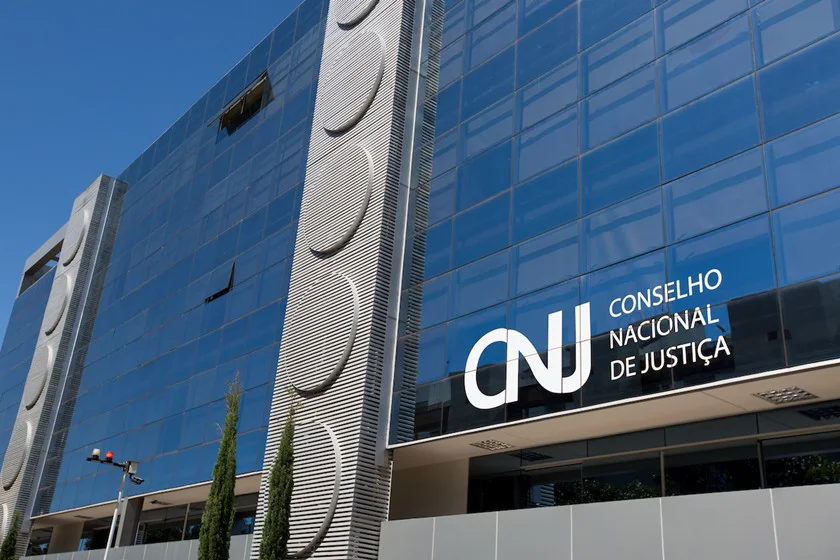
He asked the National Council of Justice (CNJ), which oversees Brazil’s courts, to widen its checks. According to Poder360 and the legal news site Consultor Jurídico, he wants an extraordinary inspection of every regional federal appeals court.
What Mendes asked for
Precatórios are payment orders issued when the government loses a case and owes more than a small-claims ceiling. They wait in a queue for federal payment.
Mendes wants the CNJ’s national inspectorate to “trace other precatórios marked by irregularities and clean up the Union’s payment queue,” Poder360 reported. He singled out sugar and ethanol mill claims and claims over public health system (SUS) fees.
He also called for an end, “once and for all,” to issuing precatórios before a case is final, which he says conflicts with the Constitution.
The Banco Master link
Mendes called Banco Master’s operation a “parasitic business model” that drained public money and investors’ savings. He said the bank bought claims against the government at deep discounts and booked them at far higher values.
It then used them as backing to raise money, he wrote. He urged the securities regulator (CVM) and the central bank to tighten oversight of how such court-ordered debts are traded.
Mendes wrote that the 2026 budget guidelines law puts the potential impact of the mill cases above R$100 billion (about US$19.3 billion). He also cited a contract worth up to R$427 million (about US$82 million) between the bank and a law firm.
That firm is run by the wife of a judge at the TRF-1, the regional federal appeals court based in Brasília. The firm told Poder360 and Agência Brasil it received no payment as a retainer or success fee.
What has already happened
On Wednesday 23 September the national inspector of justice, Benedito Gonçalves, cancelled 16 precatórios issued by the TRF-1 for sugar mills, Agência Brasil reported. The claims, worth R$4.7 billion (about US$906 million), had been traded with Banco Master.
The next day Mendes sent the mill dispute to the full Supreme Court (see Brazil’s Top Court Sends US$20 Billion in Sugar Mill Claims to Full Bench).
What Is Not Yet Known
No CNJ response had been reported by Monday afternoon. Nor is it known how many other suspect court-ordered debts exist, or what they are worth.
The TRF-1 contract remains under investigation, and no court has found wrongdoing by the judge or the law firm. The wider inquiry has also slowed (see Brazil’s Bank Collapse Inquiry Slows to a Crawl in the Week Before the Vote).
Sources: Poder360, 28 September 2026 (with the full text of Gilmar Mendes’s post); Consultor Jurídico, 28 September 2026; Agência Brasil, 23 September 2026. Currency converted at 5.19 reais per US dollar (open.er-api.com, 28 September 2026).
This article was produced by The Rio Times’ automated newsroom system. How we use AI · Report an error
Read More from The Rio Times