Brazil considers resumption of relations with Venezuela
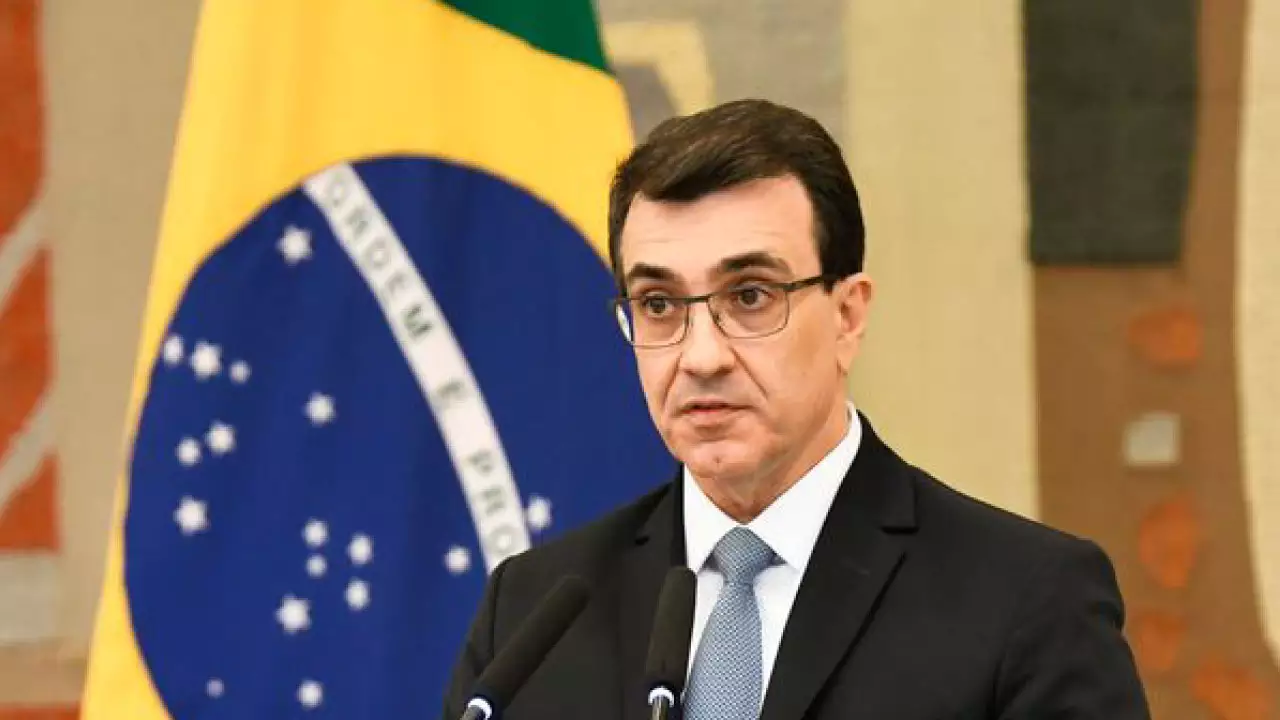
RIO DE JANEIRO, BRAZIL – Brazilian Foreign Minister Carlos Franca has raised the possibility of re-establishing diplomatic relations with Venezuela.
“At a time when the United States is considering an exemption from the embargo on Venezuelan oil exports, we should reassess the issue of diplomatic relations,” he said at a Senate hearing.
The public approach represents a shift in foreign policy for Brazil, whose government has severed diplomatic ties since Jair Bolsonaro took office in January 2019.

Franca acknowledged increasing calls from both allies and the opposition to restore bilateral relations. “It’s a question we think about every day,” he said.
He stressed that “if at some point a rapprochement with Venezuela is possible, we can begin the resumption of consular relations.”
From the border state of Roraima (northern Brazil), Senator Chico Rodrigues affirmed that the Brazilian government is already considering reopening a consulate for the nearly 25,000 Brazilians living in Venezuela.
ARGENTINA TOO, WANTS TO REESTABLISH FULL RELATIONS WITH VENEZUELA
Argentina’s President Alberto Fernandez announced that he proposes restoring full diplomatic relations with Venezuela and asked other Latin American countries to act similarly at a press conference held on April 18 with his Ecuadorian counterpart, Guillermo Lasso.
“As a first step, Argentina wants to recover its full diplomatic ties. It is a step we are taking, and I call on all Latin American countries to review it because Venezuela has gone through a difficult period,” Fernández said.
Argentina had joined in 2017, during the government of liberal Mauricio Macri, the Lima Group, which sought a way out of the crisis in Venezuela and subsequently recognized opposition leader Juan Guaidó as president in charge of that country.
RECENT HISTORY OF BRAZIL-VENEZUELA RELATIONS
In 2001, Venezuela and Brazil opened a high-voltage power line between the two countries to supply electricity from Venezuela to energy-starved northern Brazil. The line provides cheap hydroelectric power to Brazil and earns Venezuela tens of millions of dollars every year.
In 2007, Brazil and Venezuela pledged closer trade and energy ties, including building a new oil refinery in Brazil. The US$4.5 billion refinery scheme to be completed in 2010 will be 40%-owned by Venezuela’s state oil firm PDVSA, while Brazil’s national oil firm Petrobras will hold the rest.
Venezuela purchased 1,500 tonnes of coffee beans from Brazil on 10 August 2009 after falling out with Colombia over its decision to allow an increased United States presence in its military bases.
On 18 June 2015, a mission of Brazilian senators led by Sen. Aécio Neves (composed mainly of opposition legislative to Pres. Dilma Rousseff) flew to Caracas with interest in visiting Venezuelan prisoner Leopoldo López and the families of victims of the protests against President Nicolás Maduro.
About a kilometer away from the Simón Bolívar International Airport, the senators’ vehicle was prevented from continuing the trip after being stopped and surrounded by government protesters. Finally, the Brazilian senators decided to return to Brazil on the same day.
The legislative houses Câmara dos Deputados and Senado Federal of Brazil issued motions of rejection to such events. The Ministry of Foreign Affairs of Brazil issued an Official Note expressing his annoyance with the “unacceptable hostile acts” that occurred that day and asking for official explanations from the Government of Venezuela.
Since the Brazilian government of President Jair Bolsonaro in 2019, Brazil has cut off its relations with the current Venezuelan government of President Nicolás Maduro. Brazil downgraded its diplomatic ties with the ruling Venezuelan government.
In the Venezuelan presidential crisis, Brazil recognized Venezuelan opposition leader Juan Guaidó as the legitimate President of Venezuela. In April 2020, Brazil closed its embassy in Venezuela.
More: Brazil news in English, every day from The Rio Times.
This article was produced by The Rio Times’ automated newsroom system. How we use AI · Report an error · Editorial responsibility: Matthias Camenzind, Editor-in-Chief