Brazil · Business
Key Facts
—Cuts under way. Azul, a leading carrier, says it has already trimmed about 5% of its capacity.
—The cause. Jet-fuel prices have roughly doubled in three months amid Middle East conflict.
—10 million fewer. The sector warns Brazil could lose roughly 10 million passengers this year.
—From a record. Domestic traffic topped 100 million in 2025 and may now fall below 90 million.
—Costly by design. Brazil pairs some of the world’s priciest jet fuel with heavy taxes and lawsuits.
—A winner. The shock lifts demand for fuel-saving jets from Brazil’s own Embraer.
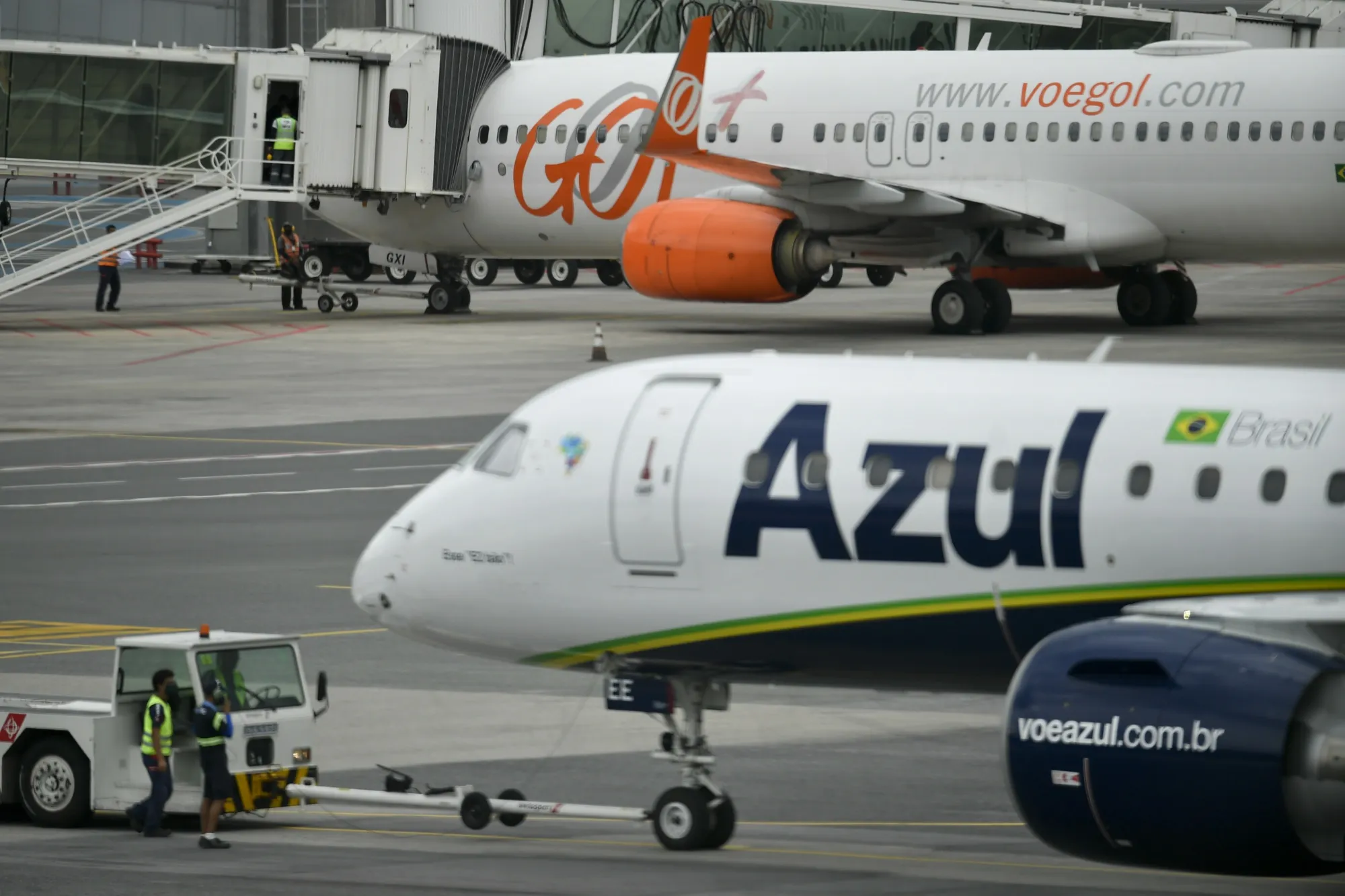
Brazil airlines are pulling flights from their schedules as a war-driven spike in fuel prices reshapes their costs, and the industry now warns the country could lose around 10 million passengers this year after a record 2025.
Why Brazil airlines are pulling flights
Brazil’s carriers are cutting back, and they are doing it now rather than warning about it later. John Rodgerson, chief executive of Azul, one of the country’s largest airlines, says the company has already removed about 5% of its capacity, trimming both routes and the number of times it flies them. The cuts span domestic, regional and international services, and even busy corridors have felt it; he noted that the São Paulo to Curitiba route no longer runs as often as before. For an airline of Azul’s size, a 5% reduction translates into millions of seats over the course of a year.
The trigger is fuel. The price of jet kerosene has roughly doubled over three months, driven by conflict in the Middle East that has pushed up global oil prices. Fuel already made up around 30% of Azul’s costs, so a doubling lands with brutal force, and airlines cannot simply pass the full increase on to passengers without driving them away. The industry body IATA estimates the war-driven fuel surge will add some $100 billion to airlines’ costs worldwide this year. In Brazil, the result is fewer flights, especially on thinner routes where the economics break down fastest.
Ten million passengers at stake
The scale of the pullback is striking against where the market was a year ago. In 2025, Brazil’s domestic aviation set a record, carrying more than 100 million travelers, a jump of about 17% on the year before. Now IATA expects that number to fall below 90 million, a drop that lines up with industry warnings that the country could lose on the order of 10 million passengers in 2026. That is not a marginal dip; it is a meaningful contraction in how many people fly within a continent-sized country where air travel is often the only practical way to cover long distances.
Regional aviation looks most exposed. Rodgerson points out that fuel tends to cost more in remote areas, so the smaller cities served by short regional hops are the ones most likely to lose connections when airlines retrench. For travelers, that can mean longer journeys, higher fares or, in some places, no direct flights at all. For the towns affected, the loss of air links can quietly erode business travel, tourism and access to services that bigger cities take for granted.
Part of what makes the shock land so fast is how fuel is priced in Brazil. The state-controlled oil company Petrobras adjusts the wholesale price of jet kerosene at regular intervals based on global oil prices and the exchange rate, so a war-driven spike abroad flows into local costs within weeks rather than being cushioned over time. To defend demand without simply slashing fares, carriers are leaning on corporate travel, encouraging companies to hand trips to employees as a perk, a way to keep planes full even as leisure travelers balk at higher prices.
A market that was already expensive to fly
What makes the fuel shock especially painful is that flying in Brazil was costly to begin with. According to Rodgerson, the country combines three structural burdens: some of the most expensive jet fuel in the world, a heavy tax load, and an extraordinary volume of passenger lawsuits. By IATA‘s count, Brazil accounts for about 95% of all passenger-rights legal cases globally, with one lawsuit for every 227 passengers, against one for every 1.2 million in the United States. That litigation alone adds cost and risk to every ticket sold, and it leaves little room for the cheap-fare model that fills planes elsewhere.
There is one notable beneficiary amid the strain. The same high fuel prices that hurt the airlines strengthen the case for newer, more efficient aircraft, and that plays to Brazil’s own planemaker, Embraer, whose latest jets burn markedly less fuel than older models. As carriers worldwide look to trim fuel bills, demand for those aircraft tends to rise, turning a crisis for the airlines into an opportunity for the manufacturer. For now, though, the dominant story is contraction: a record-setting market going into reverse, with fewer flights, higher fares and millions of journeys that simply will not happen this year. Whether the trend eases depends largely on something no airline controls, the price of oil and the course of a distant war.
Frequently Asked Questions
Why are Brazilian airlines cutting flights?
Jet-fuel prices have roughly doubled in three months because of Middle East conflict, and carriers cannot pass the full cost to passengers, so they are trimming routes and frequencies instead.
How many passengers could Brazil lose?
The sector warns of roughly 10 million fewer passengers in 2026, with domestic traffic expected to fall below 90 million after topping 100 million in 2025.
Does anyone benefit from the fuel shock?
Brazil’s planemaker Embraer stands to gain, because higher fuel prices push airlines toward its newer jets, which burn significantly less fuel than older aircraft.
Connected Coverage
Gol Owner Abra Sees Brazilian Airfares Rising up to 20%
Brazil Opens $179M Airline Credit Line as Jet Fuel Doubles
This article was produced by The Rio Times’ automated newsroom system. How we use AI · Report an error · Editorial responsibility: Matthias Camenzind, Editor-in-Chief
Read More from The Rio Times