Argentina’s Milei Says His Diplomacy Helped Mercosur Dodge 35% U.S. Tariff
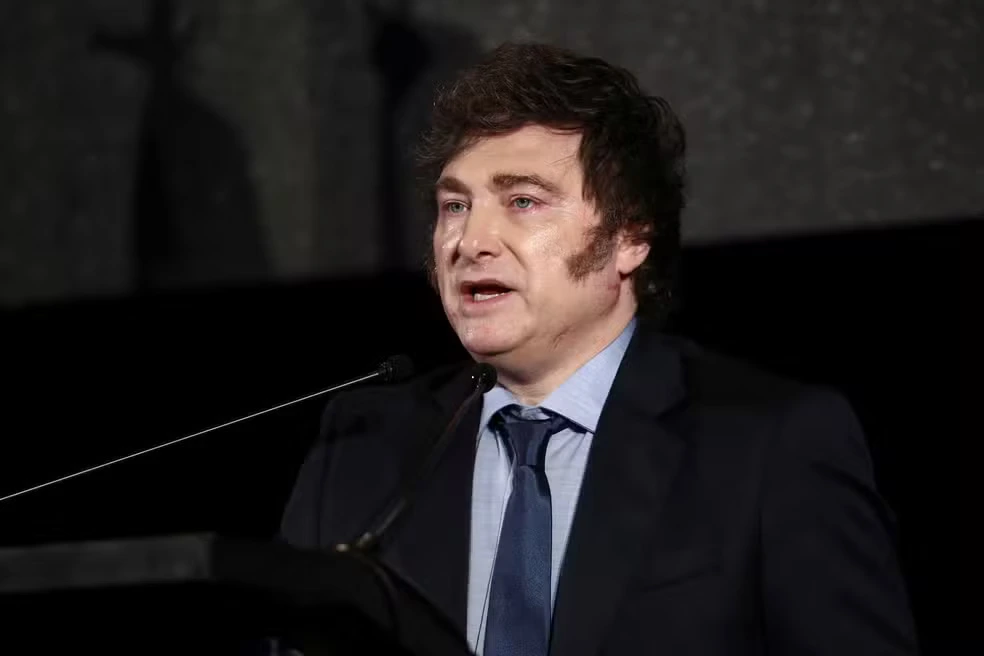
Javier Milei, Argentina’s president, asserted that his diplomatic alignment with Donald Trump shielded Brazil and fellow Mercosur nations from a proposed 35% US tariff, securing a 10% rate instead.
The claim, made during a televised interview on April 14, follows the US’s April 2 rollout of “reciprocal tariffs” targeting over 60 nations, with Mercosur members facing the lowest tier of penalties.
The US policy imposed a baseline 10% duty on imports from Argentina, Brazil, Paraguay, Uruguay, and Bolivia—far below rates applied to China (34%), the EU (20%), and Vietnam (46%).
Milei argued that Washington initially sought higher tariffs for Mercosur due to trade imbalances but adjusted its approach to prevent regional trade diversion.
“A 35% rate on Argentina alone would’ve rerouted goods through Brazil,” he stated, prompting a uniform bloc-wide rate. Mercosur ministers responded on April 11 by expanding product exemptions from the bloc’s Common External Tariff, allowing members to negotiate bilateral deals.
Argentina pushed for 50 tariff-line exemptions, aiming to ease US trade talks without violating Mercosur rules. The bloc’s 2023 intra-regional trade totaled $53 billion, with Brazil accounting for 70% of Argentina’s $25 billion Mercosur exports.
Mercosur’s Trade Challenges
Trump’s tariff framework exempts NAFTA partners but hits 85% of global trade. US imports from Mercosur reached $42 billion in 2024, dominated by Brazilian machinery ($9.1B), Argentine energy products ($7.3B), and Uruguayan beef ($2.4B).
The 10% duty threatens to raise US consumer prices for these goods by an estimated $4.2 billion annually. Milei’s government is concurrently negotiating a $20 billion IMF loan and a bilateral US deal targeting zero tariffs on 50 export lines.
While US-Argentina trade hit a rare surplus in 2024 ($3.1B), analysts note limited overlap: 63% of Argentina’s US-bound exports are raw materials, while 89% of its US imports are manufactured goods.
Mercosur’s internal tensions resurfaced as Uruguay’s President Luis Lacalle Pou called for bloc-wide negotiations with Washington, while Brazilian officials criticized Milei’s unilateral rhetoric.
The tariff decision underscores Mercosur’s fragile unity amid shifting US trade strategies—a dynamic set to test South America’s $2.8 trillion economy as Trump’s measures take full effect.
More: Argentina news in English, every day from The Rio Times.
This article was produced by The Rio Times’ automated newsroom system. How we use AI · Report an error · Editorial responsibility: Matthias Camenzind, Editor-in-Chief
In depth