Argentina’s Treasury Refinances US$5.6 Billion of Peso Debt as Markets Fall
ARGENTINA · ECONOMY
Key Facts
- —The country Argentina, led by libertarian President Javier Milei since December 2023, had annual inflation of 33.5% in August.
- —Why it matters The Treasury refinances peso debt twice a month, and pesos not reinvested can flow into dollars and push prices up.
- —What happened On Monday 28 September Argentina’s Treasury raised 8.62 trillion pesos (US$5.64 billion), 100.08% of the debt due.
- —A difficult day The same day, Argentina’s country-risk premium hit a six-month high of 628 points and Buenos Aires shares fell 3.3%.
- —What it means for you No extra pesos were released, which removes one source of pressure on the exchange rate for now.
- —Still open Whether markets calm before about 96.5 trillion pesos (US$63.1 billion) falls due from October to December.
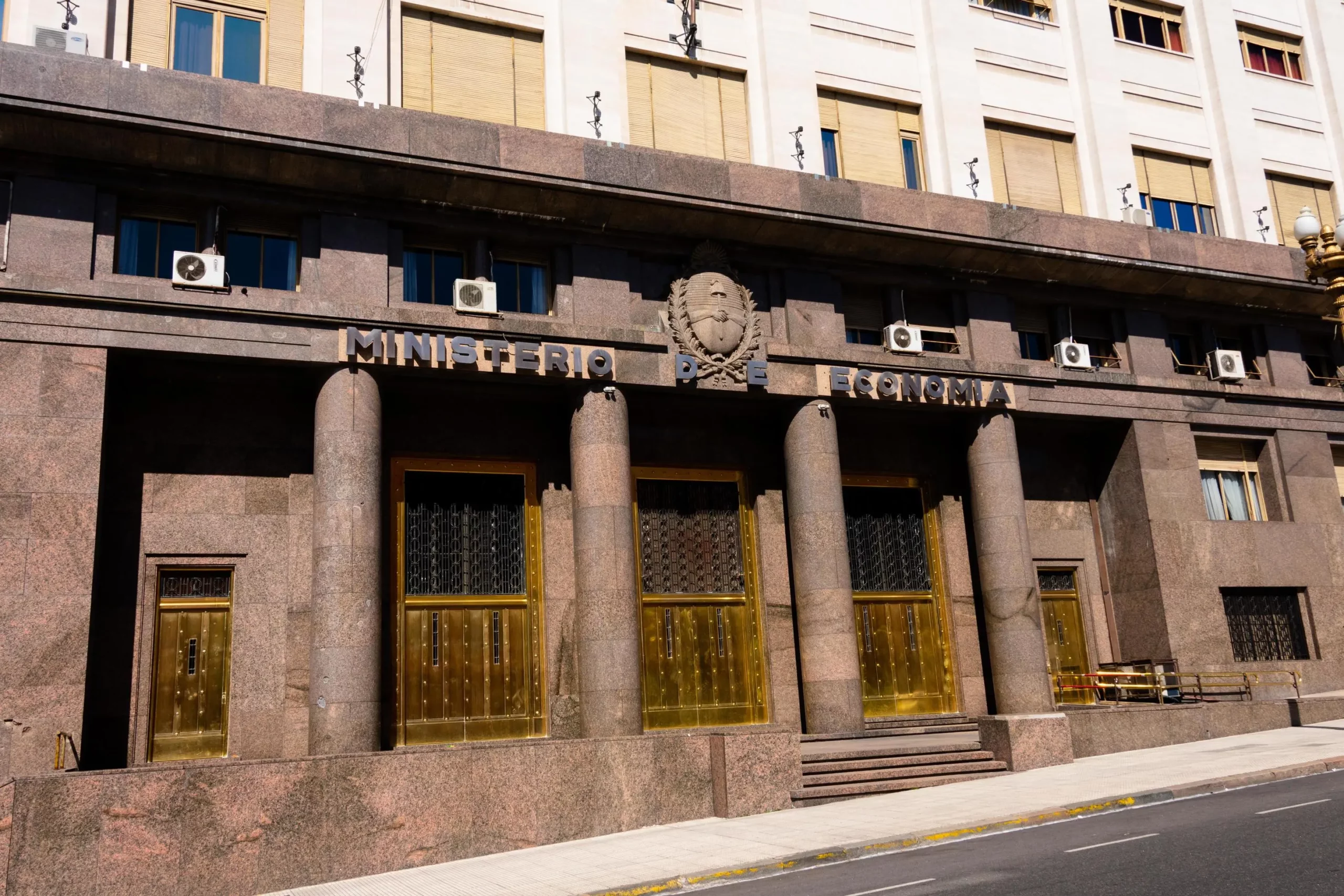
Argentina’s Treasury refinanced all of its peso debt falling due this week at an auction on Monday 28 September. The Finance Secretariat, part of the Economy Ministry, raised 8.62 trillion pesos (US$5.64 billion), 100.08% of the maturing debt.
It did so on a day of heavy selling, with Argentina’s risk premium at a six-month high. Dollar figures use the central bank’s official wholesale rate, Communication A3500: 1,528.76 pesos per dollar on 28 September.
What the Treasury sold
Investors offered 9.77 trillion pesos (US$6.39 billion), 13% more than the 8.61 trillion (US$5.63 billion) due, iProfesional reported. The new securities settle on Wednesday 30 September, according to the Finance Secretariat’s official auction notice.
The biggest slice, 2.92 trillion pesos (US$1.91 billion), went into a bond due on 30 July 2027. It pays 3.63 points over TAMAR, a benchmark tracking what large banks pay on big deposits, Infobae and El Destape explained.
A fixed-rate note due 15 January 2027 took 2.85 trillion pesos (US$1.86 billion) at 2.17% a month. An inflation-linked bond due 31 May 2027 raised 1.02 trillion pesos (US$669 million) at 5.97% above inflation.
Two notes tied to the official dollar rate, due 30 October and 30 November, raised 1.83 trillion pesos (US$1.2 billion). They are paid in pesos but track the exchange rate, so holders are protected if the peso weakens.
Why Monday was a difficult day
JP Morgan’s country-risk index, the extra yield investors demand on Argentine dollar bonds over US Treasuries, rose 19 points to 628. It had touched 642 at midday, the highest since 2 December 2025, Infobae reported.
A reading of 628 means investors want about 6.3 percentage points more from Argentina than from the US government. The index stood at 403 in July and at 485 on 11 September, according to Infobae and Página/12.
The S&P Merval, the main Buenos Aires share index, fell 3.3% to 2,798,925 points, a seventh straight fall. Measured in dollars, it dropped 4.8% to its lowest level since the 2025 midterm elections, Ámbito reported.
Part of the pressure came from abroad, where the 30-year US Treasury yield reached its highest level since May 2004, Ámbito reported. Analysts at Cohen, a Buenos Aires broker, said the punishment of Argentine debt “went far beyond the global context”, Infobae reported.
Cohen pointed to weak local data, with economic activity falling sharply in July and poverty rising in the first half. Public confidence has slipped too, as Milei Government Confidence Matches Term Low in Argentina as Household Arrears Hit 13% shows.
Why a full rollover matters for the peso and prices
When a peso bond matures and investors do not buy new ones, the Treasury pays them cash from its deposits. Those pesos can then flow into dollars, pushing the exchange rate and prices up, El Destape explained before the auction.
A rollover of exactly 100% means every peso repaid is borrowed again, so no money is added or withdrawn. Anything below 100% releases pesos, while anything above it pulls pesos out of the market.
Felipe Núñez, an official close to Economy Minister Luis Caputo, called it “a 100% roll in an extremely adverse international context”. He added on X that it came “at rates around those of the secondary market”, where existing bonds trade, Crónica reported.
PPI, a brokerage, said the Treasury turned away some bids to “preserve the stability of the peso market”, La Nación reported. Puente, another broker, said keeping cash levels unchanged should hold very short-term interest rates stable and relatively low.
Consumer prices rose 1.7% in August, the smallest monthly rise in 14 months, INDEC, the statistics office, reported on 10 September. Over 12 months prices rose 33.5%, while the new fixed-rate note pays 2.17% a month, or 29.36% a year.
The price of borrowing short
Puente said the Treasury paid one percentage point over market yields on the January note. It paid half a point extra on the TAMAR bond, a “reasonable premium” on “a particularly bad day”, Puente said.
Daniel Chodos of the broker Dhalmore Capital was less satisfied, Ámbito reported. The Treasury “paid a premium on every security and ended up refinancing at a higher cost than we expected”, he said.
Chodos noted that the new debt has an average life of 5.8 months, longer than at the last two auctions. That is still far below the 10.8 months reached in July and almost 12 months in June.
Federico Furiase, the finance secretary, said rates on long-dated bonds are “still very high” and the government will not accept them. “We see that inflation will keep falling and that rates will come down,” he said on a pro-government streaming channel, iProfesional reported.
Furiase said about 45% of peso debt now falls due after October 2027, when Argentina holds its next presidential election, Crónica reported. El Destape, an opposition-leaning site, warned on 11 September that shorter terms pile up maturities that could threaten currency stability.
The long view: a year of rolling debt
Argentina’s Treasury refinances peso debt at auctions twice a month, and recent results have hovered around 100%. On 27 August it raised 12.16 trillion pesos (US$7.95 billion) against 12.6 trillion (US$8.24 billion) due, Infobae reported.
That left about half a trillion pesos (US$327 million) in the system, to calm interest rates after weeks of scarce cash. On Friday 11 September the Treasury went the other way, raising 103.46% of its maturities, Ámbito and Infobae reported.
Demand has cooled since: bids on 11 September were 1.7 times the debt due, against about 1.1 times on Monday. That auction drew 14.17 trillion pesos (US$9.27 billion) in bids, against 9.77 trillion (US$6.39 billion) this week.
Last week the Treasury also swapped about 5 trillion pesos (US$3.27 billion) of a dollar-linked note into later debt, Ámbito reported. Holders of 75% of the note accepted, which left less to refinance on Monday, La Nación noted.
The Treasury has kept its Bonar 2029 dollar bond out of recent auctions, with about US$800 million unsold, Ámbito reported. Martín de la Fuente of the broker Bavsa said dollar-linked notes took 21% of Monday’s total, up from 11.7% last time.
Critics and defenders read the market differently
The consultancy 1816 links the fall in Argentine bonds to doubts that the large dollar inflows of recent months can continue. It flagged a sharp slowdown in the central bank’s dollar purchases, iProfesional reported.
The consultancy also estimates that private holdings of dollar-linked debt exceed the equivalent of US$12 billion. La Nación, a centre-right daily, said demand for such cover keeps growing as the central bank struggles to build reserves.
Página/12, a left-leaning daily, said the jump in country risk complicates Argentina’s access to international credit at reasonable rates. The index had climbed about 150 points in just over two weeks, the paper noted.
Adrián Yarde Buller, an economist at Facimex Valores, said current levels imply “a probability above 40%” that policies are reversed. He called that “exaggerated” with more than a year to go before the election, Ámbito reported.
What comes next, and what the result does not mean
October brings about 27 trillion pesos (US$17.7 billion) and November 33.5 trillion (US$21.9 billion), per La Nación. December adds 36 trillion pesos (US$23.5 billion), for about 96.5 trillion pesos (US$63.1 billion) by year-end.
Argentina’s Treasury holds about 8 trillion pesos (US$5.23 billion) at the central bank, iProfesional reported. It also has some 10 trillion pesos (US$6.54 billion) in fixed-term bank deposits, the site added.
It is not known whether markets will calm enough to let the Treasury sell longer or dollar bonds before the 2027 election. Officials blame higher global interest rates, while Página/12 also points to weaker activity, slower reserve buying and the 2027 election.
A full rollover does not mean new money: the Treasury swapped old debt for new, at a higher cost on some notes. Nor does a country-risk reading of 628 mean default, because it measures the extra yield investors demand, not a missed payment.
For people who earn in dollars and spend in pesos, a full rollover removes one pressure on the exchange rate for now. It does not fix the peso’s path, which analysts tie to reserves, inflation and the 2027 election.
Frequently Asked Questions
What does it mean when Argentina rolls over its debt?
The Treasury sells new bonds to raise the money it needs to repay bonds that are maturing. A rollover of 100% means every peso repaid is borrowed again, so no extra pesos reach the market.
What is Argentina’s country risk?
It is JP Morgan’s measure of the extra yield investors demand on Argentine dollar bonds over US Treasuries. At 628 points on 28 September, investors wanted about 6.3 percentage points more, which makes new dollar borrowing expensive.
Does this affect the exchange rate for visitors and expats?
Only indirectly. Because no extra pesos were released, there is less money that could be switched into dollars this week. The official wholesale rate was 1,528.76 pesos per dollar on 28 September.
How much peso debt does Argentina’s Treasury face before the end of 2026?
About 27 trillion pesos (US$17.7 billion) in October, 33.5 trillion pesos (US$21.9 billion) in November and 36 trillion pesos (US$23.5 billion) in December, La Nación reported. That is roughly 96.5 trillion pesos (US$63.1 billion) in total.
This article was produced by The Rio Times’ automated newsroom system. How we use AI · Report an error
In depth
Read More from The Rio Times