A US Firm Will Build Argentina’s First Private Nuclear Reactor
Energy
Key Facts
—The proposal. Meitner Energy has proposed Argentina’s first privately funded nuclear reactor, a 1.2-billion-dollar project at the Atucha complex.
—The design. It is a small modular reactor of about 300 megawatts, billed as the first of its kind built anywhere.
—The backers. The firm pairs United States capital from the Ansari Group with a forty per cent stake tied to Argentina’s state technology company INVAP.
—The vehicle. It would seek shelter under the Super RIGI incentive regime, which still awaits a Senate vote.
—The contrast. The plan lands as the state nuclear agency cuts jobs and shelves its own reactor prototype.
Argentina has taken a first step toward an unusual milestone: a privately financed Argentina nuclear reactor, paid for entirely with company money rather than the state’s.
On the second of July, a United States-registered firm called Meitner Energy presented the plan to Economy Minister Luis Caputo and the nuclear affairs secretary. The estimated cost is one and a fifth billion dollars, with construction running about five years.
If it proceeds, it would be the first nuclear plant in Argentina built without state funds, a notable shift in a sector that governments have run since it began seventy years ago.
What the Argentina nuclear reactor plan involves
The design is a small modular reactor, or SMR, called the ACR-300, with a capacity of roughly three hundred megawatts. Officials say it draws on Argentine engineering and would be the first unit of this design built anywhere in the world.
Small modular reactors are a coming class of nuclear plant, factory-built in sections and smaller than a traditional station, which their backers argue makes them cheaper and quicker to deploy. None of this exact design is yet operating, so Argentina would host a genuine first.
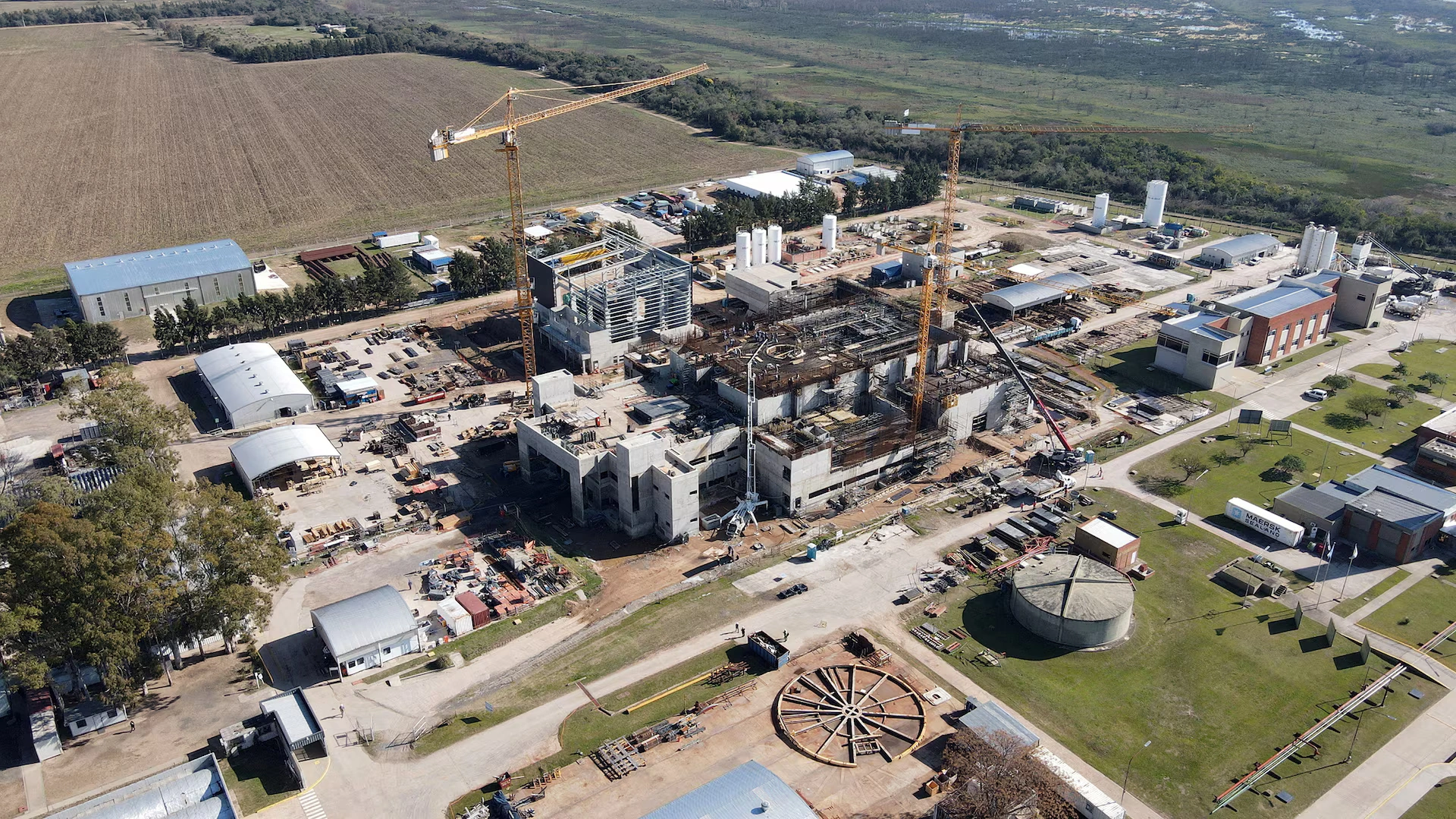
The plant would sit at the Atucha complex north of Buenos Aires, where two of the country’s three reactors already run. The state operator, Nucleoeléctrica Argentina, would have the right to run and maintain it on market terms.
Who is behind it, and how it gets paid for
Meitner Energy is registered in the United States and led locally by a former Shell executive. Around forty per cent of it is tied to INVAP, the state-owned technology company of the southern province of Río Negro, giving the venture a strong Argentine engineering core.
The rest sits with the Ansari Group, run by a United States-based magnate. The whole bill is to be met by private capital, with no outlay from the treasury, and the company would pay a fee for the land rights.
To make the numbers work, the project would seek the Super RIGI, the enhanced incentive regime for investments above one billion dollars that offers tax stability and free access to foreign currency. That regime has cleared the lower house but still needs the Senate.
Why the timing matters
The announcement lands at a pointed moment. The state nuclear agency is in turmoil, having declined to renew dozens of contracts in a cost-cutting drive that sparked protests, and its own small-reactor prototype has been set aside.
The wider signal for a foreign reader is this: President Milei’s bet is that private money and risk, under state rules, can revive strategic industries the shrinking state can no longer bankroll, and nuclear power is now the clearest test of it.
Plenty stands between the plan and a working plant. The licensing regulator must still approve the design and the build, the Senate must pass the Super RIGI, and a first-of-its-kind reactor carries the schedule and cost risks that come with any untested technology.
Even so, the project is a marker. It is the second private nuclear proposal filed under Milei, and officials cast it as proof that Argentina’s decades of nuclear know-how can now pull in foreign capital rather than lean on the public purse.
Who is building the Argentina nuclear reactor?
Meitner Energy, a United States-registered firm pairing the Ansari Group with a forty per cent stake tied to Argentina’s state technology company INVAP, has proposed the plant, which would be built at the Atucha complex and operated by the state firm Nucleoeléctrica Argentina.
How much will it cost and who pays?
The project is estimated at one and a fifth billion dollars and would be financed entirely with private capital, with no spending by the Argentine state, under the Super RIGI incentive regime that still awaits a Senate vote.
What kind of reactor is it?
It is a small modular reactor called the ACR-300, of about three hundred megawatts, described by officials as based on Argentine engineering and as the first unit of its design to be built anywhere in the world.
Connected Coverage
Argentina’s Lower House Backs Milei’s “Super RIGI” Investment Plan
Argentina Clears Two More Investment Projects as Reserves Hit Target
Argentina Unveils Super RIGI With 15% Tax to Land $30bn Investors
Frequently Asked Questions
Who is behind this nuclear reactor project in Argentina?
Meitner Energy, a US-registered firm, is behind the project, combining the Ansari Group's capital with a forty per cent stake tied to INVAP, Argentina's state-owned technology company from the province of Río Negro. The plant would be operated by the existing state firm Nucleoeléctrica Argentina.
How much will this reactor cost, and who is paying for it?
The project is estimated at one and a fifth billion dollars, paid entirely with private capital — the Argentine state puts in nothing, and the company would pay a fee for the land. To make the finances work, the project would use the Super RIGI incentive regime, which still needs a Senate vote to become law.
What kind of reactor is this, and has anything like it been built before?
It is a small modular reactor called the ACR-300, with a capacity of about 300 megawatts, described as drawing on Argentine engineering. No unit of this exact design has been built anywhere in the world yet, so Argentina would be hosting a genuine first.
This article was produced by The Rio Times’ automated newsroom system. How we use AI · Report an error · Editorial responsibility: Matthias Camenzind, Editor-in-Chief